 January 2026 in “Frontiers in Molecular Biosciences”
 A new method helps diagnose alopecia areata using specific gene markers and could guide targeted treatments.
![Asl Us Soos [Glycyrrhiza Glabra (Linn)]: An Evidence-Based Review on Its Phytopharmacological, Therapeutic Potential and Gastroduodenal Ulcer Activity](/images/assets/6967bbcb-3ed8-4b8e-a417-ed1c34019505/small/62125.jpg) January 2026 in “International Journal of Unani and Integrative Medicine”
January 2026 in “International Journal of Unani and Integrative Medicine” Licorice can effectively treat stomach ulcers and may work as well as or better than some standard drugs.
 January 2026 in “Journal of Cosmetics Dermatological Sciences and Applications”
 PRP shows promise for hair restoration with mild side effects, but more research is needed for clear guidelines.
 December 2025 in “IP Indian Journal of Clinical and Experimental Dermatology”
 Androgenetic alopecia treatments are becoming more personalized and include new therapies like topical antiandrogens and regenerative strategies.
 November 2025 in “International Journal of Recent Innovations in Medicine and Clinical Research”
 Understanding different types of hair loss helps in accurate diagnosis and treatment.
 October 2025 in “Frontiers in Immunology”
 Platelet-rich plasma might help treat eczema by reducing inflammation and repairing the skin.
 September 2025 in “Tạp chí Da liễu học Việt Nam”
 Combining oral methylprednisolone with microneedle radiofrequency improves hair growth in alopecia areata but may cause pain and side effects.
 September 2025 in “International Journal of Science and Research (IJSR)”
 Stress causes hair loss by disrupting hair growth cycles, and combining medical and cosmetic treatments can help manage it.
 September 2025 in “Dermatology Online Journal”
 Biopsy is crucial for diagnosing unusual hair loss causes like lymphoma.
 September 2025 in “Drug Design Development and Therapy”
 Combining platelet-rich products, biomaterials, and bioactive substances may improve skin treatment, but more research is needed.
 August 2025 in “Frontiers in Immunology”
 People with alopecia areata have a higher risk of heart disease.
Combining PRP and microneedling effectively improves hair growth and patient satisfaction for hair loss.
 January 2025 in “International Journal of Dermatology Venereology and Leprosy Sciences”
 Obesity worsens skin health and losing weight can improve skin conditions.
 September 2024 in “Turkish Journal of Dermatology”
 A lower second to fourth finger length ratio may predict male alopecia areata.
 August 2024 in “Quality in Sport”
 PRP helps with skin, hair, and wound treatments but needs more research for standard use.
 July 2024 in “Journal Of Stem Cell Research”
 Mesenchymal stem cells improve skin appearance and structure in dermatology and aesthetic medicine.
 May 2024 in “Frontiers in Immunology”
 Type-2 immunity may influence skin diseases and could be targeted for treatment.
 April 2024 in “bioRxiv (Cold Spring Harbor Laboratory)”
 GRK2 is essential for healthy hair follicle function, and its absence can lead to hair loss and cysts.
 February 2024 in “Frontiers in physiology”
 Hair follicle stem cells help skin heal and grow during stretching.
 September 2023 in “bioRxiv (Cold Spring Harbor Laboratory)”
 Freezing gamma-irradiated amniotic fluid may help hair growth and speed up the growth phase.
 January 2023 in “Acta dermatovenerologica Alpina, Pannonica et Adriatica (Tiskana izd.)”
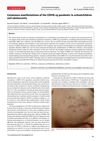
 The article concludes that schoolchildren and adolescents experienced various skin issues during the COVID-19 pandemic, including acne from masks and other skin reactions from the virus and vaccines.
 November 2022 in “Journal of Education, Health and Sport”
 The skin's bacteria might influence the development of a hair loss condition called alopecia areata.
 September 2022 in “Institutional Repositories DataBase (IRDB)”
 3D-oxy exosomes may significantly boost hair growth, offering new treatment options for hair loss.
 January 2022 in “Dermatology Review”
 Higher IL-31 levels are linked to worse itching in chronic kidney disease patients.
 June 2020 in “The journal of investigative dermatology/Journal of investigative dermatology”
 Topical treatments led to hair regrowth in a man with linear morphea.
 May 2018 in “White Rose eTheses Online (University of Leeds, The University of Sheffield, University of York)”
 Alopecia areata may be treated by using EGCG to balance immune cells and reduce inflammation.

Proretinal nanoparticles are a safe and effective way to deliver retinal to the skin.
 September 2004 in “Experimental dermatology”
 Melatonin directly affects mouse hair follicles and may influence hair growth.
 January 2026 in “MEDS Clinical Medicine”
 Plum-blossom needle therapy shows promise for treating hair loss but needs more research.
 November 2025 in “Clinical Cosmetic and Investigational Dermatology”
 Immune cells and plasma proteins are linked to hair loss, suggesting new treatment options.