July 2019 in “Indian dermatology online journal” Alopecia areata can show unusual red-dotted vessels and dithranol treatment may mask typical patterns.
 33 citations
,
December 2004 in “Differentiation”
33 citations
,
December 2004 in “Differentiation” Mouse amnion can turn into skin and hair follicles with help from certain cells and factors.
 September 2023 in “The Journal of Dermatology”
 Transplanting one's own hair follicle cells can improve hair loss in men and women, and is particularly effective in women.
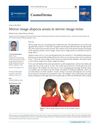
Mirror-image twins can have alopecia areata on opposite sides of their heads.
May 2024 in “JAAD Case Reports” A young man was diagnosed with a rare hair loss condition usually seen in older women.
 April 2023 in “International journal of dermatology and venereology”
 Dermoscopic features can help identify and differentiate types of pityriasis versicolor.
 16 citations
,
January 2005 in “Pediatric Dermatology”
16 citations
,
January 2005 in “Pediatric Dermatology” A 10-year-old girl with Fox Fordyce disease improved with treatment, suggesting the disease can occur before puberty and might be underdiagnosed in young girls.
 21 citations
,
January 2005 in “Pediatric Dermatology”
21 citations
,
January 2005 in “Pediatric Dermatology” An 8-year-old girl with vitiligo developed extra hair growth on her knee after using tacrolimus ointment.
2 citations
,
June 2012 in “American Journal of Dermatopathology” A rare neck cyst in a 47-year-old man showed diverse skin cell types and was not linked to HPV.
26 citations
,
May 2001 in “British Journal of Dermatology” Pilomatrixomas likely originate from the hair matrix due to changes in hair keratin expression.
May 2025 in “Apollo Medicine” Trichoscopy is a useful tool for diagnosing and assessing the severity of alopecia areata.
 April 2018 in “The journal of investigative dermatology/Journal of investigative dermatology”
 The model can effectively test gene functions and drug responses in human skin.
 16 citations
,
March 2014 in “Journal of the European Academy of Dermatology and Venereology”
16 citations
,
March 2014 in “Journal of the European Academy of Dermatology and Venereology” Korean patients with PCOS often have skin problems like acne and excess hair, with different symptoms based on their specific PCOS type.
 5 citations
,
March 2020 in “Current Opinion in Endocrine and Metabolic Research”
5 citations
,
March 2020 in “Current Opinion in Endocrine and Metabolic Research” Skin problems in PCOS, like excess hair, acne, and hair loss, may not always indicate high male hormone levels and need careful diagnosis for proper treatment.
1 citations
,
April 2018 in “Journal of dairy science” Dairy cows' skin and hair follicles change size and growth phase around the time they give birth.
1 citations
,
August 2024 in “Journal of Morphology” Mammary glands evolved from hair organs in Monodelphis domestica.
December 2015 in “European Journal of Pediatric Dermatology” Newborns can experience temporary hair loss in bands, unrelated to sleeping position.
 October 2021 in “International journal of research in dermatology”
 No link between scalp patterns and alopecia severity in children, but more severe cases often had nail abnormalities.
 94 citations
,
August 1975 in “Journal of Cutaneous Pathology”
94 citations
,
August 1975 in “Journal of Cutaneous Pathology” Male pattern baldness involves smaller hair follicles, larger oil glands, and other tissue changes, but not major blood supply issues.
December 2017 in “Canadian journal of ophthalmology” A rare skin condition was misdiagnosed as a harmless mole on a woman's eyelid.
 January 2025 in “International Journal of Dermatology”
 Consider TFI in facial hypopigmentation diagnoses and confirm with a biopsy.
19 citations
,
July 2022 in “PNAS Nexus” Similar treatments might work for different types of scarring hair loss.
June 2014 in “Experimental dermatology” The epidermis is crucial for hair growth.
 17 citations
,
December 2001 in “Journal of Investigative Dermatology”
17 citations
,
December 2001 in “Journal of Investigative Dermatology” The osteopontin gene is active in a specific part of rat hair follicles during a certain hair growth phase and might affect hair cycle and diseases.
 57 citations
,
January 2003 in “Clinical and experimental dermatology”
57 citations
,
January 2003 in “Clinical and experimental dermatology” Postmenopausal frontal fibrosing alopecia is a type of hair loss in postmenopausal women that may stop on its own but has no effective treatment.
 5 citations
,
August 2012 in “Journal of Dermatology”
5 citations
,
August 2012 in “Journal of Dermatology” Tamoxifen may cause female hair loss by increasing androgen receptor expression.
 25 citations
,
December 2008 in “Journal of Dermatological Case Reports”
25 citations
,
December 2008 in “Journal of Dermatological Case Reports” Skin color may change how alopecia areata looks under a dermoscope.
 5 citations
,
January 2017 in “Anais brasileiros de dermatologia/Anais Brasileiros de Dermatologia”
5 citations
,
January 2017 in “Anais brasileiros de dermatologia/Anais Brasileiros de Dermatologia” Porokeratotic eccrine and hair follicle nevus is a very rare skin disorder possibly caused by a GJB2 gene mutation.
A woman with a rare hair loss condition developed skin cancer in the bald area.
6 citations
,
November 1984 in “Acta Dermato Venereologica” Hair follicles and sweat glands show different keratin staining patterns.