1 citations
,
June 2023 in “British Journal of Dermatology” Alopecia areata causes significant financial strain, especially for women and those with severe symptoms.
 1 citations
,
May 2022 in “Research Square (Research Square)”
1 citations
,
May 2022 in “Research Square (Research Square)” Acetate helps reduce depression in rats with PCOS by lowering specific gene expression and DNA changes in the brain.
 1 citations
,
January 2009 in “Elsevier eBooks”
1 citations
,
January 2009 in “Elsevier eBooks” Combining proper shaving, topical treatments, and laser therapy effectively reduces Pseudofolliculitis Barbae.
February 2024 in “Veterinary sciences” Canine pemphigus foliaceus involves significant immune activity and shares similarities with human pemphigus.
 November 2023 in “Berkala Ilmu Kesehatan Kulit dan Kelamin/Berkala ilmu kesehatan kulit dan kelamin (Periodical of dermatology and venerology)”
 A dermoscope helps accurately tell apart Pityrosporum folliculitis and Acne vulgaris.
 March 2023 in “Journal of the American Academy of Dermatology”
 Treating underlying conditions and using antifungals effectively resolve Pityrosporum folliculitis in immunocompromised people.
 March 2019 in “Nasza Dermatologia Online”
 A rare scalp condition with hair loss was correctly diagnosed and treated, leading to hair regrowth.
 February 2024 in “Journal of Cellular and Molecular Medicine”
 A hydrogel releasing pectolinarin speeds up wound healing and reduces scarring.
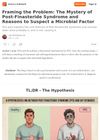 April 2026 in “Open MIND”
 Microbes in the small intestine may cause Post-Finasteride Syndrome symptoms.
 April 2026 in “Zenodo (CERN European Organization for Nuclear Research)”
 Microbes in the small intestine may cause Post-Finasteride Syndrome symptoms.
 April 2026 in “Zenodo (CERN European Organization for Nuclear Research)”
 Gut bacteria imbalance may cause Post-Finasteride Syndrome symptoms.
 April 2026 in “Zenodo (CERN European Organization for Nuclear Research)”
 Gut bacteria imbalance may cause Post-Finasteride Syndrome symptoms.
 March 2026 in “Clinical Cosmetic and Investigational Dermatology”
 Effective hair removal is crucial for better cosmetic results in forehead flap reconstruction, with laser hair removal being the preferred method.
 February 2026 in “PubMed”
 Finasteride withdrawal causes anxiety-like behavior in male rats.
February 2026 in “Skin Appendage Disorders” Pseudofolliculitis barbae is linked to higher rates of anxiety and depression.
 February 2026 in “Zenodo (CERN European Organization for Nuclear Research)”
 There is no proven treatment for post-finasteride syndrome yet.
 February 2026 in “Zenodo (CERN European Organization for Nuclear Research)”
 There is no proven treatment for post-finasteride syndrome yet.
 February 2026 in “Zenodo (CERN European Organization for Nuclear Research)”
 Gut bacteria overgrowth may cause some Post-Finasteride Syndrome symptoms.
 February 2026 in “Zenodo (CERN European Organization for Nuclear Research)”
 Gut bacteria overgrowth may cause some Post-Finasteride Syndrome symptoms.
February 2026 in “Journal of Psychosexual Health” Finasteride can cause long-lasting sexual dysfunction even after stopping the drug.
 January 2026 in “SKIN The Journal of Cutaneous Medicine”
 Androgenetic alopecia patients often experience higher rates of depression and anxiety, suggesting mental health screening before finasteride treatment.
November 2025 in “Cureus” COVID-19 vaccines caused mostly mild side effects in Bangladeshi medical students, with fewer issues after more doses.
November 2025 in “SKIN The Journal of Cutaneous Medicine” Ritlecitinib is generally safe for adolescents with alopecia areata over 5 years.
November 2025 in “SKIN The Journal of Cutaneous Medicine” Ritlecitinib is effective long-term for treating alopecia areata in teens.
October 2025 in “Environment International” Exposure to certain chemicals before birth and during childhood may affect puberty timing.

Allopregnanolone may help reduce inflammation and symptoms related to post-finasteride syndrome.
 July 2025 in “International Journal of Dermatology”
 Topical finasteride may be safer than oral finasteride, but more research is needed.
June 2025 in “British Journal of Dermatology” Patients with alopecia areata in the UK face barriers to care, needing better-defined pathways and more education for general practitioners.
 March 2025 in “Journal of Cosmetic Dermatology”
 Finasteride use may increase depression and suicide risk, especially at 1 mg, so monitoring is advised.
March 2025 in “Pediatric Dermatology” The supplement aims to improve care for children with alopecia areata.