 59 citations
,
November 2010 in “Circulation Research”
59 citations
,
November 2010 in “Circulation Research” Wnt signaling may be linked to heart diseases in aging and could be a target for future treatments.
 48 citations
,
June 2013 in “Journal of Dermatological Science”
48 citations
,
June 2013 in “Journal of Dermatological Science” Valproic acid may help hair grow and could be a safe treatment for hair loss.
 37 citations
,
February 2014 in “Journal of Dermatology”
37 citations
,
February 2014 in “Journal of Dermatology” Valproic acid increases hair count in men with hair loss.
 32 citations
,
January 2007 in “Biological & Pharmaceutical Bulletin”
32 citations
,
January 2007 in “Biological & Pharmaceutical Bulletin” Minoxidil and retinol together help hair grow.
 25 citations
,
August 2015 in “International Journal of Cosmetic Science”
25 citations
,
August 2015 in “International Journal of Cosmetic Science” Malva verticillata seed extract might help treat hair loss by activating hair growth signals in skin cells.
 25 citations
,
March 2014 in “Experimental Dermatology”
25 citations
,
March 2014 in “Experimental Dermatology” Leptin helps start the growth phase of hair.
 23 citations
,
January 2020 in “Frontiers in Pharmacology”
23 citations
,
January 2020 in “Frontiers in Pharmacology” Dihydrotestosterone affects hair growth by changing the Wnt/β-catenin pathway, with low levels helping and high levels hindering growth.
 23 citations
,
May 2005 in “British Journal of Cancer”
23 citations
,
May 2005 in “British Journal of Cancer” Plucked human hair can be used to study drug effects on certain cell markers.
 18 citations
,
September 2016 in “International Journal of Molecular Sciences”
18 citations
,
September 2016 in “International Journal of Molecular Sciences” Polydeoxyribonucleotide (PDRN) may help lighten skin and treat hyperpigmentation.
 18 citations
,
January 2001 in “Annual Reports in Medicinal Chemistry”
18 citations
,
January 2001 in “Annual Reports in Medicinal Chemistry” Selective Androgen Receptor Modulators (SARMs) are drugs that can control the effects of androgens in different tissues, potentially having fewer side effects and promising for treating various conditions.
 17 citations
,
May 2010 in “Journal of Dermatological Science”
17 citations
,
May 2010 in “Journal of Dermatological Science” Erythropoietin helps hair grow and could be a potential treatment for hair loss.
 14 citations
,
March 2022 in “Journal of inflammation research”
14 citations
,
March 2022 in “Journal of inflammation research” Baricitinib shows promise as a new treatment for certain skin conditions like alopecia areata.
 12 citations
,
July 2019 in “Acta Neurologica Belgica”
12 citations
,
July 2019 in “Acta Neurologica Belgica” Levodopa for Parkinson's disease might be linked to skin issues like melanoma, but it's unclear if the drug or the disease causes them.
 10 citations
,
May 2014 in “The Journal of Steroid Biochemistry and Molecular Biology”
10 citations
,
May 2014 in “The Journal of Steroid Biochemistry and Molecular Biology” Allopregnanolone increases KCC2 expression in baby male rats' brains, while finasteride doesn't affect it.
 8 citations
,
September 2017 in “Journal of Investigative Dermatology”
8 citations
,
September 2017 in “Journal of Investigative Dermatology” CXXC5 is a protein that prevents hair growth and could be a target for hair loss treatment.
 6 citations
,
January 2024 in “Annals of Dermatology”
6 citations
,
January 2024 in “Annals of Dermatology” Dickkopf-related Protein 2 can help hair grow by activating a specific cell pathway.
![Discovery of 7-Methoxy-6-[4-(4-Methyl-1,3-Thiazol-2-yl)-1H-Imidazol-5-yl]-1,3-Benzothiazole (TASP0382088): A Potent and Selective Transforming Growth Factor-β Type I Receptor Inhibitor as a Topical Drug for Alopecia](/images/research/9620bd26-3366-4f2a-bcac-f511697bbc41/small/35997.jpg) 6 citations
,
January 2013 in “Chemical & pharmaceutical bulletin/Chemical and pharmaceutical bulletin”
6 citations
,
January 2013 in “Chemical & pharmaceutical bulletin/Chemical and pharmaceutical bulletin” A new compound shows promise as a topical treatment for hair loss.

Ocu-miR-205 affects hair density in Rex rabbits by promoting cell changes and influencing hair follicle phases.

Ocu-miR-205 affects hair density in Rex rabbits by promoting cell changes and influencing hair follicle phases.
 2 citations
,
April 2018 in “Journal of Investigative Dermatology”
2 citations
,
April 2018 in “Journal of Investigative Dermatology” Frontal fibrosing alopecia shows increased inflammation and JAK-STAT pathway activity without reduced hair proteins.
 2 citations
,
August 2013 in “Journal of Investigative Dermatology”
2 citations
,
August 2013 in “Journal of Investigative Dermatology” Nuclear shape and chromatin changes affect gene expression in skin cell differentiation.
 April 2025 in “Cellular and Molecular Biology”
 Human dermal stem/progenitor cells can divide and differentiate more than hair follicle dermal papilla cells.
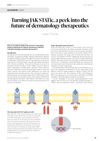 August 2024 in “New Zealand Medical Student Journal”
 JAK inhibitors show promise for treating skin diseases effectively and safely.

Abemaciclib can cause skin, hair, and nail problems, leading some patients to stop using it.

Higher TGF-β signaling may increase skin cancer risk in organ transplant recipients.
 April 2020 in “Research Square (Research Square)”
 Exosomes from stem cells help wounds heal faster by affecting specific cell signals.

Ocu-miR-205 affects hair density in Rex rabbits by influencing cell processes and signaling pathways.
 April 2018 in “Journal of Investigative Dermatology”
 Kaempferol helps skin stem cells grow and may improve skin thickness due to its 3-OH group.
 April 2018 in “Journal of Investigative Dermatology”
 Removing STAT5 from 3D-cultured human skin cells reduces their ability to grow hair.
 April 2018 in “The journal of investigative dermatology/Journal of investigative dermatology”
 The model can effectively test gene functions and drug responses in human skin.