1 citations
,
November 2004 in “International Journal of Cosmetic Science” External agents penetrate skin more easily in areas with fewer lipids, especially through hair follicles.
 9 citations
,
May 2013 in “JAMA Dermatology”
9 citations
,
May 2013 in “JAMA Dermatology” Sunlight exposure improved a patient's skin condition, and there may be a link between a certain disease and skin growths; a leukemia treatment caused changes in hair color and growth.
 63 citations
,
December 2002 in “Archives of Dermatology”
63 citations
,
December 2002 in “Archives of Dermatology” The 308-nm excimer laser is a promising treatment for vitiligo with varying success and mild side effects.
 May 2017 in “Journal of The American Academy of Dermatology”
 LED light helps human hair root cells grow and prevents them from dying by activating specific growth pathways.
8 citations
,
June 2021 in “Frontiers in Medicine” The combination of the excimer lamp and liquor carbonis detergens is more effective for scalp psoriasis than the lamp alone.
 June 2023 in “LA Referencia (Red Federada de Repositorios Institucionales de Publicaciones Científicas)”
 Home photobiomodulation therapy can improve life quality and mobility for disabled individuals.
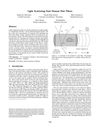
Researchers developed a new model for more realistic computer graphics of hair by considering how light scatters on hair fibers.
 April 2018 in “Radiotherapy and Oncology”
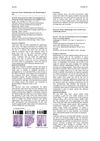
 Mitochondria may influence how cells respond to radiation, affecting nearby non-irradiated cells.
 November 1998 in “Journal of The European Academy of Dermatology and Venereology”
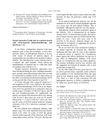
 A man's skin cancer improved and some of his hair grew back after treatment with a special light therapy and a medication.
October 2025 in “Animals” Blue light masks improved coat condition and energy in horses with PPID.
 12 citations
,
April 1960 in “The anatomical record”
12 citations
,
April 1960 in “The anatomical record” X-ray exposure affects developing hair follicles.
 November 2023 in “Journal of cosmetic dermatology”
 The 595-nm pulsed dye laser effectively reduces symptoms of EFFC with minimal side effects.
 5 citations
,
November 2015 in “International Journal of Radiation Biology”
5 citations
,
November 2015 in “International Journal of Radiation Biology” Gamma-ray exposure can cause long-lasting damage to hair follicles, affecting hair structure and color.
August 2018 in “Zenodo (CERN European Organization for Nuclear Research)” New techniques can record electromagnetic fields in hair follicles for potential medical use.
 November 2022 in “Journal of Investigative Dermatology”
 The LED light therapy mask improved skin elasticity and reduced signs of aging in a test and in women aged 40-60.
 May 2017 in “Journal of The American Academy of Dermatology”
 595 nm pulsed dye laser is a cost-effective treatment for nonmelanoma skin cancer with a low recurrence rate.
 April 2017 in “Journal of Investigative Dermatology”
  161 citations
,
July 2003 in “ACM Transactions on Graphics”
161 citations
,
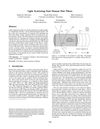
July 2003 in “ACM Transactions on Graphics” Researchers developed a new model for more realistic computer graphics rendering of hair by considering how light scatters on hair fibers.
 15 citations
,
June 2015 in “Lasers in Medical Science”
15 citations
,
June 2015 in “Lasers in Medical Science” The 830-nm wavelength was most effective at promoting hair growth in rats using low-level laser therapy.
August 2021 in “Journal of advances in medicine and medical research” Excimer light therapy is more effective than low level laser therapy for treating alopecia areata.
 62 citations
,
January 2003 in “Dermatology”
62 citations
,
January 2003 in “Dermatology” Sunlight worsens hair loss; protect scalp.
 August 2020 in “Research Square (Research Square)”
 Oxygen levels affect hair growth and color cells differently when they interact directly.
July 2021 in “British Journal of Dermatology” 2 citations
,
May 2018 in “Dermatologic Surgery”  March 2020 in “Journal of lasers in medical sciences”
 Laser therapy on human skin affects the HERC6 gene and related genes, influencing many cell processes and requiring careful safety measures.

Hair coloring and bleaching can permanently break down hair protein and temporarily change its properties.
 10 citations
,
January 2010 in “Acta dermato-venereologica”
10 citations
,
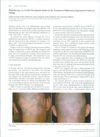
January 2010 in “Acta dermato-venereologica” Light therapy can effectively treat vitiligo and hair loss caused by a specific medication.
 38 citations
,
January 2023 in “International Journal of Medical Sciences”
38 citations
,
January 2023 in “International Journal of Medical Sciences” Red-light therapy may slow myopia progression better than traditional treatments.
3 citations
,
September 2015 in “Plastic and reconstructive surgery/PSEF CD journals” Pulsed Electric Fields can effectively stimulate hair growth in rats.
1 citations
,
July 2025 in “Journal of Photochemistry and Photobiology B Biology” Photobiomodulation helps protect hair follicle cells from damage caused by DHT.