January 2025 in “Indian Dermatology Online Journal” Mycosis fungoides can have unusual symptoms and may be misdiagnosed, but specific cell markers might suggest a lower risk of worsening.
Prussian Blue causes hair cuticles to detach, weakening the hair.
 14 citations
,
January 2005 in “Pediatric Dermatology”
14 citations
,
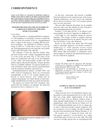
January 2005 in “Pediatric Dermatology” UVA1-light therapy successfully treated a child's skin condition, mycosis fungoides.
 April 2023 in “Journal of Investigative Dermatology”
 Sunlight simulation causes skin inflammation, with different skin types reacting at different levels of exposure.
February 2026 in “Immunity Inflammation and Disease” Recognizing unusual skin, eye, or hair issues can help diagnose immune system disorders early, especially in children.
3 citations
,
December 2020 in “Skin Appendage Disorders” Genetic testing confirmed a rare disorder causing hair loss and vision problems in a Saudi family, stressing its importance for diagnosis and counseling.
 April 2024 in “Frontiers in cellular and infection microbiology”
 Blue light might help treat skin conditions by affecting the skin's bacteria.
 May 2025 in “Journal of Cosmetic Dermatology”
 Post-finasteride syndrome may be linked to pre-existing psychological issues, not just the drug.
4 citations
,
December 2024 in “Photodiagnosis and Photodynamic Therapy” Wood's lamp is effective for early detection of tinea capitis in children.
 21 citations
,
April 2019 in “Clinical, cosmetic and investigational dermatology”
21 citations
,
April 2019 in “Clinical, cosmetic and investigational dermatology” The document concludes that stopping shaving or removing affected hair can alleviate Pseudofolliculitis barbae (PFB).
 2 citations
,
September 2022
2 citations
,
September 2022 The PER3 rs772027021 SNP may cause mild skin pigmentation changes in a new subtype of dyschromatosis universalis hereditaria.
 3 citations
,
July 2018 in “Biomedicine & pharmacotherapy”
3 citations
,
July 2018 in “Biomedicine & pharmacotherapy” Paeoniflorin protects brain cells by involving a specific protein and neurosteroids.
September 2025 in “Indian Journal of Dermatology” A Turkish woman has a hair condition caused by a LIPH gene mutation.
13 citations
,
October 2000 in “International Journal of Dermatology” A 6-year-old boy in India was diagnosed with Bloom's syndrome, showing growth and developmental issues, and skin problems worsened by sunlight.
 July 2020 in “Nepalese journal of ophthalmology”
 A boy with progeria had eye problems and signs of aging like hair loss and skin wrinkling.
2 citations
,
December 2013 in “Journal of Cosmetic Dermatology” UV treatment can damage hair, so protection is advised.
 May 2024 in “Indian Dermatology Online Journal”
 A rare bacterial infection of pubic hair can cause strong genital odor, but trimming hair and using clindamycin can quickly fix it.
January 2019 in “DSpace@MIT (Massachusetts Institute of Technology)” Higher PHGDH levels cause unusual melanin buildup in hair follicles.
2 citations
,
May 2007 in “Pediatrics in Review” Thorough history and examination are crucial for diagnosing genetic disorders like juvenile polyposis and hypomelanosis of Ito.
12 citations
,
September 2000 in “Journal of the European Academy of Dermatology and Venereology” Balneophototherapy effectively treats ichthyosis linearis circumflexa but may need ongoing treatment due to short remission.
1 citations
,
June 2020 in “Unisa Institutional Repository (University of South Africa)” Low power red laser with efavirenz can reduce HIV-1 infection to undetectable levels and improve diagnosis.
 6 citations
,
February 2004 in “Clinical and Experimental Ophthalmology”
6 citations
,
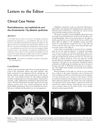
February 2004 in “Clinical and Experimental Ophthalmology” The document concludes that careful diagnosis is crucial for chromosome 13q deletion syndrome, tamoxifen can cause reversible eye damage, finasteride may be linked to cataracts, and OCT is useful for diagnosing macular diseases.
September 2023 in “Journal of the American Academy of Dermatology” Oral difelikefalin significantly reduces itch in notalgia paresthetica.
 20 citations
,
June 2011 in “ISRN Dermatology (Print)”
20 citations
,
June 2011 in “ISRN Dermatology (Print)” A woman lost most of her hair due to an allergic reaction to a hair dye ingredient.
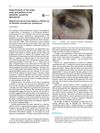
June 2017 in “The Medical Journal of Australia” The man's rash, hair loss, and vision issues were due to syphilis, not CMV.
 1 citations
,
January 2015 in “Actas dermo-sifiliográficas/Actas dermo-sifiliográficas”
1 citations
,
January 2015 in “Actas dermo-sifiliográficas/Actas dermo-sifiliográficas” Latanoprost eye drops caused excessive cheek hair growth and eyelash whitening in a woman.
June 2007 in “Taiwan Journal of Ophthalmology” Young patients with Vogt-Koyanagi-Harada syndrome may have poor vision outcomes despite treatment due to frequent recurrences.
56 citations
,
January 2014 in “Journal of Investigative Dermatology” Olmsted syndrome can be inherited as an autosomal recessive trait due to a rare TRPV3 gene mutation.
23 citations
,
October 2008 in “Journal of medicinal chemistry” PF-998425 is a new, effective, and non-phototoxic treatment for skin conditions related to androgens.
 4 citations
,
September 2016 in “Journal der Deutschen Dermatologischen Gesellschaft”
4 citations
,
September 2016 in “Journal der Deutschen Dermatologischen Gesellschaft” Some skin patients have body image issues linked to social difficulties but want psychological help.