 2 citations
,
November 1996 in “Dermatologic Surgery”
2 citations
,
November 1996 in “Dermatologic Surgery” Standardization in hair restoration photography is crucial for accurate comparison of surgical results.
December 2021 in “Cosmetics” 1 citations
,
February 2025 in “Photodermatology Photoimmunology & Photomedicine” 830 nm LED light effectively treats and prevents skin redness and dark spots, while 590 nm LED light only helps prevent them.
10 citations
,
September 2022 in “Journal of Biophotonics” Blue light therapy is safe for skin and may protect against UV radiation.
 1 citations
,
July 2023 in “Journal of Biophotonics”
1 citations
,
July 2023 in “Journal of Biophotonics” Red light at 8 mW/cm2 most effectively promotes hair cell growth and affects key growth pathways, especially in cells treated with a hair loss-related hormone.
 14 citations
,
May 2013 in “Experimental Dermatology”
14 citations
,
May 2013 in “Experimental Dermatology” The modified wash test is better than TrichoScan® for diagnosing hair loss.
Multiphoton microscopy helps understand and improve vitiligo treatments by visualizing skin cell changes.
 12 citations
,
January 2020 in “Analyst”
12 citations
,
January 2020 in “Analyst” Researchers found markers that can tell if hair has been bleached, which could improve hair test accuracy.
 2 citations
,
March 2019 in “Lasers in surgery and medicine”
2 citations
,
March 2019 in “Lasers in surgery and medicine” Higher light doses cause more damage to hair follicles, predicting better hair removal results.
September 2002 in “대한피부과학회지” Koreans have lower hair density, larger hair diameter, and slower hair growth than Caucasians.
 January 2026 in “SSRN Electronic Journal”
 Riboflavin with blue light speeds up hair dyeing, making it faster, safer, and long-lasting with less hair damage.
 June 2023 in “British Journal of Dermatology”
 The prototype for analyzing skin aging works technically and clinically.
February 2016 in “Seoul National University Open Repository (Seoul National University)” Photodynamic therapy can temporarily remove nonpigmented hair but is less effective than lasers for black hair.
 April 2017 in “Journal of Investigative Dermatology”
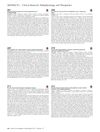
 Deep phenotyping helps distinguish between xeroderma pigmentosum and trichothiodystrophy, aiding in diagnosis and treatment.
March 2026 in “Dyes and Pigments” Riboflavin and blue light speed up genipin hair dye, making it fast, glossy, stable, and eco-friendly.
 1 citations
,
April 2015 in “Current problems in dermatology”
1 citations
,
April 2015 in “Current problems in dermatology” The document concludes that the trichogram is a useful tool for diagnosing hair loss and suggests semi-organ cultures for practical trichological research.
September 2015 in “Photodiagnosis and Photodynamic Therapy”  31 citations
,
August 2001 in “PubMed”
31 citations
,
August 2001 in “PubMed” TrichoScan accurately measures hair growth and showed improved hair counts and thickness after finasteride treatment.
 January 2017 in “Nihon Keshouhin Gijutsushakaishi/Journal of S C C./Nihon Keshouhin Gijutsushakai kaishi”
 Sunlight and chemical treatments change hair's internal structure differently, needing specific care.
September 2017 in “The journal of investigative dermatology/Journal of investigative dermatology” Different types of human skin cells respond uniquely to various colors and doses of light, which could lead to specialized light treatments for skin conditions.
 12 citations
,
June 2013 in “The American Journal of Dermatopathology”
12 citations
,
June 2013 in “The American Journal of Dermatopathology” A new method using visual aids to diagnose hair diseases was effective after brief training.
1 citations
,
October 2025 in “Micromachines” Portable point-of-care testing can improve quick and accurate genetic disorder detection.
October 2025 in “Pediatric Dermatology” UVFD helps quickly diagnose hair loss conditions in children.
4 citations
,
June 2022 in “Journal of cleaner production” New eco-friendly method strengthens and sets hair using light and causes less damage.
1 citations
,
January 2019 in “Indian Journal of Dermatology, Venereology and Leprology”  1 citations
,
November 2014 in “Journal of Biomedical Optics”
1 citations
,
November 2014 in “Journal of Biomedical Optics” Reflectance spectroscopy can noninvasively track hair growth stages by measuring skin reflectance and melanin changes.
 January 1998 in “Lasers in Surgery and Medicine”
 Lasers are effective and safe for various medical treatments, including cancer, wound healing, and skin conditions.

New imaging tools help doctors better examine hair and scalp health without surgery.
 9 citations
,
January 2018 in “Medical research archives”
9 citations
,
January 2018 in “Medical research archives” Low-intensity light therapy is effective for skin healing, reducing inflammation, and treating various skin conditions.
1 citations
,
June 2022 in “Photobiomodulation, photomedicine, and laser surgery”