 September 2025 in “Frontiers in Genetics”
 The method effectively extracts high-quality DNA from marmoset hair, avoiding blood chimerism.
 December 2025 in “International Journal For Multidisciplinary Research”
 Microscopic hair analysis is important in forensics but has limitations; new technologies are improving its accuracy.
35 citations
,
April 2021 in “Current Biology”  4 citations
,
June 2021 in “Scientific Reports”
4 citations
,
June 2021 in “Scientific Reports” Hair fiber shape and curvature are not significantly linked when ancestry is considered.
 44 citations
,
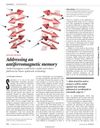
February 2016 in “Science”
44 citations
,
February 2016 in “Science” Researchers developed a new type of memory using antiferromagnets that is stable, not disrupted by magnets, and works at room temperature.
 40 citations
,
January 2016 in “Elsevier eBooks”
40 citations
,
January 2016 in “Elsevier eBooks” The skin is the largest organ, protecting the body, regulating temperature, and producing hormones.
 12 citations
,
January 1981 in “Springer eBooks”
12 citations
,
January 1981 in “Springer eBooks” Environmental factors like temperature and nutrition affect hair growth, with humans showing seasonal hair growth differences.
 5 citations
,
October 2018 in “Dermatologic therapy”
5 citations
,
October 2018 in “Dermatologic therapy” Recognizing congenital triangular alopecia is crucial to avoid unnecessary treatments.
30 citations
,
December 1996 in “Journal of Investigative Dermatology” 4 citations
,
December 1995 in “Anthropologischer Anzeiger” Family members have similar hair protein patterns, which could be useful for genetic studies.
 June 2025 in “Rapid Communications in Mass Spectrometry”
 The new method improves protein extraction and analysis in hair, aiding biomedical and forensic work.
 March 2026 in “Egyptian Journal of Forensic Sciences”
 Unified regulations and ethical guidelines are needed for fair use of forensic DNA phenotyping.
 11 citations
,
February 2019 in “Research and reports in forensic medical science”
11 citations
,
February 2019 in “Research and reports in forensic medical science” DNA phenotyping helps predict physical traits from DNA with varying accuracy and requires careful ethical and legal handling.
 January 2023 in “Türkiye klinikleri adli tıp ve adli bilimler dergisi”
 DNA markers can help predict male pattern baldness, useful in criminal and missing person cases.
 April 2025 in “INTERANTIONAL JOURNAL OF SCIENTIFIC RESEARCH IN ENGINEERING AND MANAGEMENT”
 Hair histology helps identify animal species in forensic investigations.
27 citations
,
April 1978 in “Journal of Forensic Sciences” Enzyme typing can reliably characterize human hair.
 1 citations
,
September 2024 in “Frontiers in Cell and Developmental Biology”
1 citations
,
September 2024 in “Frontiers in Cell and Developmental Biology” Pigs are a good model for studying human hair growth and disorders.
Machine learning improves DNA predictions for eye and hair color, but challenges remain for skin tone and facial features.
 September 2024 in “Journal of Investigative Dermatology”
 A new tool can analyze hair to detect changes due to hormones, genetics, and aging.
 June 2026 in “arXiv (Cornell University)”
 The new method improves SNP analysis in genetic studies by combining tests, enhancing accuracy and cost-effectiveness.
14 citations
,
September 2019 in “Forensic Science International Genetics” Hair keratin proteins can be reliably identified in hair as short as 0.12 cm, with 0.5 to 2 cm being the best length for analysis.

Hair shaft characteristics can affect mitochondrial DNA metrics, but more research is needed.
 December 2019 in “Periodicals of Engineering and Natural Sciences (PEN)”
 Hair analysis can provide insights into a person's medical history and location over time.
 6 citations
,
November 2022 in “Forensic Science Medicine and Pathology”
6 citations
,
November 2022 in “Forensic Science Medicine and Pathology” Genetic markers can help predict ear shapes for forensic use.
April 2021 in “Journal of Investigative Dermatology” A deep learning model was developed to help diagnose trichothiodystrophy by analyzing hair patterns.
 13 citations
,
February 2020 in “Cold Spring Harbor Perspectives in Biology”
13 citations
,
February 2020 in “Cold Spring Harbor Perspectives in Biology” New methods have helped find cells that create other cells in the body.
 4 citations
,
November 2017 in “Scientific Reports”
4 citations
,
November 2017 in “Scientific Reports” The research provides a gene-based framework for hair biology, highlighting the Hippo pathway's importance and suggesting links between hair disorders, cancer pathways, and the immune system.
68 citations
,
August 2014 in “PeerJ” Human hair proteins vary by individual, body site, and ethnicity, useful for forensics.
The research found that people's hair proteins vary, especially by ethnicity and body part, which could help identify individuals in forensic science.
1 citations
,
April 2009 in “Wiley Encyclopedia of Forensic Science” Microscopic hair analysis helps identify species and sometimes individuals in forensic science.