10 citations
,
January 2012 in “Case reports in medicine” Diphencyprone can cause unexpected and possibly permanent vitiligo.
49 citations
,
November 2021 in “Annual review of pathology” Lysophospholipids like LPA and S1P are important for hair growth, immune responses, and vascular development, and could be targeted for treating diseases.
33 citations
,
December 1999 in “Journal of Investigative Dermatology Symposium Proceedings”  November 2025 in “International Journal of Advanced Research”
 Platelet-rich plasma therapy effectively treated laser-induced skin lightening.
 November 2023 in “International Journal of Pharmaceutics”
 The new delivery system improves treatment for hair loss by enhancing drug absorption and effectiveness.
June 2023 in “Zenodo (CERN European Organization for Nuclear Research)” Hutchinson-Gilford Progeria Syndrome causes rapid aging due to a gene mutation, with no cure yet, but research may lead to better treatments.
August 2022 in “Nutrients” Nutritional supplements may help improve hair growth in female pattern hair loss.
June 2023 in “Journal of dermatology for physician assistants” Lichen planopilaris should be considered when diagnosing hair loss in people with darker skin as it may be often missed.
Self-assembling peptide hydrogels effectively deliver drugs locally, enhancing treatment and reducing side effects.
 February 2024 in “Journal of Investigative Dermatology”
 Deleting NIPP1 in mouse skin cells causes early aging and chronic skin issues.
Integrating ABI screening in clinics can improve patient care for those at risk of peripheral artery disease.
 15 citations
,
January 2015 in “Skin Pharmacology and Physiology”
15 citations
,
January 2015 in “Skin Pharmacology and Physiology” Parathyroid hormones are important for hair growth, but their use in treating hair loss from chemotherapy is still uncertain.
 24 citations
,
May 2019 in “PLOS genetics”
24 citations
,
May 2019 in “PLOS genetics” Mutations in the HEPHL1 gene cause abnormal hair and cognitive issues.
September 2016 in “Journal of dermatological science” Human induced pluripotent stem cells can be used to create cells that help grow hair.
 June 2026 in “Frontiers in Bioengineering and Biotechnology”
 Hair follicle systems are being engineered to better mimic natural hair follicles for studying hair disorders and testing treatments.
 4 citations
,
January 2021 in “Archives of dermatological research”
4 citations
,
January 2021 in “Archives of dermatological research” The study created a new model to better understand human hair growth and health.
 September 1997 in “BioMed Research International”
 Female pattern hair loss often starts in teenage years, reduces hair density, and can impact quality of life.
7 citations
,
July 2018 in “Stem cell research” Hair samples can be used to create stem cells easily and non-invasively.
July 2024 in “International Journal of Molecular Sciences” The inhibitor DPP can promote hair growth.
Antiandrogen treatment helps reduce hair follicles and sebaceous glands in hirsute women.
 5 citations
,
April 2017 in “Dermatologic Surgery”
5 citations
,
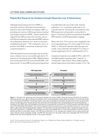
April 2017 in “Dermatologic Surgery” PRP treatment satisfies 58% of female hair loss patients, with most noticing fuller, thicker hair and less shedding.
 September 2022 in “The American Journal of Dermatopathology”
 Blocking IL-17 might help treat the hair loss condition Lichen planopilaris.
A rare case of a woman having both lichen planus pigmentosus and classic lichen planopilaris at the same time.
 January 2026 in “Clinical Cosmetic and Investigational Dermatology”
 Early diagnosis and targeted anti-inflammatory treatments can improve outcomes in androgenetic alopecia with perifollicular inflammation and fibrosis.
 227 citations
,
December 2021 in “ACS Nano”
227 citations
,
December 2021 in “ACS Nano” Special hydrogels that respond to light can speed up wound healing and prevent infection.
 1 citations
,
August 2022 in “JAAD case reports”
1 citations
,
August 2022 in “JAAD case reports” Pioglitazone use was linked to hair regrowth in a patient with permanent hair loss from cicatricial alopecia.

Platelet-rich plasma (PRP) can help with hair loss and improve hair transplant results.
April 2020 in “Journal of the Endocrine Society” The patient with a misplaced pituitary gland and interrupted pituitary stalk is being treated with hormone replacement.
 1 citations
,
May 2017 in “Hair transplant forum international”
1 citations
,
May 2017 in “Hair transplant forum international” PRP is beneficial for hair restoration.