 141 citations
,
November 2005 in “International journal of pharmaceutics”
141 citations
,
November 2005 in “International journal of pharmaceutics” Hair follicles may soon be used more for targeted and systemic drug delivery.
 13 citations
,
January 2007 in “International journal of pharmaceutics”
13 citations
,
January 2007 in “International journal of pharmaceutics” Papain cream removes hair better than papain gel, causing hair follicles to widen and skin to thicken.
 1 citations
,
May 2023 in “Cureus”
1 citations
,
May 2023 in “Cureus” A rare hair follicle tumor in the hand was successfully removed with no return after four years.
 May 2025 in “International Journal of Molecular Sciences”
 DHHB from Platycladus orientalis L. promotes hair growth and could be a natural alternative to current treatments.

Hair microscopy is a useful and affordable way to diagnose hair disorders.
142 citations
,
January 2010 in “Journal of dermatological science” Hair follicles are promising targets for delivering drugs effectively.
Polygonum multiflorum, especially emodin, may help treat hair loss by targeting specific proteins, offering a new approach beyond traditional therapies.
 23 citations
,
May 2005 in “British Journal of Cancer”
23 citations
,
May 2005 in “British Journal of Cancer” Plucked human hair can be used to study drug effects on certain cell markers.
1 citations
,
January 2006 in “Maia-rivista Di Letterature Classiche” Polygonum multiflorum is used for health benefits but may cause liver issues.
 2 citations
,
May 2010 in “Actas Dermo-Sifiliográficas”
2 citations
,
May 2010 in “Actas Dermo-Sifiliográficas” Home-use medical-cosmetic devices like lasers for hair removal may be convenient but need more research to confirm safety and effectiveness.

Periplaneta americana extract promotes hair growth and is safe for treating hair loss.
 April 2017 in “Journal of Investigative Dermatology”
 Applying pseudoceramide improved skin and hair health.
 4 citations
,
March 2020 in “Journal of Cosmetic Dermatology”
4 citations
,
March 2020 in “Journal of Cosmetic Dermatology” Plumbago zeylanica extract helps hair growth and reduces a hair loss-related enzyme.
 127 citations
,
January 2013 in “PLOS ONE”
127 citations
,
January 2013 in “PLOS ONE” Probiotic bacteria improved skin and hair health in aged mice.
July 2021 in “Authorea (Authorea)” Graham-Little Piccardi Lassueur Syndrome is a rare skin condition with specific hair loss and skin symptoms.
 January 2003 in “Elsevier eBooks”
 Androgens and other hormones affect hair growth and skin conditions like acne.
June 2026 in “International Journal of Research in Ayurveda and Pharmacy” Avoid harmful hair cosmetics to prevent hair loss.
 1 citations
,
August 2017 in “Asian Journal of Pharmaceutical and Clinical Research”
1 citations
,
August 2017 in “Asian Journal of Pharmaceutical and Clinical Research” The 1% ethyl acetate fraction ethosomal gel from Nothopanax scutellarium leaves promotes hair growth but can mildly irritate the skin.
 April 2025 in “International Journal of Ayurveda and Pharma Research”
 Ayurvedic treatment can reverse premature graying and improve hair health.
 October 2014 in “Journal of the Portuguese Society of Dermatology and Venereology”
 Early recognition and treatment of LPP can prevent hair loss and improve quality of life.
 1 citations
,
January 2018 in “Acta dermato-venereologica”
1 citations
,
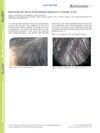
January 2018 in “Acta dermato-venereologica” A teenager's hair with alternating white and dark bands, known as Pili annulati, is a genetic condition that is usually harmless and often considered attractive.
4 citations
,
June 1990 in “Postgraduate medicine” Medication can effectively reduce hair growth and improve life quality for women with hirsutism.
 April 2025 in “Dermatology Practical & Conceptual”
 Increased LC3 gene expression may be linked to premature graying of hair.
 1 citations
,
October 2022 in “Dermatology practical & conceptual”
1 citations
,
October 2022 in “Dermatology practical & conceptual” Isolated patchy heterochromia with pili annulati can occur without other health issues.
 May 2026 in “Zenodo (CERN European Organization for Nuclear Research)”
 The polyherbal hair growth serum is a safe, effective, and natural alternative to synthetic products.
 1 citations
,
January 2023 in “International Research Journal of Ayurveda & Yoga”
1 citations
,
January 2023 in “International Research Journal of Ayurveda & Yoga” Ayurveda suggests natural treatments for premature hair greying caused by an imbalance of Pitta dosha.

New imaging tools help doctors better examine hair and scalp health without surgery.
Eclipta alba shows promise for treating hair loss.
1 citations
,
August 2010 in “Journal of dermatology” Photoepilation significantly reduces hair, and phototrichograms can objectively measure its effectiveness.
 May 2006 in “Women's Health Medicine”
 Excessive hair growth in women, often from high androgen levels, is usually caused by PCOS, and can be treated with hair removal, medication, and possibly weight loss.