23 citations
,
July 1994 in “Journal of Dermatological Science” Pili torti hair twists due to uneven outer root sheath cell development.
9 citations
,
August 2021 in “Journal of clinical medicine” Pili torti is a rare condition where hair is twisted and breaks easily, often linked to genetic disorders or other health issues.
Frizzy hair is fragile and can lead to hair loss and damage if not properly cared for.
 178 citations
,
December 2011 in “Journal of Dermatological Case Reports”
178 citations
,
December 2011 in “Journal of Dermatological Case Reports” Trichoscopy is a useful tool for diagnosing different hair and scalp diseases by their unique visual features.
 66 citations
,
February 2013 in “Pediatric Dermatology”
66 citations
,
February 2013 in “Pediatric Dermatology” Dermoscopy improves diagnosis and treatment monitoring for children's skin infections, inflammations, and hair disorders.
 3 citations
,
January 2016 in “Journal of cosmetology & trichology”
3 citations
,
January 2016 in “Journal of cosmetology & trichology” Taking vitamins, minerals, and amino acids can improve hair strength and quality in people with Monilethrix.
 1 citations
,
July 2024 in “International Journal of Dermatology Venereology and Leprosy Sciences”
1 citations
,
July 2024 in “International Journal of Dermatology Venereology and Leprosy Sciences” Cysteine strengthens hair, and glutamine fuels hair growth.
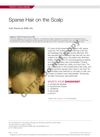
A 5-year-old girl has sparse, dry, and brittle hair but is otherwise healthy.
 January 2019 in “Global Dermatology”
 Genetic hair shaft abnormalities can be seen with microscopes and often affect scalp hair.
 January 2016 in “Elsevier eBooks”
 Trichoscopy is a key method for dermatologists to quickly and effectively diagnose hair and scalp conditions.
 November 2005 in “Journal of Investigative Dermatology Symposium Proceedings”
 The 2004 hair research meeting presented new findings on hair cell differentiation, genetic factors in hair loss, hair pigmentation, and potential targeted therapies.
 1 citations
,
May 2004 in “Journal der Deutschen Dermatologischen Gesellschaft”
1 citations
,
May 2004 in “Journal der Deutschen Dermatologischen Gesellschaft” The meeting presented new findings on hair stem cells, pigmentation, genetics, and modern hair treatment techniques.
 57 citations
,
November 1987 in “Pediatric Dermatology”
57 citations
,
November 1987 in “Pediatric Dermatology” Children's hair grows in different types from before birth through puberty, with growth rates and characteristics varying by age, sex, and race.
 5 citations
,
November 2008 in “Advances in Dermatology”
5 citations
,
November 2008 in “Advances in Dermatology” The review highlights the importance of stem cells in hair health and suggests new treatment strategies for hair loss conditions.
 November 2019 in “Harper's Textbook of Pediatric Dermatology”
 Understanding normal hair growth and loss in children is key to diagnosing and treating hair disorders.
 26 citations
,
October 2012 in “Dermatologic Clinics”
26 citations
,
October 2012 in “Dermatologic Clinics” The document details hair transplantation techniques and innovations, highlighting Follicular Unit Transplantation as the standard and discussing the effectiveness and challenges of the procedure.
 14 citations
,
September 2010 in “Annals of Plastic Surgery”
14 citations
,
September 2010 in “Annals of Plastic Surgery” Hair restoration has evolved from surgery to drugs to potential gene therapy, with improved results and ongoing research driven by high demand.
 11 citations
,
July 2008 in “Facial Plastic Surgery Clinics of North America”
11 citations
,
July 2008 in “Facial Plastic Surgery Clinics of North America” Hair restoration surgery redistributes existing hair to achieve a natural look, with visible regrowth in 3-4 months and rare complications, mostly aesthetic.
 June 2021 in “International journal of research in dermatology”
 Shaving and avoiding brushing improved the patient's beard hair condition.
 157 citations
,
June 2011
157 citations
,
June 2011 Dermatoscopy and videodermatoscopy are useful for diagnosing and monitoring various skin, hair, and nail conditions.
 99 citations
,
June 2005 in “Journal of Cosmetic Dermatology”
99 citations
,
June 2005 in “Journal of Cosmetic Dermatology” Hair ages due to genetics and environmental factors, leading to graying and thinning, with treatments available for some conditions.
 86 citations
,
August 2014 in “Journal of The American Academy of Dermatology”
86 citations
,
August 2014 in “Journal of The American Academy of Dermatology” To diagnose hair loss, use a systematic approach including history, exams, and tests.
 86 citations
,
October 2013 in “Dermatologic Clinics”
86 citations
,
October 2013 in “Dermatologic Clinics” Trichoscopy is a useful non-invasive method for diagnosing different hair loss conditions.
 69 citations
,
January 2015 in “Current problems in dermatology”
69 citations
,
January 2015 in “Current problems in dermatology” Trichoscopy is a quick, noninvasive method to diagnose hair and scalp disorders, often reducing the need for biopsies.
 69 citations
,
August 2014 in “Journal of The American Academy of Dermatology”
69 citations
,
August 2014 in “Journal of The American Academy of Dermatology” Trichoscopy is a quick, cost-effective tool for diagnosing different hair loss conditions.
 44 citations
,
January 2005 in “Dermatology”
44 citations
,
January 2005 in “Dermatology” Hair problems can be caused by genetics or the environment, and treatment should focus on the cause and reducing hair damage.
 43 citations
,
August 2013 in “Pediatric Dermatology”
43 citations
,
August 2013 in “Pediatric Dermatology” Trichoscopy is good for diagnosing and monitoring hair and scalp problems in children but needs more research for certain conditions.
 43 citations
,
January 2013 in “Indian Journal of Dermatology, Venereology and Leprology”
43 citations
,
January 2013 in “Indian Journal of Dermatology, Venereology and Leprology” The article concludes that advancements in hair cosmetics require dermatologists to stay informed about products and their potential risks, including allergies and higher risks for hairdressers.
 42 citations
,
October 2012 in “Dermatologic Clinics”
42 citations
,
October 2012 in “Dermatologic Clinics” Trichoscopy is a useful tool for diagnosing different hair and scalp diseases without surgery.
 42 citations
,
March 2006 in “Drug Discovery Today: Therapeutic Strategies”
42 citations
,
March 2006 in “Drug Discovery Today: Therapeutic Strategies” The conclusion is that we need more effective hair loss treatments than the current ones, and these could include new drugs, gene and stem cell therapy, hormones, and scalp cooling, but they all need thorough safety testing.