 1 citations
,
January 2018 in “Acta dermato-venereologica”
1 citations
,
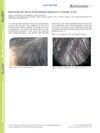
January 2018 in “Acta dermato-venereologica” A teenager's hair with alternating white and dark bands, known as Pili annulati, is a genetic condition that is usually harmless and often considered attractive.
49 citations
,
September 2004 in “Journal of the European Academy of Dermatology and Venereology” Careful light microscopy is crucial for detecting mild cases of pili annulati, which weakens hair and varies widely in expression.
36 citations
,
July 1988 in “Archives of Dermatological Research” Pili annulati is caused by a protein metabolism disorder affecting hair structure.
33 citations
,
September 1987 in “American Journal of Medical Genetics” Uncombable hair is inherited dominantly with complete penetrance.
28 citations
,
January 1985 in “Journal of the American Academy of Dermatology” A girl with citrullinemia developed pili torti, suggesting a link between the hair condition and the metabolic disorder.
23 citations
,
July 1994 in “Journal of Dermatological Science” Pili torti hair twists due to uneven outer root sheath cell development.
15 citations
,
March 1996 in “PubMed” Anorexia nervosa may cause a hair defect called pili torti due to malnutrition and high vitamin A levels.
 13 citations
,
January 2012 in “International journal of trichology”
13 citations
,
January 2012 in “International journal of trichology” The study found that hair fragility in Pili annulati may be caused by cavities and damage within the hair shafts.
9 citations
,
August 2021 in “Journal of clinical medicine” Pili torti is a rare condition where hair is twisted and breaks easily, often linked to genetic disorders or other health issues.
 9 citations
,
January 2001 in “Dermatology”
9 citations
,
January 2001 in “Dermatology” Pili anulati may cause hair loss, proper diagnosis and treatment needed.
8 citations
,
May 2005 in “The American journal of dermatopathology/American journal of dermatopathology” The hair defect is due to abnormal inner root sheath keratinization.
7 citations
,
May 1988 in “International Journal of Dermatology” The patient's hair has unique structural differences with alternating bright and dark bands.
 6 citations
,
February 2013 in “Veterinary Dermatology”
6 citations
,
February 2013 in “Veterinary Dermatology” A young cat had a rare hair condition with twisted hair shafts but stayed healthy.
5 citations
,
January 2016 in “International Journal of Trichology” Erlotinib can cause hair loss and texture changes.
 5 citations
,
March 2009 in “Pediatric Dermatology”
5 citations
,
March 2009 in “Pediatric Dermatology” The study found that pili bifurcati causes hair to intermittently split into two branches, each with its own outer layer.
5 citations
,
November 1979 in “PubMed” A hereditary condition causes hair loss and twisted hair in some family members.
 4 citations
,
January 2017 in “Annals of Dermatology”
4 citations
,
January 2017 in “Annals of Dermatology” Frequent hairdryer use may worsen hair fragility in people with Pili Annulati.
4 citations
,
November 2016 in “The Journal of Dermatology” Pili torti hair is fragile due to loose keratin filaments and weak disulfide bonds.
Genetic factors might cause fibrosing alopecia linked to hair shaft abnormalities.
2 citations
,
May 2020 in “Journal of the American Academy of Dermatology” Hair shaft changes may be linked to CCCA, but their role is unclear.
1 citations
,
August 2024 in “Pediatric Dermatology” A rare, harmless hair condition was found in an infant's eyebrow, needing no treatment.
 1 citations
,
July 2023 in “Cureus”
1 citations
,
July 2023 in “Cureus” A rare hair disorder with multiple hairs from one follicle was found on a patient's abdomen.
 1 citations
,
October 2022 in “Dermatology practical & conceptual”
1 citations
,
October 2022 in “Dermatology practical & conceptual” Isolated patchy heterochromia with pili annulati can occur without other health issues.
June 2026 in “Skin Appendage Disorders” Pili annulati may be more common than thought, so recognizing its features is important for diagnosis.
July 2025 in “Case Reports in Dermatology” Early detection and treatment are crucial to prevent irreversible hair loss in Lichen Planopilaris.
 April 2025 in “Dermatology Practical & Conceptual”
 UV-enhanced trichoscopy helps diagnose hair shaft disorders like pili annulati.
October 2024 in “Skin Research and Technology” Pili annulati causes zebra-striped hair but doesn't affect hair strength or quality of life.
 June 2024 in “Annals of Medicine and Surgery”
 A 23-year-old Syrian woman has two rare hair disorders, and avoiding hair treatments plus using vitamins and minoxidil may help.
 35 citations
,
March 2014 in “British Journal of Dermatology”
35 citations
,
March 2014 in “British Journal of Dermatology” Hair loss in male pattern baldness involves muscle degeneration and increased scalp fat.
 31 citations
,
January 2014 in “International Journal of Trichology”
31 citations
,
January 2014 in “International Journal of Trichology” The arrector pili muscle might play a role in hair loss and needs more research to understand its impact.