 January 2025 in “Dermatology and Therapy”
 UVFT helps diagnose hair and scalp diseases by showing different fluorescence patterns.
January 2013 in “Liaoning Zhongyiyao Daxue xuebao” Fresh ginger promotes hair growth in mice.
22 citations
,
September 2008 in “International Journal of Dermatology” The case suggests a possible autoimmune link between lichen sclerosus and vitiligo.
 15 citations
,
January 2003 in “Lasers in Surgery and Medicine”
15 citations
,
January 2003 in “Lasers in Surgery and Medicine” Cold air and a chilled sapphire window both protect the skin during laser treatments, and work better with water or gel, especially for darker skin.
 4 citations
,
August 2017 in “Journal of cutaneous pathology”
4 citations
,
August 2017 in “Journal of cutaneous pathology” An 8-year-old girl had a rare, benign skin tumor on her forehead.
2 citations
,
January 2022 in “Indian dermatology online journal” Dermoscopy may not show hookworms clearly, and comparing it with tissue studies could improve diagnosis accuracy for skin conditions caused by parasites.
 1 citations
,
January 2023 in “Indian Journal of Animal Research”
1 citations
,
January 2023 in “Indian Journal of Animal Research” A new method effectively stains hair samples for study without losing hair sections.
February 2025 in “International Journal of Research Publication and Reviews” Butterfly pea flower is valued for its health benefits, color-changing ability, and use in food and drinks.

A 12-year-old girl was misdiagnosed with alopecia areata but actually had a nevus sebaceus with a genetic mutation.
 January 2018 in “Skin appendage disorders”
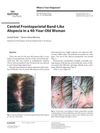
 A woman's hair loss was correctly diagnosed as Lichen planopilaris after initial misdiagnosis, highlighting the usefulness of trichoscopy in diagnosing hair disorders.
 February 2025 in “Buletin Veteriner Udayana”
 Ivermectin and sulfur effectively treated the cat's scabies and sporotrichosis in 14 days.
 September 2021 in “CRC Press eBooks”
 Pregnancy can cause normal skin changes, including darkening of certain areas, nail changes, vascular changes, and breast changes like stretch marks.
July 2025 in “Journal of Investigative Dermatology” 1 citations
,
January 2023 in “Annals of Indian Academy of Neurology” Recognizing CVG can help diagnose systemic amyloidosis early.
 January 2026 in “RIGGS Journal of Artificial Intelligence and Digital Business”
 A pomade with peppermint oil and minoxidil can effectively promote hair growth, with the best formulation having a balanced texture and stability.
 43 citations
,
November 2018 in “Nature Communications”
43 citations
,
November 2018 in “Nature Communications” Genetic variations affecting skin structure play a key role in severe acne.
39 citations
,
January 2018 in “British journal of dermatology/British journal of dermatology, Supplement” Acne and hidradenitis suppurativa have different causes and risk factors, but both are driven by inflammation and may benefit from treatments targeting interleukin-1.
 February 2026 in “International Journal of Molecular Sciences”
 Silencing SFRP1 alone promotes hair growth, but adding DKK1 does not help.
 February 2024 in “Journal of Investigative Dermatology”
 Deleting NIPP1 in mouse skin cells causes early aging and chronic skin issues.
 September 2025 in “Journal of the American Academy of Dermatology”
 Reducing SFRP1 can promote hair growth and may help treat hair loss.
 1 citations
,
April 2018 in “Journal of Investigative Dermatology”
1 citations
,
April 2018 in “Journal of Investigative Dermatology” PRC1 is essential for proper skin development and stem cell formation by controlling gene activity.
3 citations
,
April 2025 in “Science Advances” Loss of Ten1 in mice causes telomere shortening and symptoms similar to human dyskeratosis congenita.
26 citations
,
May 2007 in “Differentiation” Foxn1 helps skin cells mature by controlling a specific protein's activity.
372 citations
,
December 2004 in “Nature Genetics”  January 2025 in “PLoS ONE”
 ING5 is crucial for stem cell maintenance and preventing certain cancers.
 3 citations
,
July 2022 in “Stem Cell Research & Therapy”
3 citations
,
July 2022 in “Stem Cell Research & Therapy” Turning off a specific gene in stem cells speeds up skin healing by helping cells move better.
54 citations
,
October 2007 in “The FASEB Journal” Phospholipase C-δ1 is crucial for normal hair development.
17 citations
,
May 2013 in “Journal of Investigative Dermatology” Mutations in β1 integrins cause embryonic death but have milder effects on skin.
3 citations
,
April 2022 in “Research Square (Research Square)” PBX1 reduces aging and cell death in stem cells by boosting SIRT1 and lowering PARP1.
The scant hair in snthr-1Bao mice is likely caused by a deletion affecting the Plcd1 gene.