
New treatments for hair loss show promise, including plasma, stem cells, and hair-stimulating complexes, but more research is needed to fully understand them.
 55 citations
,
August 2008 in “Reviews in endocrine and metabolic disorders”
55 citations
,
August 2008 in “Reviews in endocrine and metabolic disorders” Nonclassic adrenal hyperplasia is a genetic condition that can cause early puberty and fertility problems, treated with specific steroids.
 27 citations
,
January 2001 in “Endocrine Practice”
27 citations
,
January 2001 in “Endocrine Practice” Finasteride cream reduces hair growth in women with hirsutism, but more research needed.
 8 citations
,
April 2016 in “Anais Brasileiros De Dermatologia”
8 citations
,
April 2016 in “Anais Brasileiros De Dermatologia” Right hand finger ratio may predict male hair loss.
 1 citations
,
July 2022 in “Case reports in endocrinology”
1 citations
,
July 2022 in “Case reports in endocrinology” A 70-year-old woman with a malignant adrenal tumor improved after surgery and radiotherapy.
 24 citations
,
May 1982 in “Biochemical Pharmacology”
24 citations
,
May 1982 in “Biochemical Pharmacology” These drugs cause hair growth without affecting testosterone or adrenal hormones.
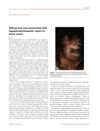 2 citations
,
February 2014 in “Journal of the European Academy of Dermatology and Venereology”
2 citations
,
February 2014 in “Journal of the European Academy of Dermatology and Venereology” High levels of prolactin in the blood can be linked to widespread hair loss.
 75 citations
,
May 1986 in “Clinics in endocrinology and metabolism”
75 citations
,
May 1986 in “Clinics in endocrinology and metabolism” Male hormones are important for hair and oil gland development and can cause conditions like excessive hair growth and acne.
 70 citations
,
February 2015 in “Expert Opinion on Drug Discovery”
70 citations
,
February 2015 in “Expert Opinion on Drug Discovery” Topical drugs and near-infrared light therapy show potential for treating alopecia.
 17 citations
,
October 2003 in “Brazilian Journal of Medical and Biological Research”
17 citations
,
October 2003 in “Brazilian Journal of Medical and Biological Research” The gene SDR5A1 is found in scalp hair of both hirsute and normal individuals, but it does not explain differences in hair growth.