 3 citations
,
August 2021 in “Journal of fiber science and technology”
3 citations
,
August 2021 in “Journal of fiber science and technology” Chitin nanofibrils are better at stabilizing oil droplets in emulsions than cellulose nanofibrils.
11 citations
,
June 2025 in “Advanced Functional Materials” The new nanosilver treatment effectively kills bacteria and speeds up wound healing with less toxicity.
13 citations
,
November 2022 in “Biomaterials Science” The microneedle patch effectively promotes hair regrowth by delivering miR-218.
 16 citations
,
January 2021 in “International Journal of Medical Sciences”
16 citations
,
January 2021 in “International Journal of Medical Sciences” Injectable gelatin microspheres with platelet-rich plasma speed up wound healing.
 January 2026 in “Biomaterials Science”
 The formulation helps improve wound healing and skin repair.
 19 citations
,
September 2020 in “Pharmaceutics”
19 citations
,
September 2020 in “Pharmaceutics” Sodium Valproate nanospanlastics could be a safe and effective treatment for Androgenic Alopecia, with fewer side effects than minoxidil.
 61 citations
,
May 2014 in “International journal of pharmaceutics”
61 citations
,
May 2014 in “International journal of pharmaceutics” Nanocrystals improve skin penetration and stability of caffeine, suggesting a new method for delivering similar substances through the skin.
 May 2026 in “Drug Delivery and Translational Research”
 Nanocarriers with spironolactone and 2-deoxy-D-ribose may improve hair loss treatment by targeting hair follicles directly.
 2 citations
,
January 2021 in “PLANT ARCHIVES”
2 citations
,
January 2021 in “PLANT ARCHIVES” Andrographolide-loaded topical nanocarriers are a safe and effective treatment for psoriasis.
January 2005 in “Life sciences” Targeting LPA could help treat skin disorders.
14 citations
,
March 2019 in “European journal of pharmaceutics and biopharmaceutics” Proretinal nanoparticles improve skin absorption and reduce irritation of topical retinoids.
 57 citations
,
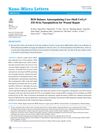
March 2024 in “Nano-Micro Letters”
57 citations
,
March 2024 in “Nano-Micro Letters” The nanoplatform helps heal wounds by balancing bacteria-killing and inflammation-reducing functions.
 March 2024 in “Bioactive Materials”
 New treatment using engineered nanovesicles in hydrogel improves hair growth by repairing hair follicle cells in a mouse model of hair loss.
 14 citations
,
August 2016 in “Journal of nanomedicine research”
14 citations
,
August 2016 in “Journal of nanomedicine research” Zinc oxide nanoparticle biscuits improved growth and health in zinc-deficient rats without toxicity.
March 2023 in “ACS Applied Materials & Interfaces” A new microneedle patch can help regrow hair over a long time.
 January 2026 in “Journal of Emerging Technologies and Innovative Research”
 Zinc oxide nanoparticles made from Tridax procumbens leaves show strong antibacterial and anticancer effects.

DOPE:DOPC liposomes can improve targeted cancer drug delivery, reducing side effects and increasing effectiveness.
3 citations
,
September 2023 in “Journal of Photochemistry and Photobiology A Chemistry”  April 2025 in “Indian Journal of Pharmaceutical Education and Research”
 Nanofibers improve skincare products by enhancing drug delivery and hydration.
August 2025 in “OPAL (Open@LaTrobe) (La Trobe University)” Machine learning optimized microneedles promote hair regrowth better than minoxidil without safety risks.
August 2025 in “Acta Biomaterialia” The new hydrogel speeds up wound healing by reducing inflammation and promoting tissue growth.
February 2025 in “BioNanoScience” March 2024 in “Journal of pharmacy & pharmaceutical sciences” Polymeric microneedles offer a less invasive, long-lasting drug delivery method that improves patient compliance and reduces side effects.
January 2026 in “BioNanoScience” February 2023 in “International Journal of Biological Macromolecules” 28 citations
,
October 2023 in “Trends in biotechnology” 30 citations
,
November 2015 in “Advanced Pharmaceutical Bulletin” Nanoethosomes can improve the skin penetration of Lidocaine for topical use.
37 citations
,
November 2020 in “International Journal of Nanomedicine” Nano-liposol with astaxanthin may improve antioxidant and wound healing effects.
 February 2026 in “International Journal of Molecular Sciences”
 PDLLA filler can improve hair thickness and shine by reducing age-related hair decline.
November 2022 in “Journal of Nanobiotechnology” The developed system could effectively treat hair loss and promote hair growth.