 1 citations
,
October 2023 in “Journal of the Pakistan Medical Association”
1 citations
,
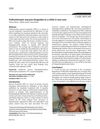
October 2023 in “Journal of the Pakistan Medical Association” Folliculotropic mycosis fungoides can occur in children and is diagnosed with specific tests, but often stays in early stages with treatment.
 1 citations
,
October 2017 in “Dermatologic Clinics”
1 citations
,
October 2017 in “Dermatologic Clinics” Men are increasingly using energy-based skin treatments for workplace success, with lasers and other devices effectively improving skin and body appearance.
 January 2026 in “Acta Dermatovenerologica Alpina Pannonica et Adriatica”
 Accurate diagnosis is crucial for effectively treating severe alopecia and related symptoms.
 May 2013 in “Springer eBooks”
 Skin problems in the elderly are unique and may indicate other diseases, involving changes in skin, hair, nails, and increased cancer risk.
 2 citations
,
July 2022 in “Pediatric dermatology”
2 citations
,
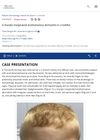
July 2022 in “Pediatric dermatology” A toddler with a rash and developmental delays improved after treatment for severe malnutrition caused by a diet lacking in protein.
4 citations
,
July 2019 in “Clinical and experimental dermatology” Early diagnosis and biotin treatment are crucial for infants with biotinidase deficiency to prevent severe complications.
 April 2021 in “International Journal of Research in Dermatology”
 A child with a rare scalp condition regrew hair after treatment.
 January 2023 in “Open journal of pediatrics”
 A 7-month-old girl with a rare skin disorder died because diagnosis was delayed.
 May 2002 in “British Journal of Dermatology”
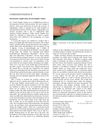
 A pregnant woman's skin condition improved after giving birth, possibly due to high estrogen levels during pregnancy.
January 2025 in “Dermatology Online Journal” The man's hair loss and skin papules were diagnosed as atrichia with papular lesions, not alopecia areata universalis.
1 citations
,
March 2013 in “Journal of Dermatological Case Reports” A rare skin condition affected only the facial hair of a 46-year-old man.
17 citations
,
March 1994 in “Pediatric Dermatology” Vitiligo and alopecia areata may share common causes.
October 2025 in “OPAL (Open@LaTrobe) (La Trobe University)” Early genetic testing and zinc therapy are crucial for managing acrodermatitis enteropathica in infants.
65 citations
,
November 2008 in “Pediatric Dermatology” Phototherapy is effective and well-tolerated for treating childhood psoriasis and pityriasis lichenoides chronica.
12 citations
,
September 2000 in “Journal of the European Academy of Dermatology and Venereology” Balneophototherapy effectively treats ichthyosis linearis circumflexa but may need ongoing treatment due to short remission.

Recognizing mild or atypical cases of ectodermal dysplasia is crucial for better treatment and future planning.
16 citations
,
August 2017 in “Lupus” Chronic cutaneous lupus erythematosus should be considered when acne treatments don't work.
 1 citations
,
January 2009
1 citations
,
January 2009 A 25-year-old Malay fireman had skin bumps on his neck that were removed successfully after other treatments failed.
 December 2022 in “The journal of pediatrics/The Journal of pediatrics”
 A young girl's foot lesion was actually a rare condition caused by a hair fragment under the skin, not a parasite.
16 citations
,
December 2006 in “Chinese Medical Journal” Early intervention and protective measures are crucial for managing CIPA due to the lack of pain and standard treatment.
 32 citations
,
April 1994 in “Journal of the American Academy of Dermatology”
32 citations
,
April 1994 in “Journal of the American Academy of Dermatology” High androgen levels and genetic factors likely cause Becker's nevus and related symptoms.
March 2024 in “International journal of molecular sciences” Three specific genetic variants cause severe skin issues in children with EBS, highlighting the need for early genetic screening.
1 citations
,
September 2017 in “BMJ” The man has a disease causing skin patches, thickened nerves, and mild muscle weakness.
3 citations
,
March 2017 in “Pediatric Dermatology” FOXN1 duplication can cause excessive hair growth.
1 citations
,
November 2003 in “SKINmed Dermatology for the Clinician” A 17-year-old with Netherton syndrome has dry, itchy skin, brittle hair, and high IgE levels, treated with antihistamines and emollients.

An infant with a zinc deficiency skin disorder improved with zinc treatment.
January 2009 in “Chinese Journal of Evidence-Based Pediatrics” Neonatal lupus symptoms usually resolve, but some children may develop other autoimmune diseases later.
 4 citations
,
October 2011 in “International Journal of Dermatology”
4 citations
,
October 2011 in “International Journal of Dermatology” Bardet-Biedl syndrome may include under-recognized skin problems related to its metabolic disturbances.
9 citations
,
June 2017 in “American journal of ophthalmology. Case reports” A new mutation in the CDH3 gene causes hair loss and vision problems in a young girl.
15 citations
,
April 1970 in “PubMed” Netherton's syndrome may have a familial link and doesn't always include atopy.