4 citations
,
January 2023 in “Journal of Clinical Investigation” Specific mutations in a receptor cause facial abnormalities and hair loss.
 3 citations
,
January 2019 in “Jikken doubutsu ihou/Jikken doubutsu/Experimental animals/Jikken Dobutsu”
3 citations
,
January 2019 in “Jikken doubutsu ihou/Jikken doubutsu/Experimental animals/Jikken Dobutsu” Pigs without the Hairless gene showed skin and thymus changes, useful for studying human hair disorders.
 2 citations
,
May 2023 in “Journal of Advanced Research”
2 citations
,
May 2023 in “Journal of Advanced Research” Two mutations in KRT74 and EDAR genes cause sheep to have finer wool.
 2 citations
,
April 2020 in “bioRxiv (Cold Spring Harbor Laboratory)”
2 citations
,
April 2020 in “bioRxiv (Cold Spring Harbor Laboratory)” MendelVar is a tool that helps identify important genes by combining GWAS data with Mendelian disease information.
 2 citations
,
November 2015 in “Actas Dermo-Sifiliográficas”
2 citations
,
November 2015 in “Actas Dermo-Sifiliográficas” Epidermal stem cells show promise for future dermatology treatments due to ongoing advancements.
 2 citations
,
April 2013 in “Expert Review of Endocrinology & Metabolism”
2 citations
,
April 2013 in “Expert Review of Endocrinology & Metabolism” Identifying nonclassic congenital adrenal hyperplasia and carriers of CYP21 mutations is challenging, and genetic counseling is recommended due to their prevalence.
 2 citations
,
November 2011 in “InTech eBooks”
2 citations
,
November 2011 in “InTech eBooks” Most adrenal cortex tumors are benign and non-secreting, but proper diagnosis and treatment are important due to the rare possibility of cancer.
1 citations
,
June 2025 in “Pigment Cell & Melanoma Research” SASH1 gene mutations are linked to various inherited skin pigmentation disorders.
 1 citations
,
July 2016 in “Elsevier eBooks”
1 citations
,
July 2016 in “Elsevier eBooks” Understanding skin structure and development helps diagnose and treat skin disorders.
 1 citations
,
February 2009 in “Journal of Investigative Dermatology”
1 citations
,
February 2009 in “Journal of Investigative Dermatology” Lipase H is important for hair follicle function and shaping hair fibers.
 1 citations
,
May 2001 in “Pharmacology & Toxicology”
1 citations
,
May 2001 in “Pharmacology & Toxicology” Cyproterone acetate may cause liver cancer at high doses, but is considered safe at recommended doses for approved uses.
MFN2 mutations cause mitochondrial problems, leading to more upper body fat and lower leptin levels.
March 2026 in “JID Innovations” Aire mutation reduces alopecia areata, while Notch4 mutation prevents it in mice.
 November 2025 in “Archiv für Pathologische Anatomie und Physiologie und für Klinische Medicin”
 Sporadic trichoblastic neoplasms generally don't recur or spread, with one case showing a specific genetic fusion.
July 2025 in “Frontiers in Medicine” Mutations in the LIPH gene cause woolly hair in a child.
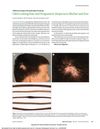 May 2014 in “JAMA Dermatology”
 Mother and son diagnosed with a rare genetic hair loss condition with no effective treatment.
 September 2023 in “Frontiers in cell and developmental biology”
 Vav2 changes how hair follicle stem cells' genes work as they age, which might improve regeneration but also raise cancer risk.
MFN2 mutations cause mitochondrial problems, unusual fat distribution, and low leptin despite high body fat.
152 citations
,
April 2002 in “The journal of investigative dermatology/Journal of investigative dermatology” A new mutation in the Connexin 26 gene was found in a patient with KID syndrome, expanding the known disorders linked to this gene.
 53 citations
,
January 2011 in “Diabetes”
53 citations
,
January 2011 in “Diabetes” People with PCNT mutations often develop severe insulin resistance and early-onset diabetes during childhood or adolescence.
 42 citations
,
April 2009 in “Human Genetics”
42 citations
,
April 2009 in “Human Genetics” A specific genetic mutation may increase male pattern baldness risk, especially in Europeans.
 35 citations
,
April 2014 in “American Journal of Medical Genetics”
35 citations
,
April 2014 in “American Journal of Medical Genetics” Boys with less severe EDA mutations in XLHED have milder symptoms and better sweat and hair production.
 32 citations
,
May 2012 in “PloS one”
32 citations
,
May 2012 in “PloS one” Thymic transplantation normalized some T-cells but not others, maintaining immune function.
22 citations
,
February 2012 in “Journal of Investigative Dermatology” A specific gene mutation causes severe skin and nail issues and hair loss.
9 citations
,
January 2014 in “Molecular Genetics and Metabolism Reports” The rhg mutation in mice affects the Oat gene, causing hair growth issues and other symptoms.
7 citations
,
August 2019 in “JAAD Case Reports” Hidradenitis suppurativa may be more severe in people with Mediterranean fever gene mutations.
5 citations
,
April 2022 in “The journal of investigative dermatology/Journal of investigative dermatology” A new therapy for a skin blistering condition has not been developed yet.
 4 citations
,
December 2020 in “Mammalian genome”
4 citations
,
December 2020 in “Mammalian genome” Harlequin mutant mice have hair loss due to low AIF protein levels and retroviral element activity.
 4 citations
,
October 2018 in “Cell Stem Cell”
4 citations
,
October 2018 in “Cell Stem Cell” Hox genes control hair growth patterns in mammals by regulating stem cell activity in the skin.
 4 citations
,
January 2014 in “International Journal of Trichology”
4 citations
,
January 2014 in “International Journal of Trichology” A 12-year-old boy with a rare genetic condition has progressive hair loss with no effective treatment.