 1 citations
,
April 2020 in “bioRxiv (Cold Spring Harbor Laboratory)”
1 citations
,
April 2020 in “bioRxiv (Cold Spring Harbor Laboratory)” Polyamines are important in deciding hair follicle stem cell behavior, affecting hair growth and loss.
 30 citations
,
July 2010 in “Experimental Dermatology”
30 citations
,
July 2010 in “Experimental Dermatology” Polyamines are important for hair growth, but more research is needed to understand their functions and treatment potential.
9 citations
,
April 2006 in “International Journal of Dermatology” DFMO may help control hair growth and treat cancer.
 14 citations
,
January 2001 in “Clinical chemistry”
14 citations
,
January 2001 in “Clinical chemistry” Hair can be used to measure cancer-related chemicals noninvasively.
26 citations
,
June 2003 in “PubMed” Alpha-difluoromethylornithine prevents cancer in mice but causes hair loss.
10 citations
,
July 1980 in “British Journal of Dermatology” Topical putrescine and spermine increased DNA synthesis in hairless mouse skin.
 47 citations
,
January 2019 in “Nature communications”
47 citations
,
January 2019 in “Nature communications” Polyamines help fix DNA damage accurately in cells.
 10 citations
,
June 2001 in “Annals of neurology”
10 citations
,
June 2001 in “Annals of neurology” Alzheimer's patients have higher levels of certain chemicals in their hair.
 September 2019 in “Journal of Investigative Dermatology”
 People with pattern hair loss have higher polyamine levels in the top of their head compared to the back.
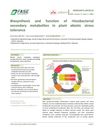 November 2025 in “Frontiers of Agricultural Science and Engineering”
 Rhizobacterial strain RT3 helps lettuce survive drought by producing protective substances like proline.
91 citations
,
July 2004 in “Journal of Biological Chemistry” Overexpressing SSAT enzyme reduces prostate tumor growth in mice.
17 citations
,
July 2013 in “Amino Acids” Increased ODC activity leads to skin tumors by recruiting stem cells, not by toxic byproducts.
124 citations
,
July 1997 in “Journal of Biological Chemistry” Overexpressing a specific enzyme in mice causes hair loss and female infertility.
8 citations
,
July 2022 in “International Journal of Molecular Sciences” 17β-estradiol lowers polyamine oxidase levels in breast cancer cells through estrogen receptor 2.
 September 2019 in “Journal of Investigative Dermatology”
 Targeted therapy with Ustekinumab significantly improved a skin condition called ILVEN, which is caused by mutations in the CARD14 gene.
July 2017 in “Cancer Research” Polyamines help repair DNA breaks and may influence cancer development.
10 citations
,
August 2013 in “Experimental Dermatology” Hairless protein and putrescine regulate each other, affecting hair growth and skin balance.
 April 2026 in “Amino Acids”
 Polyamines are crucial for skin tumor development, and inhibiting them can prevent tumors.
August 2021 in “Journal of Investigative Dermatology” Adjusting polyamine levels could help treat skin disorders like psoriasis and skin cancer.

Plant roots respond to fungus smells by possibly using certain proteins and a plant hormone to change root growth, but more research is needed.
 75 citations
,
January 2014 in “Archiv Der Pharmazie”
75 citations
,
January 2014 in “Archiv Der Pharmazie” Jasmonic acid and its derivatives play important roles in plant health and have potential uses in medicine and agriculture.
 6 citations
,
January 2016 in “Bioorganic & Medicinal Chemistry Letters”
6 citations
,
January 2016 in “Bioorganic & Medicinal Chemistry Letters” Some minoxidil combinations can help differentiate leukemia cells without harming other cells.
 3 citations
,
March 2021 in “Metabolites”
3 citations
,
March 2021 in “Metabolites” Hair loss causes differ between men and women due to changes in hormone levels and inflammation-related pathways.
54 citations
,
May 2001 in “Journal of Investigative Dermatology” Excessive putrescine causes hair loss in transgenic mice by disrupting hair follicle development.
 1 citations
,
August 2022 in “BMC Plant Biology”
1 citations
,
August 2022 in “BMC Plant Biology” Melatonin helps broccoli roots produce anti-cancer compounds by controlling nitric oxide and hydrogen peroxide levels.
52 citations
,
May 1997 in “Journal of Biological Chemistry” High ornithine decarboxylase levels may lead to hair loss and cancer by increasing CK2 activity in the nucleus.
1 citations
,
January 2009 in “Elsevier eBooks” Using Eflornithine cream with laser treatments improves facial hair removal.
305 citations
,
March 2008 in “AJP Endocrinology and Metabolism” SSAT is a key enzyme affecting cell growth and metabolism, with potential but risky use in disease treatment.
128 citations
,
December 2006 in “Journal of Biological Chemistry” Altering SSAT affects fat metabolism and body fat in mice.
37 citations
,
February 2005 in “Journal of Investigative Dermatology” Overexpression of SSAT causes hair loss and skin issues, but reducing putrescine can help.