4 citations
,
April 2019 in “JAAD Case Reports” DPR can cause skin, hair, and nail issues, sometimes appearing later in life.
 April 2016 in “Journal of Investigative Dermatology”
 Microneedle arrays deliver botulinum toxin effectively for sweat suppression, similar to injections.
October 2022 in “Amplla Editora eBooks” Deep Brain Stimulation helps manage Parkinson's symptoms when medication isn't enough.
64 citations
,
March 2008 in “Neuropsychopharmacology” January 2017 in “Corpus Université Laval (Université Laval)” Dutasteride may protect brain cells in early Parkinson's, while progesterone helps neuron recovery.
 May 2026 in “Frontiers in Pharmacology”
 Dendrobium officinale polysaccharide helps hair regrowth in hair loss mice by affecting local steroid metabolism and hair follicle responses.
13 citations
,
July 2016 in “Indian Journal of Dermatology” DPR can show different hair characteristics, as seen in two brothers with normal hair.
37 citations
,
January 1986 in “Carcinogenesis” ODC expression in mouse skin and tumors is varied and can be inhibited by retinoic acid or cycloheximide.
31 citations
,
November 1991 in “Brain Research” Aδ-LTMRs have complex synapses with glycine, while Aβ-LTMRs have simpler ones.
 15 citations
,
June 2019 in “Journal of Neuroendocrinology”
15 citations
,
June 2019 in “Journal of Neuroendocrinology” Isoallopregnanolone may be a safe and effective treatment for reducing tics in a mouse model of Tourette syndrome.
8 citations
,
March 2015 in “Molecular Medicine Reports” Hair dye ingredient PPD causes cell death and aging in human hair cells by altering microRNA levels.
8 citations
,
January 2024 in “Medical Principles and Practice” IGFBP5 may be a potential target for Parkinson's treatment by reducing neuron death.
 64 citations
,
January 2002 in “American Journal of Clinical Dermatology”
64 citations
,
January 2002 in “American Journal of Clinical Dermatology” Some patients taking antipsychotic medications experience skin reactions, ranging from mild to severe.
 March 2024 in “Biochimica et biophysica acta. Molecular basis of disease”
 Deferoxamine may help protect inner ear cells from damage caused by oxidative stress.
50 citations
,
December 2017 in “Nanoscale” Polymeric micelle nanocarriers deliver adapalene more effectively to hair follicles than commercial products.
 June 2023 in “International Journal of Research in Medical Sciences”
 Two brothers from Bangladesh were diagnosed with X-linked adrenoleukodystrophy, showing neurological and adrenal symptoms.
124 citations
,
November 2000 in “The journal of investigative dermatology/Journal of investigative dermatology” PAD3 plays a key role in hair and skin protein structure and may be linked to skin diseases.
18 citations
,
September 1972 in “British Journal of Pharmacology” PCPA induces hypersexual behavior in male rats regardless of age or castration status.
May 2025 in “Biomedicine & Pharmacotherapy” Hyperbranched polymer dots significantly boost hair regrowth better than minoxidil.
1 citations
,
June 2015 in “Journal of anatomy” A compound named ZCZ90 can increase muscle spindle firing, potentially helping treat muscle spasms and hypertension.
1 citations
,
September 2024 in “Journal of the American Academy of Dermatology” Farudodstat may effectively treat alopecia areata without harmful side effects.
198 citations
,
June 2013 in “Molecular psychiatry” Schizophrenia patients' stem cells show abnormal neuron development and mitochondrial issues.
41 citations
,
July 2018 in “Frontiers in Neurology” Myotonic dystrophy may be classified as a segmental progeroid disorder.
A new genetic mutation was found causing hair and eye issues in a boy.
 115 citations
,
October 2009 in “The Journal of clinical endocrinology and metabolism/Journal of clinical endocrinology & metabolism”
115 citations
,
October 2009 in “The Journal of clinical endocrinology and metabolism/Journal of clinical endocrinology & metabolism” The research found that Atypical Progeroid Syndrome has unique symptoms and is not caused by the buildup of a certain mutant protein.
1 citations
,
December 2024 in “Journal of Orthopaedic Research®” Aromoline and DRD4 are potential targets for osteoarthritis treatment.
1 citations
,
September 2017 in “BMJ” The man has a disease causing skin patches, thickened nerves, and mild muscle weakness.
 9 citations
,
July 2010 in “British Journal of Dermatology”
9 citations
,
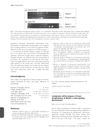
July 2010 in “British Journal of Dermatology” The document suggests a rare skin condition might be caused by a genetic phenomenon.
17 citations
,
May 2007 in “Forensic Science Medicine and Pathology” Clozapine levels in hair reflect dosage and bind more to pigmented hair.
16 citations
,
May 2020 in “Psychoneuroendocrinology” People with Parkinson's disease have higher levels of cortisone in their hair, which may indicate chronic stress hormone dysfunction.