2 citations
,
October 2016 in “OPAL (Open@LaTrobe) (La Trobe University)” The Swedish neonatal screening program effectively detects PKU, galactosaemia, and biotinidase deficiency with low false positives.
 June 2023 in “GSC Advanced Research and Reviews”
 Hutchinson-Gilford Progeria Syndrome causes rapid aging from a genetic mutation, with no cure but ongoing research into potential treatments.
1 citations
,
April 2018 in “Journal of Investigative Dermatology” The Trichodysplasia spinulosa virus protein can cause abnormal hair growth in mice.
 February 2026 in “Frontiers in Medicine”
 Personalized sonidegib dosing can effectively treat Gorlin-Goltz syndrome with fewer side effects.
7 citations
,
August 2017 in “European journal of endocrinology” Mutations in the POC1A gene can cause a unique form of extreme insulin resistance and short stature.
8 citations
,
June 1981 in “Clinica Chimica Acta” 55 citations
,
August 2013 in “PloS one” Genetic differences between young and old Tan sheep explain why their fleece changes from curly to straight as they age.
 11 citations
,
March 2013 in “Gene”
11 citations
,
March 2013 in “Gene” A certain genetic variation in the IL1A gene may lower the risk of a hair loss condition in Chinese people.
18 citations
,
July 2006 in “British Journal of Dermatology” Connexin 30 is usually absent in normal skin but can appear in certain skin conditions.
 2 citations
,
October 1990 in “The Lancet”
2 citations
,
October 1990 in “The Lancet” Some people have a genetic variation that makes them less effective at breaking down drugs.
8 citations
,
July 2015 in “Molecular cytogenetics” A complex X chromosome rearrangement can increase the risk of multiple autoimmune diseases.
January 2026 in “Molecules” A new perming method is less damaging to hair and works as well as traditional methods.
 181 citations
,
January 2009 in “Nature Genetics”
181 citations
,
January 2009 in “Nature Genetics” Certain mutations in a hair growth-related gene cause a type of genetic hair loss.
22 citations
,
January 1990 2 citations
,
December 2013 in “Journal of dermatology” A specific gene mutation causes a rare hair loss condition in a Chinese patient.
1 citations
,
February 2025 in “Journal of the Neurological Sciences” Beta-trace protein may help diagnose and predict treatment response in certain nerve disorders.
 November 2024 in “NeoReviews”
 Pallister-Killian Syndrome is a complex genetic disorder requiring coordinated care and genetic counseling.
2 citations
,
May 2021 in “Neuropathology & applied neurobiology/Neuropathology and applied neurobiology” Correct diagnosis and treatment are crucial for effective management of lipid storage myopathies.
1 citations
,
October 2020 in “Research Square (Research Square)” A genetic variant in goats is linked to cashmere growth.
 21 citations
,
January 2018 in “PLoS Genetics”
21 citations
,
January 2018 in “PLoS Genetics” Certain genetic variants in keratins increase the risk of tooth decay.
 6 citations
,
August 2012 in “The Journal of Pediatrics”
6 citations
,
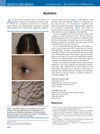
August 2012 in “The Journal of Pediatrics” A 12-year-old girl was diagnosed with monilethrix, a genetic condition causing fragile, beaded hair that breaks easily, with no effective treatment available.
21 citations
,
June 2009 in “Mammalian genome” A new mutation in the Hr gene causes hair loss in mice, similar to a human hair disorder.
 12 citations
,
July 2021 in “Scientific Reports”
12 citations
,
July 2021 in “Scientific Reports” Glutamic acid helps increase hair growth in mice.
10 citations
,
June 2021 in “Journal of Investigative Dermatology”  5 citations
,
January 2016 in “Genetics and molecular research”
5 citations
,
January 2016 in “Genetics and molecular research” Certain genetic variations in the A2M gene are linked to better milk quality in Murrah buffaloes.
11 citations
,
December 2013 in “Clinical and experimental dermatology” A child with skin and heart issues had rare genetic mutations affecting skin and heart cell cohesion.
 16 citations
,
January 2010 in “American Journal of Neuroradiology”
16 citations
,
January 2010 in “American Journal of Neuroradiology” Specific brain and bone imaging findings can help diagnose Trichothiodystrophy.
3 citations
,
December 2021 in “Proteins” Wool fiber curliness is linked to the presence of certain proteins and K38.
10 citations
,
July 1980 in “British Journal of Dermatology” Topical putrescine and spermine increased DNA synthesis in hairless mouse skin.
33 citations
,
February 2012 in “British Journal of Dermatology” Mutations in the p63 gene affect skin adhesion, barrier integrity, and hair growth.