 6 citations
,
January 2000 in “Dermatology”
6 citations
,
January 2000 in “Dermatology” A girl's severely tangled hair couldn't be fixed and had to be cut due to a rare condition called plica neuropathica.
January 2019 in “Elsevier eBooks” Pustules are pus-filled bumps often seen in skin conditions like acne and infections.
40 citations
,
July 2008 in “PROTEOMICS” A new model helps study acne and test treatments.
 June 2022 in “Indian Dermatology Online Journal”
 A man with total hair loss developed blackhead-like spots on his scalp, possibly because no hair was present to help drain oils.
 May 2024 in “Indian Journal of Dermatology”
 The woman has a rare skin condition called follicular Dowling-Degos disease, which has limited treatment options.
 47 citations
,
January 2015 in “Dermatology”
47 citations
,
January 2015 in “Dermatology” The best way to treat acne is to prevent healthy skin glands from turning into acne lesions by controlling the triggers early on.
 3 citations
,
December 2019 in “International Journal of Pharmacology”
3 citations
,
December 2019 in “International Journal of Pharmacology” The ethanol extract of Poria cocos helps skin cells to grow.
10 citations
,
January 1925 in “Archives of Dermatology” Trichostasis spinulosa is a rare skin condition with hair-filled plugs in hair follicles.
18 citations
,
October 2024 in “Medical Science Monitor” Improving skin barrier function is crucial for better acne treatment.
April 2024 in “JURNAL ILMU KEFARMASIAN INDONESIA” The mud mask with 22.5% kaolin and pomegranate peel extract worked best.
 January 2021 in “Nasza Dermatologia Online”
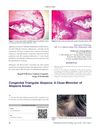
 Plica polonica is a rare condition where hair becomes irreversibly tangled, and the treatment is to cut the matted hair.
 13 citations
,
January 2011 in “International Journal of Trichology”
13 citations
,
January 2011 in “International Journal of Trichology” CTA is often mistaken for AA but doesn't respond to steroids and may require hair transplantation.
 August 2019 in “Journal of Investigative Dermatology”
 The study found that tight junctions reach the top layer of the skin's stratum granulosum, not just the second top layer as previously thought.
98 citations
,
July 1968 in “Archives of Dermatology” Human sebum can cause acne by clogging pores.
September 2019 in “Journal of Investigative Dermatology” EGFR and MEK inhibitors reduce PD-L1 in hair follicles, possibly causing inflammation.
6 citations
,
August 2024 in “The Journal of Dermatology” Ozenoxacin reduces sebum production, helping manage acne.
11 citations
,
November 1996 in “Pediatric dermatology” Trichostasis spinulosa can look like acne but usually affects adults, not children.
 3 citations
,
July 2024 in “Frontiers in Pharmacology”
3 citations
,
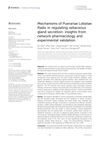
July 2024 in “Frontiers in Pharmacology” Puerariae Lobatae Radix can reduce sebaceous gland size and secretion, potentially treating related skin conditions.
January 2025 in “SSRN Electronic Journal” 19 citations
,
January 2020 in “Journal of Biophotonics” A PEG-400/oleic acid mixture best improves drug delivery monitoring through hair follicles.
January 2020 in “Korean journal of ophthalmology/Korean Journal of Ophthalmology” Minoxidil increases cell layer permeability by reducing tight junction proteins and raising ROS levels.
6 citations
,
April 2013 in “British Journal of Dermatology” Hidradenitis suppurativa is likely caused by blocked hair follicles, not apocrine glands.
 1 citations
,
May 2023 in “Curēus”
1 citations
,
May 2023 in “Curēus” A man had a benign pilar cyst on his face, which is rare and was successfully removed by surgery.
 2 citations
,
May 2015 in “PloS one”
2 citations
,
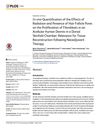
May 2015 in “PloS one” Hair follicle pores help cell survival and growth, even after radiation.
 17 citations
,
February 2015 in “Phytochemistry Reviews”
17 citations
,
February 2015 in “Phytochemistry Reviews” Southeast Asian herbs show promise for skin and hair care, but more research is needed to confirm their effectiveness in cosmetics.
 9 citations
,
July 2001 in “Cell”
9 citations
,
July 2001 in “Cell” Cells from certain embryo parts can induce head formation in another embryo, involving complex signaling pathways.
 November 2025 in “Journal of Skin and Sexually Transmitted Diseases”
 Trichofolliculoma was found in a person with amniotic band syndrome for the first time.
 November 2023 in “International journal of biology, pharmacy and allied sciences”
 Banana plants have many health benefits, but more research is needed to confirm them.
 January 1994 in “Nihon Chikusan Gakkaiho”
 Collagen fibrils in mink skin change structure during hair growth, becoming looser and thicker in the active phase.
29 citations
,
January 2016 in “Experimental Dermatology” Mechanical stress may cause lesions in Hidradenitis suppurativa.