44 citations
,
January 1999 in “Dermatology” Nevus comedonicus is a rare skin condition with grouped open pores, sometimes linked to other body issues.
5 citations
,
March 1943 in “Archives of Dermatology and Syphilology” A rare case of severe scalp hair loss and nail issues in keratosis follicularis was observed.
8 citations
,
April 2014 in “Clinical and Experimental Dermatology” Eruptive vellus hair cysts likely originate from the infrainfundibulum and sebaceous duct.
13 citations
,
November 1985 in “International Journal of Dermatology” The study found clear differences in lesion distribution and microscopic features among trichostasis spinulosa, keratosis pilaris, and eruptive vellus hair cysts.
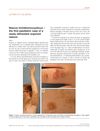 8 citations
,
April 2010 in “JEADV. Journal of the European Academy of Dermatology and Venereology/Journal of the European Academy of Dermatology and Venereology”
8 citations
,
April 2010 in “JEADV. Journal of the European Academy of Dermatology and Venereology/Journal of the European Academy of Dermatology and Venereology” The first pediatric case of naevus trichilemmocysticus was documented.
January 2006 in “International water power & dam construction” Nevus comedonicus can appear later in life and affect both eyelids.
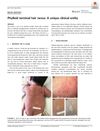 August 2018 in “Pediatric Dermatology”
 A baby had a unique skin condition with a pale patch and surrounding dark hairs, not linked to other health issues.
January 2026 in “JDDG Journal der Deutschen Dermatologischen Gesellschaft” A 5-year-old boy has Nevus Comedonicus Syndrome, causing skin lesions and a cataract.
175 citations
,
September 1998 in “British Journal of Dermatology” Keratin 17 gene mutations cause both steatocystoma multiplex and pachyonychia congenita type 2.
10 citations
,
July 2001 in “PubMed” A new type of pachyonychia congenita may exist, caused by a different keratin mutation.
 September 2022 in “JAAD case reports”
 The man has a genetic skin condition called pachyonychia congenita.
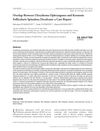 1 citations
,
September 2015 in “Serbian Journal of Dermatology and Venereology/Serbian Journal of Dermatology and Venerology”
1 citations
,
September 2015 in “Serbian Journal of Dermatology and Venereology/Serbian Journal of Dermatology and Venerology” A 19-year-old male had two rare skin conditions causing scarring and permanent hair loss.
12 citations
,
January 2000 in “Journal of cutaneous medicine and surgery” Microorganism overgrowth and hyperkeratosis may trigger immune reactions causing lichen planopilaris.
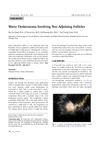 10 citations
,
January 2011 in “Annals of Dermatology”
10 citations
,
January 2011 in “Annals of Dermatology” A rare scalp tumor involving two hair follicles was successfully removed with surgery, with no recurrence after 7 months.
17 citations
,
July 1984 in “British journal of dermatology/British journal of dermatology, Supplement” The four patients have a unique type of ichthyosis affecting hair follicles.
5 citations
,
February 2005 in “Journal of the American Academy of Dermatology” Focal palmoplantar callosities may help diagnose non-Herlitz junctional epidermolysis bullosa.
12 citations
,
November 2011 in “Pediatric dermatology” A 16-year-old boy had a rare case of Becker's nevus on his face and mouth.
30 citations
,
January 1999 in “Journal of Cutaneous Pathology” Spiny keratoderma may be ectopic hair formation on palms and soles.
Spiny keratoderma is a rare skin condition with small spines on palms and soles, possibly linked to abnormal hair formation.
 February 2026 in “Journal of Cutaneous and Aesthetic Surgery”
 Ectopic acanthosis nigricans can occur at surgical sites due to skin graft mismatches.
April 1977 in “Pediatric Research”  May 2020 in “JOJ Dermatology & Cosmetics”
 A rare skin condition usually on the face was found on a man's heel.
2 citations
,
March 1994 in “Oncology Reports” Keratoacanthomas and squamous cell carcinomas have similar keratin patterns, making them hard to tell apart.
1 citations
,
April 2011 in “Clinical Kidney Journal” A benign skin tumor grew quickly in a dialysis patient and was surgically removed.
 September 2023 in “Curēus”
 A 21-year-old male has a benign skin condition called Becker's nevus, which he chose not to treat.
22 citations
,
February 2012 in “Journal of Investigative Dermatology” A specific gene mutation causes severe skin and nail issues and hair loss.
 March 2026 in “Scientific Journal”
 Early recognition and evaluation of nevus sebaceus are crucial to detect and manage potential cancerous changes.
 1 citations
,
January 2009
1 citations
,
January 2009 A 25-year-old Malay fireman had skin bumps on his neck that were removed successfully after other treatments failed.
September 2016 in “Journal of Dermatological Science” Polarizing light microscopy can easily and reliably diagnose congenital keratinizing disorders like Netherton syndrome.
 February 2020 in “Definitions”
 Mutations in the KRT16 gene can cause skin and nail disorders.