 8 citations
,
April 2019 in “ACS Biomaterials Science & Engineering”
8 citations
,
April 2019 in “ACS Biomaterials Science & Engineering” The new SIS-PEG sponge is a promising material for skin regeneration and hair growth.
 6 citations
,
December 2022 in “Colloids and Surfaces B: Biointerfaces”
6 citations
,
December 2022 in “Colloids and Surfaces B: Biointerfaces” The new wound dressing promotes cell growth and healing, absorbs wound fluids well, and is biocompatible.
 January 2024 in “Journal of chemical health risks”
 Gold nanoparticles show promise for treating inflammatory bowel disease by reducing inflammation and colon injury.
 140 citations
,
August 2011 in “Biomaterials”
140 citations
,
August 2011 in “Biomaterials” Keratose, derived from human hair, is a non-toxic biomaterial good for tissue regeneration and integrates well with body tissues.
78 citations
,
February 2024 in “ACS Omega” The scaffold is a promising material for wound healing and tissue engineering.
71 citations
,
September 2013 in “Materials Science and Engineering C” Keratin-based hydrogels from human hair and wool are promising for wound dressings and are more eco-friendly.
61 citations
,
September 2024 in “Micromachines” Electrospun nanofiber membranes are promising for non-invasive medical uses like tissue repair and health monitoring.
60 citations
,
February 2014 in “Tissue Engineering Part A” Microporous scaffolds speed up skin healing and regeneration.
31 citations
,
March 2023 in “BioFactors” Curcumin nanoformulations improve wound healing by enhancing its effectiveness and sustained release.
28 citations
,
September 2023 in “International Journal of Biological Macromolecules” The new dressing speeds up wound healing better than current options.
15 citations
,
April 2021 in “International Journal of Pharmaceutics” Smaller mesoporous nanoparticles can improve the effectiveness of topical drugs by penetrating skin furrows.
 3 citations
,
March 2024 in “Discover Applied Sciences”
3 citations
,
March 2024 in “Discover Applied Sciences” Spirulina proteins can improve hair smoothness and strength in hair care products.
2 citations
,
April 2022 in “bioRxiv (Cold Spring Harbor Laboratory)” The modified Isabgol dressing effectively heals wounds by preventing infections and maintaining moisture.
 April 2025 in “Indian Journal of Pharmaceutical Education and Research”
 Nanofibers improve skincare products by enhancing drug delivery and hydration.
 June 2024 in “Advanced therapeutics”
 The new hydrogel dressing effectively kills bacteria and helps wounds heal faster with hair regrowth.
 June 2024 in “International journal of biological macromolecules”
 The hydrogel effectively stops bleeding and heals diabetic wounds quickly.
January 2024 in “Journal of chemical health risks” The bio-patch promotes faster, scarless wound healing.

The research shows how certain drugs can form stable structures with polymers, which is important for making new pharmaceuticals.
 September 2023 in “Journal of Fluid Mechanics”
 The homogenization theory effectively describes how flow behaves differently across asymmetric membranes.
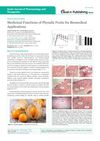 May 2021 in “Austin journal of pharmacology and therapeutics”
 Physalis fruits have medicinal properties that can help treat various diseases and have anti-inflammatory, antioxidant, antibacterial, and antitumor effects.
research Hair
January 1983 in “Elsevier eBooks” Hair grows from living roots, is made of dead keratin, and goes through growth, rest, and shedding stages.
5 citations
,
January 1991 in “Drugs of The Future” January 2022 in “Drugs of Today”  39 citations
,
November 2016 in “Pharmaceutics”
39 citations
,
November 2016 in “Pharmaceutics” The hair follicle pathway significantly affects how easily water-loving chemicals pass through the skin.
10 citations
,
December 2001 in “PubMed” The conclusion is that substances can penetrate hair fibers through multiple pathways, including both the cell membrane complex and the non-keratinous parts.
 5 citations
,
October 2014 in “Methods”
5 citations
,
October 2014 in “Methods” The document explains how to create detailed biological pathways using genomic data and tools, with examples of hair and breast development.
106 citations
,
June 1990 in “Journal of Investigative Dermatology” 47 citations
,
January 2003 in “Pharmaceutical Research”  February 2024 in “Pharmaceutical research”
 Hair follicles affect how well small molecules can pass through the skin, and this varies depending on the molecule's features.
48 citations
,
May 2002 in “Journal of Anatomy” VEGFs increase blood vessel permeability, especially in diseases like cancer and heart disease.