 March 2022 in “Journal of Clinical Case Studies Reviews & Reports”
 COVID-19 can cause or worsen skin conditions and might show early signs of infection.
 March 2022 in “Journal of clinical case studies reviews & reports”
 COVID-19 can cause different skin issues, including rashes and hair loss.

COVID-19 pneumonia may cause lasting lung damage like fibrosis.
 9 citations
,
May 2021 in “Dermatologic Therapy”
9 citations
,
May 2021 in “Dermatologic Therapy” Possible link between androgens and COVID-19 severity; more research needed.
 34 citations
,
September 2020 in “BMC Endocrine Disorders”
34 citations
,
September 2020 in “BMC Endocrine Disorders” Existing drug dexamethasone may lower death risk in severe COVID-19 cases; more research needed for other drugs.
 April 2023 in “Research Square (Research Square)”
 Many healthcare workers who had Covid-19 suffer from long-term symptoms like hair loss and fatigue, especially women.
 123 citations
,
May 2020 in “Drug Development Research”
123 citations
,
May 2020 in “Drug Development Research” Men's sensitivity to male hormones might affect how severe COVID-19 gets for them.
 October 2022 in “Journal of experimental and clinical medicine”
 Repurposing existing drugs for COVID-19 shows promise but requires more research to confirm effectiveness.
 January 2022 in “Revista Dermatológica Centro Uraga”
 Herpes zoster can occur with COVID-19 even in healthy individuals.
 November 2023 in “Advances and Applications in Statistics”
 AI can effectively predict COVID-19 mortality risk using patient data.
 February 2025 in “Physician s Journal of Medicine”
 Recognizing skin symptoms can help diagnose and manage COVID-19.
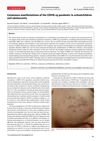 January 2023 in “Acta dermatovenerologica Alpina, Pannonica et Adriatica (Tiskana izd.)”
 The article concludes that schoolchildren and adolescents experienced various skin issues during the COVID-19 pandemic, including acne from masks and other skin reactions from the virus and vaccines.
 5 citations
,
November 2021 in “History & Philosophy of the Life Sciences”
5 citations
,
November 2021 in “History & Philosophy of the Life Sciences” Racial minorities faced more Covid-19 blame due to anti-fatness and structural racism.
 8 citations
,
June 2021 in “Journal of Cosmetic Dermatology”
8 citations
,
June 2021 in “Journal of Cosmetic Dermatology” The review found that COVID-19 can cause skin problems, including rashes and issues from wearing PPE, and suggests more research and protective measures for healthcare workers.
 July 2022 in “International Journal of Research in Dermatology”
 Some children with COVID-19 develop skin symptoms linked to a severe inflammatory condition.
 26 citations
,
September 2020 in “Journal of the European Academy of Dermatology and Venereology”
26 citations
,
September 2020 in “Journal of the European Academy of Dermatology and Venereology” A certain genetic variant in the androgen receptor may predict the severity of COVID-19 in men.
 10 citations
,
May 2020 in “bioRxiv (Cold Spring Harbor Laboratory)”
10 citations
,
May 2020 in “bioRxiv (Cold Spring Harbor Laboratory)” Hispanics in Northern Nevada had more COVID-19 cases but lower mortality than non-Hispanics.
 8 citations
,
February 2021 in “Cureus”
8 citations
,
February 2021 in “Cureus” Hispanic individuals in Northern Nevada were more affected by COVID-19 but had lower mortality rates than non-Hispanics.
 March 2024 in “World Journal Of Advanced Research and Reviews”
 Educators who survived COVID-19 faced physical, psychological, and social challenges but overcame them with resilience and support, highlighting the need for schools to provide better health and psychological care.
 125 citations
,
August 2020 in “Frontiers in Immunology”
125 citations
,
August 2020 in “Frontiers in Immunology” Men generally have more severe COVID-19 cases and higher death rates than women due to biological differences.
 65 citations
,
June 2021 in “Frontiers in Pharmacology”
65 citations
,
June 2021 in “Frontiers in Pharmacology” Targeting abnormal lung fluid metabolism could reduce COVID-19 deaths and ventilator use.
 42 citations
,
April 2021 in “Journal of clinical pharmacology”
42 citations
,
April 2021 in “Journal of clinical pharmacology” Baricitinib helps treat several diseases, including COVID-19, but has side effects and needs careful monitoring.
 4 citations
,
May 2020 in “bioRxiv (Cold Spring Harbor Laboratory)”
4 citations
,
May 2020 in “bioRxiv (Cold Spring Harbor Laboratory)” Migrants from certain regions had a higher risk of COVID-19 than Spaniards.
 November 2025 in “Journal of Laboratory Medicine”
 Chronic stress increased after lockdown, especially in young adults and females.
Hit15 shows promise as a COVID-19 treatment by reducing virus infection and inflammation.
 April 2021 in “Journal of Investigative Dermatology”
 Female authorship in dermatology publications increased during the COVID-19 pandemic, but women are still underrepresented in senior roles.
 November 2022 in “Journal of Pharmaceutical Negative Results”
 Vaccination is crucial for managing Covid-19 despite new virus strains.

Quality of life improved after COVID-19, but ongoing health support is needed.

Social media data can help track and predict COVID-19 symptoms and trends.
 21 citations
,
February 2021 in “BMJ case reports”
21 citations
,
February 2021 in “BMJ case reports” Anabolic steroid users may face higher risk of severe COVID-19.