 47 citations
,
February 2015 in “European Journal of Clinical Investigation”
47 citations
,
February 2015 in “European Journal of Clinical Investigation” The review suggests thorough evaluation and genetic testing for proper diagnosis and treatment of Chrousos syndrome.
Survivors of severe COVID-19 need ongoing care to manage lasting health issues.
 31 citations
,
August 2020 in “EClinicalMedicine”
31 citations
,
August 2020 in “EClinicalMedicine” Male cancer patients have a higher risk of severe illness and death from COVID-19 than female patients.
 12 citations
,
January 2022 in “Journal of Menopausal Medicine”
12 citations
,
January 2022 in “Journal of Menopausal Medicine” Careful medical care is needed for those over 50 on hormone therapy during COVID-19.
 8 citations
,
June 2021 in “Journal of Cosmetic Dermatology”
8 citations
,
June 2021 in “Journal of Cosmetic Dermatology” The review found that COVID-19 can cause skin problems, including rashes and issues from wearing PPE, and suggests more research and protective measures for healthcare workers.
 November 2022 in “Journal of Pharmaceutical Negative Results”
 Vaccination is crucial for managing Covid-19 despite new virus strains.
 71 citations
,
April 2020 in “Journal of Cosmetic Dermatology”
71 citations
,
April 2020 in “Journal of Cosmetic Dermatology” Genetic differences may affect COVID-19 deaths; anti-androgens could be potential treatment.
 14 citations
,
April 2021 in “Frontiers in Psychiatry”
14 citations
,
April 2021 in “Frontiers in Psychiatry” Overall alcohol consumption decreased during lockdown, but heavy drinkers consumed more.
 2 citations
,
January 2025 in “Dermatology Practical & Conceptual”
2 citations
,
January 2025 in “Dermatology Practical & Conceptual” Nailfold dermoscopy is a simple, cheap way to check blood vessel changes in COVID-19 patients.
 February 2025 in “Physician s Journal of Medicine”
 Recognizing skin symptoms can help diagnose and manage COVID-19.
 January 2024 in “International Journal of Biology Sciences”
 Targeted interventions based on gender, education, and age can improve COVID-19 healthcare responses.
 January 2024 in “Wiadomości Lekarskie”
 A multidisciplinary approach is crucial for managing Silver-Russell syndrome effectively.
 September 2022 in “Revista de la Asociación Colombiana de Dermatología y Cirugía Dermatológica”
 Skin symptoms appear in up to 20% of Covid-19 cases.
 June 2021 in “Current Research in Diabetes & Obesity Journal”
 Effective pre- and post-operative care is crucial for better outcomes in sleeve gastrectomy patients.

Lower LDL-c levels predict higher COVID-19 mortality.
 3 citations
,
September 2022 in “Frontiers in psychiatry”
3 citations
,
September 2022 in “Frontiers in psychiatry” University students in Egypt experienced high stress during COVID-19's third wave, with negative coping mechanisms being more common.
 2 citations
,
January 2021 in “Signa Vitae”
2 citations
,
January 2021 in “Signa Vitae” Certain symptoms and patient profiles, like thoracic pain and general malaise, increase the risk of COVID-19 patients being readmitted to the emergency department.
 70 citations
,
July 2020 in “Pharmacological Reports”
70 citations
,
July 2020 in “Pharmacological Reports” Cepharanthine, a Japanese hair loss drug, shows promise as a COVID-19 treatment but needs more testing.
 21 citations
,
February 2021 in “BMJ case reports”
21 citations
,
February 2021 in “BMJ case reports” Anabolic steroid users may face higher risk of severe COVID-19.
 5 citations
,
July 2021 in “bioRxiv (Cold Spring Harbor Laboratory)”
5 citations
,
July 2021 in “bioRxiv (Cold Spring Harbor Laboratory)” Completing a 14-day proxalutamide treatment significantly lowers death rates in hospitalized COVID-19 patients.
 September 2022 in “Ciencia Unemi”
 More clinical trials are needed to confirm if plant-based products can effectively treat COVID-19.
Sex hormones likely did not affect COVID-19 outcomes in South Korea.
 54 citations
,
October 2019 in “Cochrane library”
54 citations
,
October 2019 in “Cochrane library” Some drugs may reduce prostatitis symptoms short-term with few side effects.
 8 citations
,
September 2021 in “bioRxiv (Cold Spring Harbor Laboratory)”
8 citations
,
September 2021 in “bioRxiv (Cold Spring Harbor Laboratory)” Women, younger age, and low BMI increase the risk of long COVID symptoms.
 January 2024 in “Hypertension research”
 More research is needed to understand sex and racial differences in long COVID.
 3 citations
,
January 2025 in “Scientific Reports”
3 citations
,
January 2025 in “Scientific Reports” Cepharanthine is safe but not effective in significantly reducing COVID-19 recovery time.
 September 2020 in “arXiv (Cornell University)”
 Some existing drugs and natural products might work against COVID-19 by targeting the virus's main protease.
 1 citations
,
May 2022 in “Голова и шея.”
1 citations
,
May 2022 in “Голова и шея.” Physical activity increased, but sedentary behavior also rose, especially in men.
 January 2025 in “Universidad de Córdoba Insitutional Repository (Universidad de Córdoba)”
 An imbalanced scalp microbiome may worsen alopecia areata severity and inflammation, but treatment can partially restore balance.
 32 citations
,
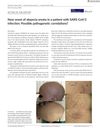
March 2021 in “Journal of cosmetic dermatology (Print)”
32 citations
,
March 2021 in “Journal of cosmetic dermatology (Print)” COVID-19 infection may trigger alopecia areata in some patients.