Doctors recommend postoperative radiation for male breast cancer, advise against testosterone for vasomotor symptoms post-adrenalectomy, suggest non-hormonal treatments for atrophic vaginitis after mastectomy, note no specific treatment for anticoagulant-induced hair loss, and call for more research on silicosis from silicon carbide exposure.
 December 2020 in “Skin appendage disorders”
 A young man with an unusual type of scarring hair loss suggests a possible new variant of a known scalp condition.
 35 citations
,
January 2014 in “BioMed Research International”
35 citations
,
January 2014 in “BioMed Research International” Female pattern hair loss involves hormonal factors, genetics, and may be linked to low ferritin levels.
 33 citations
,
January 2015 in “Journal of Cosmetic Dermatology”
33 citations
,
January 2015 in “Journal of Cosmetic Dermatology” Familial frontal fibrosing alopecia affects premenopausal women too, and early diagnosis is important, but no proven medication exists yet.
 16 citations
,
January 2017 in “Anais brasileiros de dermatologia/Anais Brasileiros de Dermatologia”
16 citations
,
January 2017 in “Anais brasileiros de dermatologia/Anais Brasileiros de Dermatologia” Managing frontal fibrosing alopecia and lichen planus pigmentosus is challenging due to resistant hair loss and skin discoloration.
 15 citations
,
January 1988 in “Drugs”
15 citations
,
January 1988 in “Drugs” The document concludes that treatments for female hair loss and excessive hair growth are temporary and not well-studied.
13 citations
,
December 2020 in “BMJ Open Diabetes Research & Care” Changes in SHBG levels don't predict diabetes risk reduction.
 10 citations
,
January 2019 in “Archives of Endocrinology and Metabolism”
10 citations
,
January 2019 in “Archives of Endocrinology and Metabolism” Testosterone therapy may slightly increase sexual desire in women with HSDD but lacks broad recommendation due to safety concerns and limited approval.
4 citations
,
December 2020 Methotrexate may help stabilize frontal fibrosing alopecia.
2 citations
,
June 2021 in “Sultan Qaboos University medical journal” Familial frontal fibrosing alopecia is rare, mostly affects women, and often occurs between sisters or mother-daughter pairs.
2 citations
,
August 2017 in “Drug and therapeutics bulletin” Strontium ranelate is no longer available for treatment.
1 citations
,
January 2024 in “Journal of personalized medicine” Hormonal imbalances during menopause may significantly contribute to Frontal Fibrosing Alopecia.
 1 citations
,
August 2018 in “Journal of The American Academy of Dermatology”
1 citations
,
August 2018 in “Journal of The American Academy of Dermatology” Combination of minoxidil and finasteride is more effective in increasing hair diameter than minoxidil alone for female-pattern hair loss.
 1 citations
,
January 2018 in “Journal of SAFOMS”
1 citations
,
January 2018 in “Journal of SAFOMS” A rare ovarian tumor can cause unusual male-like symptoms, but surgery usually leads to a good outcome.
 October 2025 in “Actualización en Medicina de Familia”
 New drugs face challenges due to limited evidence, and safety updates are advised for some existing medications.
September 2025 in “Brazilian Journal of Health Review” Early diagnosis and less aggressive hair care improve outcomes for Black women with frontal fibrosing alopecia.
 March 2025 in “Forum Dermatologicum”
 Trichoscopy is crucial for accurately diagnosing fibrosing alopecia in pattern distribution.
 December 2024 in “Brazilian Journal of Health Review”
 Early diagnosis of alopecia frontal fibrosante is crucial, but treatment remains controversial and varies.
April 2024 in “Journal of clinical medicine” Effective treatment guidelines for frontal fibrosing alopecia are still unclear.
January 2024 in “Revista Dermatológica Centro Uraga” Frontal fibrosing alopecia is increasingly affecting men, causing hair loss around the hairline and possibly other areas.
 November 2023 in “The journal of investigative dermatology/Journal of investigative dermatology”
 Early treatment and multidisciplinary care are key to managing Frontal Fibrosing Alopecia and preventing further hair loss.
 June 2022 in “Revista del Hospital Italiano de Buenos Aires”
 A rare case of a man having both frontal fibrosing alopecia and vitiligo was reported.
 May 2019 in “Australasian Journal of Dermatology”
 The conclusion is that managing hair loss conditions like FFA and melanoma requires individualized approaches, considering new findings and balancing treatment benefits with potential risks.
 July 2018 in “Nasza Dermatologia Online”
 Frontal fibrosing alopecia and ulerythema ophryogenes may be related and can evolve from one to the other.
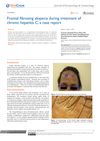 September 2017 in “Journal of Dermatology & Cosmetology”
 Hepatitis C treatment may cause frontal fibrosing alopecia.
 July 2015 in “Journal of the Dermatology Nurses’ Association”
 A 66-year-old woman experienced hair loss due to Frontal Fibrosing Alopecia, a condition with no consistently effective treatment, but it usually stabilizes over time. More research is needed for better understanding and treatment options.
 May 2009 in “Medical and surgical dermatology/Medical & surgical dermatology”
 Hair and nail conditions can stabilize or improve over time, and new treatments show promise.
 October 2025 in “International Journal of Innovative Research in Technology”
 Personalized supplements are important for women's health, but hormone therapy can increase cancer and heart risks.
 September 2014 in “Springer eBooks”
 Men and women experience skin aging differently due to changes in sex hormone levels with age.
 January 2014 in “Side effects of drugs annual”
 Exposure to certain sex hormones can increase health risks, while some hormone therapies may offer benefits for specific conditions.