 2 citations
,
December 2019 in “Veterinary Dermatology”
2 citations
,
December 2019 in “Veterinary Dermatology” Microneedling with platelet-rich plasma helps dog hair regrow faster than microneedling alone.
 1 citations
,
January 2006 in “Elsevier eBooks”
1 citations
,
January 2006 in “Elsevier eBooks” The conclusion is that different types of hair loss in dogs and cats can be cosmetic or serious, and affected animals should not be bred.
 September 2016 in “Elsevier eBooks”
 Different types of hair loss in dogs and cats have various causes and treatments, with outcomes ranging from good to uncertain.

The document concludes that non-endocrine alopecia in pets varies in treatment effectiveness and often has a poor prognosis, especially in cats.
 January 2011 in “Elsevier eBooks”
 Alopecia in animals can be hereditary, congenital, or acquired, with treatments and outcomes varying widely.
 22 citations
,
September 2014 in “Veterinary Dermatology”
22 citations
,
September 2014 in “Veterinary Dermatology” Low-level laser therapy seems to help dogs with noninflammatory alopecia grow hair back.
 August 2015 in “Advances in Small Animal Medicine and Surgery”
 Low-level laser therapy may help regrow hair in dogs with non-inflammatory hair loss.
 7 citations
,
July 1999 in “In Practice”
7 citations
,
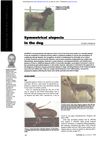
July 1999 in “In Practice” The conclusion is that a systematic approach is key for treating symmetrical alopecia in dogs, but treatment may not always be necessary.
 October 2025 in “Journal of Veterinary Clinics”
 A tailored treatment improved a Pomeranian dog's skin and hair issues caused by a vaccine.
 November 2009 in “Companion Animal”
 The document suggests that Alopecia X in dogs is mainly a cosmetic issue and might be better left untreated.
 August 2017 in “Companion animal”
 Focal alopecia in dogs has many causes and requires various tests for accurate diagnosis and treatment.
 September 2010 in “Companion Animal”
 The guide explains how to diagnose and treat hair loss in dogs, covering causes and treatments, with some conditions lacking treatment options.
 January 2007 in “Acta Veterinaria Brno”
 Trilostane treatment successfully restored hair growth in a dog with alopecia X.
 34 citations
,
March 2003 in “Veterinary Dermatology”
34 citations
,
March 2003 in “Veterinary Dermatology” Most dogs with alopecia had higher than normal levels of certain hormones, but hair loss might not always be linked to these hormone changes.
 20 citations
,
July 2006 in “Veterinary dermatology”
20 citations
,
July 2006 in “Veterinary dermatology” Melatonin helped some Pomeranian dogs regrow hair, but it wasn't linked to estrogen receptors.
 January 2015 in “Journal of clinical and investigative dermatology”
 Clipping is the best method to prepare rats for studying hair loss from chemotherapy because it causes less skin damage and effectively gets hair to the right growth phase.
 2 citations
,
January 2005 in “Elsevier eBooks”
2 citations
,
January 2005 in “Elsevier eBooks” The document describes skin diseases affecting the outer ear in dogs and cats, their spread to other body parts, and treatment options.
 January 2025 in “Pakistan Veterinary Journal”
 Microneedling may help regrow hair in dogs with certain types of alopecia.
 4 citations
,
January 2009 in “Wiley-Blackwell eBooks”
4 citations
,
January 2009 in “Wiley-Blackwell eBooks” The book explains causes, diagnosis, and treatments for hair loss in pets.
 20 citations
,
February 2004 in “Veterinary dermatology”
20 citations
,
February 2004 in “Veterinary dermatology” Dog hair grows back in about 14 weeks after being clipped for surgery, and the season doesn't really affect this growth rate.
 17 citations
,
January 2006 in “Veterinary Dermatology”
17 citations
,
January 2006 in “Veterinary Dermatology” Topical melatonin and brushing did not affect hair regrowth in Siberian Huskies.

The document's conclusion cannot be provided because the document is not readable or understandable.
13 citations
,
July 2019 in “PubMed” Nonsurgical treatments like minoxidil and laser therapy offer various options to manage hair loss effectively.
March 2016 in “Actas dermo-sifiliográficas/Actas dermo-sifiliográficas” Stopping the use of a tight headband and using specific treatments led to partial hair regrowth.
4 citations
,
November 2025 in “Nature Reviews Disease Primers”  April 2021 in “Annales de Dermatologie et de Vénéréologie - FMC”
 Biphasic alopecia often leads to permanent hair loss and its progression varies widely among individuals.
 1 citations
,
June 2022 in “PubMed”
1 citations
,
June 2022 in “PubMed” Alopecia causes hair loss and should be treated early, especially scarring types where hair cannot regrow.
 2 citations
,
June 1980 in “International Journal of Dermatology”
2 citations
,
June 1980 in “International Journal of Dermatology” Scalp biopsies are important for diagnosing hair loss conditions.
 June 2023 in “JAAD case reports”
 The document concludes that "hot comb alopecia" is now called "central cicatricial centrifugal alopecia" and its causes are complex.
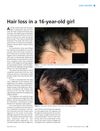 November 2014 in “Prescriber”
 The 16-year-old girl with hair loss was successfully treated for alopecia areata, leading to significant hair regrowth.