November 2024 in “Dermatology and Therapy” Dermatologists should carefully choose treatments for FFA to avoid worsening the condition.
 April 2023 in “World Journal Of Advanced Research and Reviews”
 Cosmetic products or emotional factors might contribute to Frontal Fibrosing Alopecia, and trichoscopy is useful for diagnosis.
 January 2022 in “Przegla̧d dermatologiczny”
 The exact cause of frontal fibrosing alopecia is unknown, but it's not likely due to sunscreen.
 September 2021 in “Clinical research in dermatology”
 5-Alpha-Reductase inhibitors might help slow down hair loss in Frontal Fibrosing Alopecia but are not a primary treatment and need more research.
 January 2021 in “Türkiye klinikleri dermatoloji dergisi”
 Eyebrow loss in frontal fibrosing alopecia is common and may be linked to other health issues.
December 2016 in “Anales del sistema sanitario de Navarra” Frontal fibrosing alopecia is increasing, especially in postmenopausal women, and treatment with finasteride can improve it.
8 citations
,
January 2002 in “Piel” Postmenopausal women may experience frontal hairline and eyebrow loss due to cicatricial fibrosis.
 166 citations
,
April 2012 in “Journal of The American Academy of Dermatology”
166 citations
,
April 2012 in “Journal of The American Academy of Dermatology” Mostly postmenopausal Caucasian women get Frontal Fibrosing Alopecia, which often includes eyebrow loss and has limited treatment success.
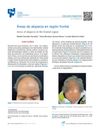 January 2025 in “Revista del Centro Dermatológico Pascua”
 Early diagnosis and treatment can help manage fibrosing alopecia in older women.
 155 citations
,
September 2008 in “British journal of dermatology/British journal of dermatology, Supplement”
155 citations
,
September 2008 in “British journal of dermatology/British journal of dermatology, Supplement” FFA is more common in postmenopausal women, can affect younger women, and may stabilize over time.
November 2024 in “International Journal of Women’s Dermatology” Frontal fibrosing alopecia in Bogotá mainly affects postmenopausal women, with possible links to hormonal changes and sunscreen use.
53 citations
,
June 2019 in “JEADV. Journal of the European Academy of Dermatology and Venereology/Journal of the European Academy of Dermatology and Venereology” Frontal fibrosing alopecia mainly affects postmenopausal women and may be linked to thyroid hormones.
January 2024 in “Updates in clinical dermatology” Frontal fibrosing alopecia is a scarring hair loss condition mainly affecting postmenopausal women, with unclear causes.
 1 citations
,
September 2021 in “CRC Press eBooks”
1 citations
,
September 2021 in “CRC Press eBooks” Frontal Fibrosing Alopecia is a hair loss condition mainly affecting postmenopausal women, with unclear causes and various clinical patterns.
2 citations
,
January 2016 in “Dermatology online journal” A 46-year-old man was diagnosed with frontal fibrosing alopecia, a condition usually seen in postmenopausal women.
 January 2022 in “Дерматологія та венерологія”
 Frontal fibrosing alopecia causes hair loss along the frontal hairline, mainly in postmenopausal women, and needs better treatments.
 February 2011 in “Journal of the American Academy of Dermatology”
 A 60-year-old man with a long-term balding condition also developed a rare hair loss condition usually seen in postmenopausal women.
 3 citations
,
February 2022 in “Dermatology practical & conceptual”
3 citations
,
February 2022 in “Dermatology practical & conceptual” The study concludes that early diagnosis of Frontal Fibrosing Alopecia is important, as it is often found in postmenopausal women, may be related to Lichen Planopilaris, and eyebrow hair loss is a common sign.
 October 2020 in “International Journal of Research in Dermatology”
 The review suggests more research is needed to understand Frontal fibrosing alopecia, a condition causing hairline recession in postmenopausal women.
 4 citations
,
April 2018 in “British Journal of Dermatology”
4 citations
,
April 2018 in “British Journal of Dermatology” Finasteride for female hair loss has low side effects, more research needed.
April 2021 in “Aktuelle Dermatologie” Frontal Fibrosing Alopecia is a type of hair loss that mainly affects postmenopausal women, has unclear causes, and lacks evidence-based treatments.
Early diagnosis and treatment of frontal fibrosing alopecia are crucial to prevent permanent hair loss.
22 citations
,
April 2012 in “Informa Healthcare eBooks” Frontal fibrosing alopecia is a type of hair loss that usually happens after menopause.
 January 2025 in “Indian Journal of Dermatology”
 Frontal fibrosing alopecia is a challenging hair loss condition with no known cause or definitive treatment.
 33 citations
,
January 2010 in “Case reports in dermatology”
33 citations
,
January 2010 in “Case reports in dermatology” Dermoscopy helps diagnose frontal fibrosing alopecia by distinguishing it from other hair loss conditions.
 29 citations
,
July 2010 in “Journal of Cutaneous Medicine and Surgery”
29 citations
,
July 2010 in “Journal of Cutaneous Medicine and Surgery” Treatments for Frontal Fibrosing Alopecia have not been proven effective.
 August 2021 in “Annals of Agricultural and Environmental Medicine”
 The article concludes that understanding Frontal Fibrosing Alopecia (FFA) is crucial for effective treatment, which includes medication like 5α-reductase inhibitors and hydroxychloroquine.
 August 2015 in “Dermatología Argentina”
 Frontal fibrosing alopecia causes hairline recession and eyebrow loss in postmenopausal women.
 33 citations
,
January 2015 in “Journal of Cosmetic Dermatology”
33 citations
,
January 2015 in “Journal of Cosmetic Dermatology” Familial frontal fibrosing alopecia affects premenopausal women too, and early diagnosis is important, but no proven medication exists yet.
2 citations
,
June 2021 in “Sultan Qaboos University medical journal” Familial frontal fibrosing alopecia is rare, mostly affects women, and often occurs between sisters or mother-daughter pairs.