 January 2026 in “Frontiers in Oncology”
 Thorough evaluation and surgery are crucial for managing rare ovarian tumors in postmenopausal women with high androgen levels.
 March 2024 in “Revista Ciências da Saúde CEUMA”
 Testosterone increases sexual behavior in female capuchin monkeys.
 January 2023 in “Zdravstvena zaštita”
 Aging-related hormone changes affect voice quality, especially during puberty, menstruation, pregnancy, and menopause.
Silk sericin dressing with collagen heals wounds faster and improves scar quality better than Bactigras.
 July 2018 in “Elsevier eBooks”
 Some drugs can cause reversible hair loss, but certain chemotherapy drugs may lead to permanent hair loss; drugs can also change hair color and texture.
 July 2015 in “Cambridge University Press eBooks”
 Androgens like testosterone affect skin health and can lead to conditions such as acne and hair loss, with various treatments available.
 August 2009 in “International Journal of Dermatology”
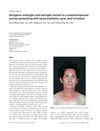
 A postmenopausal woman's facial redness, acne, and excess hair were caused by too much hormone therapy for insomnia, but improved after stopping the treatment.
 May 2023 in “Current Applied Science and Technology”
 Higher power CO2 laser causes more severe skin burns and damage.
 September 2024 in “International Journal of Pharmaceutical Quality Assurance”
 Nanoemulgels improve skin disorder treatment by delivering drugs more effectively and reducing application frequency.
 June 2024 in “International Journal of Advanced Research in Science Communication and Technology”
 Herbal extracts like Ficus religiosa may help with hair growth and skin rejuvenation.
 22 citations
,
January 2015 in “The Cochrane library”
22 citations
,
January 2015 in “The Cochrane library” DHEA may help with sexual function when used intravaginally by menopausal women but is similar to hormone therapy in other aspects and might cause more side effects like acne and hair loss.
 August 2017 in “Journal of epidemiological research”
 Cancer rates are increasing in developed countries, with estrogen, aging, low vitamin D3, and HPV infection as common causes.
 145 citations
,
December 1999 in “Journal of Investigative Dermatology Symposium Proceedings”
145 citations
,
December 1999 in “Journal of Investigative Dermatology Symposium Proceedings” Finasteride 1mg helps reverse hair miniaturization in men and postmenopausal women.
 28 citations
,
February 2011 in “Clinical Endocrinology”
28 citations
,
February 2011 in “Clinical Endocrinology” Women with PCOS have unhealthy changes in their cholesterol particles that are not related to their body weight.
 6 citations
,
April 2019 in “Journal of Cosmetic Dermatology”
6 citations
,
April 2019 in “Journal of Cosmetic Dermatology” Hair loss affects women's self-esteem; treatments like minoxidil can help.
 6 citations
,
November 2007 in “British Journal of Dermatology”
6 citations
,
November 2007 in “British Journal of Dermatology” Fulvestrant solution doesn't help hair loss in men and postmenopausal women.

Hormonal treatments can help with hair loss, acne, and excess hair growth, but it takes 3-6 months to see results and patients should know the possible side effects.
 December 2013 in “Macedonian Journal of Medical Sciences”
 Ovarian steroid cell tumors should be considered in adults with hirsutism and high testosterone, with surgery as the main treatment.
 45 citations
,
June 2016 in “Anais brasileiros de dermatologia/Anais Brasileiros de Dermatologia”
45 citations
,
June 2016 in “Anais brasileiros de dermatologia/Anais Brasileiros de Dermatologia” Silicon can improve skin and hair health, but more research is needed.
 239 citations
,
November 2000 in “Journal of The American Academy of Dermatology”
239 citations
,
November 2000 in “Journal of The American Academy of Dermatology” Finasteride doesn't effectively treat hair loss in postmenopausal women.
 8 citations
,
January 2017 in “Elsevier eBooks”
8 citations
,
January 2017 in “Elsevier eBooks” Certain nutrients can help keep skin healthy as we age.
 46 citations
,
January 2008 in “Climacteric”
46 citations
,
January 2008 in “Climacteric” Testosterone therapy can help improve sexual desire and function in postmenopausal women but may cause side effects and is not FDA-approved for this use.
 31 citations
,
September 2006 in “The Journal of Clinical Endocrinology & Metabolism”
31 citations
,
September 2006 in “The Journal of Clinical Endocrinology & Metabolism” Testosterone therapy may slightly improve sexual function in postmenopausal women, but its long-term safety is unknown.
 6 citations
,
July 2003 in “Journal of Womens Health”
6 citations
,
July 2003 in “Journal of Womens Health” Experts say proper treatment and sensitivity are important for women's facial skin issues like acne and unwanted hair.
 196 citations
,
May 2001 in “The journal of investigative dermatology/Journal of investigative dermatology”
196 citations
,
May 2001 in “The journal of investigative dermatology/Journal of investigative dermatology” Sebocytes play a key role in controlling androgen levels in human skin.
 130 citations
,
June 2003 in “Journal of Investigative Dermatology Symposium Proceedings”
130 citations
,
June 2003 in “Journal of Investigative Dermatology Symposium Proceedings” Estrogen Receptor ß (ERß) is the main hormone controller in human skin and hair follicles, not Estrogen Receptor α (ERα) or the Androgen Receptor (AR).
 48 citations
,
July 2009 in “The Journal of Sexual Medicine”
48 citations
,
July 2009 in “The Journal of Sexual Medicine” DHEA did not improve sexual function, well-being, or menopausal symptoms in postmenopausal women with low libido but caused side effects like acne and increased facial hair.
 2 citations
,
January 2012 in “Journal für Kardiologie (Krause & Pachernegg GmbH)”
2 citations
,
January 2012 in “Journal für Kardiologie (Krause & Pachernegg GmbH)” Hirsutism and alopecia during menopause can be diagnosed and treated with specific hormonal and topical therapies.
 61 citations
,
April 2012 in “British Journal of Dermatology”
61 citations
,
April 2012 in “British Journal of Dermatology” Caucasian women's hair appears thickest in their 20s, with perceived thinning after mid-30s due to both decreasing density and diameter.
 3 citations
,
September 2014 in “Journal of obstetrics and gynaecology Canada”
3 citations
,
September 2014 in “Journal of obstetrics and gynaecology Canada” Menopause often leads to lower sexual desire and discomfort during sex, but treatment should be personalized and only if it bothers the woman.