 October 1961 in “Archives of Dermatology”
 Reassurance is important for postpartum hair shedding as it likely won't cause complete baldness.
 18 citations
,
March 2016 in “Cosmetics”
18 citations
,
March 2016 in “Cosmetics” Telogen Effluvium is a condition causing excessive hair loss due to stress, illness, drugs, or hormonal changes, and can be treated with specific products or naturally resolves after 3-4 years.
 16 citations
,
August 1967 in “JAMA”
16 citations
,
August 1967 in “JAMA” Oral contraceptives may cause hair loss in women.
2 citations
,
February 2001 in “Annals of Pharmacotherapy” No specific treatment for postpartum hair loss is proven effective.
 1 citations
,
January 2022 in “Skin appendage disorders”
1 citations
,
January 2022 in “Skin appendage disorders” Hair shedding after childbirth can reveal a pre-existing condition of hair loss due to tight hairstyles.
 September 2016 in “Más dermatología”
 Postpartum hair loss usually stops within 4-6 months.
 41 citations
,
October 2017 in “International Journal of Women's Dermatology”
41 citations
,
October 2017 in “International Journal of Women's Dermatology” Most pregnant women experience skin darkening and hair changes, with these effects usually going away after giving birth.
 March 2026 in “International Journal of Research and Review”
 Rosmarinus officinalis tincture significantly improves hair volume and density.
 63 citations
,
October 1972 in “British Journal of Dermatology”
63 citations
,
October 1972 in “British Journal of Dermatology” Women with thinning hair have thinner hair strands than women without hair loss.
 39 citations
,
October 1967 in “British Journal of Dermatology”
39 citations
,
October 1967 in “British Journal of Dermatology” Hair loss in women often doesn't follow a pattern, isn't linked to age, may be genetic, and can be related to thyroid issues or other health factors.
 1 citations
,
May 1965 in “Medical Clinics of North America”
1 citations
,
May 1965 in “Medical Clinics of North America” Hair growth dysfunction involves various conditions with limited treatment options.
 9 citations
,
January 2015 in “Skin appendage disorders”
9 citations
,
January 2015 in “Skin appendage disorders” The article suggests that the belief in common postpartum hair loss lacks sufficient evidence and may be overestimated.
 67 citations
,
November 2002 in “Journal of The American Academy of Dermatology”
67 citations
,
November 2002 in “Journal of The American Academy of Dermatology” The document concludes that careful evaluation is key to diagnose and treat women with hair loss, with tests for thyroid, iron, and hormones as needed.
 38 citations
,
October 1988 in “Clinics in Dermatology”
38 citations
,
October 1988 in “Clinics in Dermatology” Hormones, nutrition, and seasonal changes regulate hair growth cycles, with androgens extending growth phases and factors like aging and malnutrition affecting hair loss and thinning.
 20 citations
,
May 2020 in “Experimental Dermatology”
20 citations
,
May 2020 in “Experimental Dermatology” Aging scalp skin contributes to hair aging and loss, and more research is needed to develop better hair loss treatments.
 June 2024 in “Al- Anbar Medical Journal”
 Acute telogen effluvium can be resolved by addressing causes, but chronic telogen effluvium is harder to treat.
 4 citations
,
March 2021 in “International Journal of Dermatology”
4 citations
,
March 2021 in “International Journal of Dermatology” COVID-19 and related stress may increase hair loss known as Telogen effluvium.
 75 citations
,
October 1996 in “Dermatologic Clinics”
75 citations
,
October 1996 in “Dermatologic Clinics” Chronic Telogen Effluvium is a hair loss condition in middle-aged women that usually doesn't lead to complete baldness.
 96 citations
,
January 1997 in “Clinics in Dermatology”
96 citations
,
January 1997 in “Clinics in Dermatology” Pregnancy can cause skin pigmentation, stretch marks, and changes in hair, nails, and sweat glands, with most resolving after birth.
 7 citations
,
May 1978 in “International Journal of Dermatology”
7 citations
,
May 1978 in “International Journal of Dermatology” Recent hair loss research shows some progress, especially in understanding male pattern baldness, but effective treatments for many types of hair loss are still lacking.
 3 citations
,
May 2002 in “Therapeutische Umschau”
3 citations
,
May 2002 in “Therapeutische Umschau” The document concluded that cyproterone acetate and minoxidil are effective for female hair loss, and a supportive doctor-patient relationship is important.
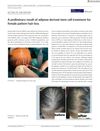 April 2021 in “Journal of Cosmetic Dermatology”
 Stem cell treatment improved hair density in female hair loss patient.
 71 citations
,
February 2006 in “Clinics in Dermatology”
71 citations
,
February 2006 in “Clinics in Dermatology” Pregnancy causes skin changes like darkening, hair thickening, nail changes, and increased risk of skin growths, most of which usually resolve after birth.
 3 citations
,
June 2006 in “Expert Review of Dermatology”
3 citations
,
June 2006 in “Expert Review of Dermatology” The document concludes that hair loss is complex, affects many people, has limited treatments, and requires more research on its causes and psychological impact.
 February 2009 in “Springer eBooks”
 Pregnancy can cause more body and scalp hair growth and make nails brittle, but these changes often revert after giving birth.
 24 citations
,
July 1987 in “Dermatologic Clinics”
24 citations
,
July 1987 in “Dermatologic Clinics” Systemic diseases can cause hair loss, which is often reversible with treatment.
 214 citations
,
March 1993 in “Archives of Dermatology”
214 citations
,
March 1993 in “Archives of Dermatology” Telogen effluvium is a reversible hair loss condition that requires a detailed diagnosis and often resolves on its own.
 February 2010 in “Journal of The American Academy of Dermatology”
 Babies born after 38 weeks to mothers under 36 years old and not delivered by C-section have a higher risk of neonatal occipital alopecia.
 7 citations
,
January 2015 in “Current problems in dermatology”
7 citations
,
January 2015 in “Current problems in dermatology” Hair loss can be caused by stress, infections, drugs, and various diseases, with treatment depending on accurate diagnosis.
 1 citations
,
May 2017 in “InTech eBooks”
1 citations
,
May 2017 in “InTech eBooks” Telogen Effluvium is a common hair loss condition that can be short-term or long-lasting and is often caused by stress, illness, or nutritional issues.