 January 2021 in “Advances in health sciences research/Advances in Health Sciences Research”
 Two siblings with gray patch tinea capitis were successfully treated after identifying risk factors.
 October 2020 in “Journal of Ayurvedic and herbal medicine”
 Dheedhi Herbal Shampoo is effective and safe for treating hair loss and dandruff.
 August 2019 in “International journal of current microbiology and applied sciences”
 Young dogs in Odisha with dermatitis are most often infected by Microsporum fungus, and Miconazole is the most effective treatment.
 May 2019 in “International journal of advanced chemistry”
 The green cream safely slowed hair growth by 25%.
 April 2019 in “Dermatology reports”
 A 12-year-old boy's hair fully regrew after 8 weeks of treatment for tinea capitis, and dermoscopy was useful for diagnosis and monitoring.
 February 2019 in “Neoreviews”
 The infant with a urea cycle disorder improved with treatment and a liver transplant.
 January 2019 in “Elsevier eBooks”
 Early detection and skin biopsies are crucial for treating skin cancer and diagnosing various skin conditions.
 September 2018 in “University of the Arts London Research Online (University of the Arts London)”
 L-arginine, hydrolysed keratin, and cystine-silanol copolymer can help protect hair from damage during and after bleaching.
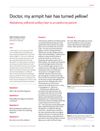
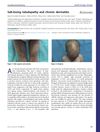
A 15-year-old boy's smelly, yellow armpit hair improved with clindamycin treatment.
 July 2018 in “Kidney international”
 Genetic testing for EGFR mutations is crucial in similar cases.
 June 2018 in “Surgical Case Reports”
 S-1 treatment led to a complete response in pancreatic cancer with manageable side effects.
 June 2018 in “The Medical Journal of Cairo University/The Medical Journal of Cairo University”
 Dermoscopy can quickly and reliably distinguish Tinea Capitis from Alopecia Areata by identifying specific hair patterns.
 February 2018 in “Medicine - Programa De Formación Médica Continuada Acreditado”
 Minoxidil and finasteride are the main FDA-approved treatments for hair loss, with other methods showing promise but lacking strong evidence.

Early NAS level changes affect alcohol consumption vulnerability.
 January 2018 in “Springer eBooks”
 Terbinafine is the most effective medicine for fungal nail infections, especially for diabetics and those with weak immune systems.
 June 2017 in “Acta Scientiae Veterinariae”
 A cat with a rare pancreatic tumor and diabetes died despite treatment, showing similar symptoms to a human condition.
 January 2017 in “IMC Journal of Medical Science”
 A rare endocrine disorder, APS 1, was diagnosed in a 26-year-old man in Bangladesh.
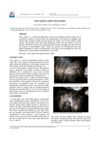
An adult Libyan woman was successfully treated for a rare scalp infection usually seen in children.
The document concludes that hair loss in women is complex, often linked to aging, health conditions, and nutritional deficiencies, and emotional impacts should not be underestimated.
The document concludes that current hair loss treatments have limitations and suggests researching new treatments targeting different factors of hair loss.
 January 2015 in “Dermatology online journal”
 A man with total hair loss also developed a rare nail condition, likely due to autoimmune issues.
 February 2014 in “Revista Argentina de Cardiología”
 Androgens may increase arrhythmias in Brugada Syndrome, while Finasteride could reduce them.

Human scalp hair follicles have PGE2 and its receptors, which might affect hair growth.
 July 2013 in “British Journal of Dermatology”
 The document reviews key historical figures and discoveries in dermatology.
 April 2012 in “KSBB Journal”
 Minoxidil analogs can be improved for hair growth inhibition by modifying specific parts of their structure.
 July 2011 in “Springer eBooks”
 The document concluded that FDA-approved treatments like minoxidil and finasteride are effective for hair loss, while the effectiveness of natural remedies and other non-approved treatments is not well-supported by evidence.
 June 2010 in “Journal of Medicine and Life Science”
 Orostachys iwarenge Hara extract may help promote hair growth.
 March 2007 in “Journal of hypertension”
 Minoxidil effectively lowers blood pressure in patients with resistant hypertension.
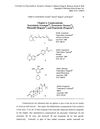
Isotretinoin and tazarotene help treat acne, while minoxidil and finasteride promote hair growth.

The patient with total hair loss did not regrow hair despite treatment, indicating a poor outlook for this type of hair loss.