 July 2024 in “International Journal of Medical Arts”
 Latanoprost is more effective than minoxidil for treating alopecia areata.
 June 2024 in “Georgetown medical review”
 Finasteride treats hair loss but may cause low libido, erectile issues, and depression.
Teprotumumab for thyroid eye disease commonly causes fatigue, brittle nails, dry eyes, hair loss, muscle spasms, and dry mouth, with rare serious events like blood clots.
 March 2024 in “bioRxiv (Cold Spring Harbor Laboratory)”
 Minoxidil treatment improves heart defects in a DiGeorge syndrome model.
 February 2024 in “International journal of biology, pharmacy and allied sciences”
 Plant-based treatments can effectively and safely treat hair loss.
Low-dose oral minoxidil is generally safe for treating hair loss, with mostly mild side effects.
Stopping minoxidil and draining fluid around the heart can save lives in rare cases.
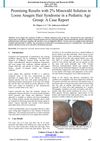 May 2023 in “International journal of science and research”
 2% minoxidil solution improved hair density and quality in children with Loose Anagen Hair Syndrome.
 January 2023 in “Han'gug mi'saengmul saengmyeong gong haghoeji/Han-guk misaengmul saengmyeong gonghak hoeji”
 NOC-4 extract promotes black hair and hair growth effectively.
 January 2023 in “International journal of biological sciences”
 COX2 and ATP synthase control the size of hedgehog spines.
 July 2022 in “medRxiv (Cold Spring Harbor Laboratory)”
 Satoyoshi syndrome is likely an autoimmune disease that mainly affects young women and improves with immune-related treatments.
 September 2021 in “Physiology News”
 Air Vice-Marshal Sir Ralph Jackson significantly advanced dialysis technology in the UK.
 September 2021 in “Physiology News”
 Addressing underrepresentation in Parkinson's research is crucial for better treatments and understanding.
 May 2021 in “Boletín latinoamericano y del Caribe de plantas medicinales y aromáticas”
 Microsechium helleri extract has antioxidant, anti-inflammatory, antidiabetic, and heart-protective benefits.
 February 2021 in “Journal of pharmaceutical and biological sciences”
 No cure exists for alopecia areata, and treatments are personalized.
 January 2020 in “Elsevier eBooks”
 Plant-based chemicals may help hair growth and prevent hair loss but need more research to compete with current treatments.
 November 2019 in “Journal of Aesthetic Nursing”
 The article concludes that a thorough diagnosis and treatment plan, including medications, non-invasive methods, or surgery, is important for managing hair loss, with a combination of minoxidil and finasteride being particularly effective.
 April 2019 in “Advances in Cosmetic Surgery”
 The document concludes that ongoing medical therapy is crucial for preventing hair loss, and surgical options can restore hair, with future treatments for hair loss being promising.
 January 2019 in “Springer eBooks”
 Modified HDL can better deliver drugs and genes, potentially improving treatments and reducing side effects.
 October 2018 in “InTech eBooks”
 The most effective treatments for hair loss are minoxidil, finasteride, PRP, and hair transplants, with steroids and immunosuppressants for autoimmune types.
 July 2018 in “International journal of clinical & experimental dermatology”
 Eat a balanced diet for healthy hair; only use supplements if you have a proven nutrient deficiency.
 January 2018 in “The journal of the convergence on culture technology”
 Astringent persimmon fruit extract can promote hair growth.
Hair loss causes emotional distress, leading to high spending on treatments, with Minoxidil and Propecia being common but having side effects.
The conclusion is that endocrinology significantly impacts medicine with various common medications used for treatment.
 January 2016 in “Journal of The Korean Medical Association”
 The document says how to diagnose and treat hair loss from alopecia areata, but there's no cure and treatments vary.
Avicennia Marina extract and avicequinone C can reduce hair loss hormone production and increase hair growth factors, suggesting they could be used to treat androgenic alopecia.
 January 2016 in “Research Explorer (The University of Manchester)”
 Activating the Eda/Edar pathway improves wound healing by enhancing hair follicle growth.
 January 2015 in “Our Dermatology Online”
 Intralesional triamcinolone is the most effective treatment for hair regrowth in alopecia areata patients.
 January 2015 in “Przegla̧d dermatologiczny”
 Intralesional triamcinolone is the most effective treatment for alopecia areata, followed by excimer light therapy, and then topical minoxidil. The scalp responds better to treatment than the beard area.
 July 2013 in “Our Dermatology Online”
 Minoxidil 2% is more effective than tacrolimus 0.1% for hair regrowth in mild to moderate patchy hair loss, and combining both might give better results.