Search
for
Sort by
Research
210-240 / 1000+ results
research Melanin Pigmentary Disorders: Treatment Update
Treatments for melanin disorders exist, but more effective options needed.
research Melasma, a photoaging disorder
Melasma is now considered a skin aging disorder caused by sun exposure in people with a genetic tendency, which impacts treatment and prevention approaches.

research Skin of color repigmentation after phenol-croton oil chemical peel
Skin of color can spontaneously repigment after a phenol-croton oil chemical peel.
research Protective effect of a novel metal-phenolic network composite against ultraviolet-induced skin damage by modulating MAPK/AP-1/NF-κB signaling pathways and attenuating oxidative stress in human keratinocytes
Melamax® protects skin from UV damage and reduces inflammation and oxidative stress.
research 890 Development of pigmented reconstructed human epidermis model containing human melanoblasts from keratinocyte culture
The created skin model with melanoblasts improves the study of skin color and offers an alternative to animal testing.
research The distribution of melanocytes and the degradation of melanosomes in fetal hair follicles
Fetal hair follicles have melanocytes with melanosomes at different stages, which are broken down into pigment particles in keratinocytes.
research When the Circadian Clock Meets the Melanin Pigmentary System
Silencing certain circadian clock genes increases skin pigmentation.
research Retinoids Modulate MITF: A Novel Mechanism in the Regulation of Melanogenesis
Retinoids or their analogs could treat skin pigmentation disorders like melasma and vitiligo.
research Chemically Induced Depigmentation of Skin and Hair
Some chemicals can permanently or temporarily remove color from skin and hair, which can be distressing and is not well-regulated in cosmetics.
research ERYTHROMELANOSIS FOLLICULARIS FACIEI ET COLLI
Three Iranian men had reddish-brown facial pigmentation with no effective treatment.
research An approach to disorders of pigmentation
The document concludes that pigmentation disorders in animals involve complex interactions between melanocytes and keratinocytes.
research 458 UVB-induced facultative pigmentation is associated with distinct DNA methylation changes
Tanning ability is linked to specific DNA changes in skin genes.
research Metabolic profiling by LC-DAD-MS, FTIR, NMR and CE-UV of polyphenols with potential against skin pigmentation disorder
Certain polyphenols may help treat skin pigmentation disorders.
research Retinoids Modulate MITF: A Novel Mechanism in the Regulation of Melanogenesis - eScholarship
Retinoids can help treat skin pigmentation disorders by affecting melanin production.
research EFFECTS OF α-MELANOCYTE-STIMULATING HORMONE AND [8-ARGININE]-VASOTOCIN UPON MELANOGENESIS IN HAIR FOLLICLE MELANOCYTES IN VITRO
α-MSH increases melanin production in moulting hair follicles, while AVT inhibits it.
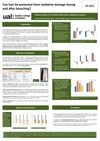
research Can hair be protected from oxidative damage during and after bleaching
L-arginine, hydrolysed keratin, and cystine-silanol copolymer can help protect hair from damage during and after bleaching.

research 516 Dynein is involved in the movement, distribution, acidity, and transfer of melanosomes
Dynlt3 is important for melanosome transport and skin coloration.
research Increased PHGDH expression promotes aberrant melanin accumulation
Higher PHGDH levels cause unusual melanin buildup in hair follicles.
research Melanogenesis During the Anagen-Catagen-Telogen Transformation of the Murine Hair Cycle
Hair stops producing melanin as it transitions from the growth phase to the resting phase.
research INTERACTION OF α-MELANOCYTE-STIMULATING HORMONE, MELATONIN, CYCLIC AMP AND CYCLIC GMP IN THE CONTROL OF MELANOGENESIS IN HAIR FOLLICLE MELANOCYTES IN VITRO
α-MSH and cyclic AMP boost melanin production, while cyclic GMP and melatonin reduce it.

research Pharmacological BACE1 and BACE2 inhibition induces hair depigmentation by inhibiting PMEL17 processing in mice
Blocking BACE1 and BACE2 enzymes causes hair color loss in mice.

research Perifollicular Melanocyte Regeneration in Bullous Pemphigoid
Melanocytes can regenerate around hair follicles in bullous pemphigoid, especially in patients with darker skin.
research 457 Impact of alpha-melanocyte-stimulating hormone on mitochondrial function in human dermal fibroblasts
Alpha-MSH affects mitochondrial function, and MC1R mutations may increase skin aging.
research All-trans retinoic acid induced the differentiation of amelanotic melanocytes of human hair follicle
All-trans retinoic acid helps amelanotic melanocytes in hair follicles develop and produce pigment while reducing their growth.
research The physical and chemical disruption of human hair after bleaching – studies by transmission electron microscopy and redox proteomics
Bleaching hair causes severe structural and chemical damage, including protein loss and oxidation.
research The secondary role of UV light in swimmers melanoma genesis
Hydrogen peroxide is a major risk factor for melanoma in swimmers, more than UV light.

research Mitochondrial deoxyguanosine kinase depletion induced ROS causes melanocyte stem cell exhaustion and hair greying
Lack of a certain enzyme causes hair to grey early by damaging stem cells, but an antioxidant can help prevent this.
research Origin, Clinical Presentation, and Diagnosis of Facial Hypermelanoses
Facial dark spots can be caused by the sun, genetics, makeup, or medicine, and are diagnosed by patient history and skin tests.
research Inducible cre-mediated N-ras activation and PTEN inactivation in transgenic mouse melanocytes requires keratinocyte hyperplasia to elicit a melanocyte pathology
Melanocyte pathology requires keratinocyte hyperplasia and regulation dysfunction.