9 citations
,
May 2014 in “BMC medical genetics” A woman with a unique syndrome similar to TRPS has a genetic change near the TRPS1 gene, affecting its regulation.
May 2025 in “Journal of the Egyptian Womenʼs Dermatologic Society” Hair follicles in nonsegmental vitiligo are better protected from immune attacks than in alopecia areata.
 February 2025 in “Animals”
 Understanding proteins in skin structures like claws and hair is crucial for future research.
 January 2025 in “Biomedical Reports”
 Telitacicept helped stabilize complement levels in a patient with lupus and thyroid cancer.
 January 2024 in “Materials chemistry frontiers (Online)”
 New near-infrared OLED emitters are more efficient, especially platinum(II) complexes, and have promising applications like hair growth treatment.

Hidradenitis Suppurativa has genetic links, with certain gene mutations more common in patients and a third of cases having a family history.
 30 citations
,
August 2009 in “Journal of the American Academy of Dermatology”
30 citations
,
August 2009 in “Journal of the American Academy of Dermatology” Bimatoprost is safe but not effective for severe eyelash loss from alopecia areata, possibly helping those with less loss.
 2 citations
,
November 2023 in “Acta dermato-venereologica”
2 citations
,
November 2023 in “Acta dermato-venereologica” Tofacitinib is effective and safe for treating alopecia areata with a good drug survival rate.
 306 citations
,
April 2019 in “International Journal of Molecular Sciences”
306 citations
,
April 2019 in “International Journal of Molecular Sciences” The skin has a complex immune system that is essential for protection and healing, requiring more research for better wound treatment.
143 citations
,
January 2007 in “The American Journal of Human Genetics” Certain genes on chromosomes 6, 10, 16, and 18 may increase the risk of alopecia areata.
 64 citations
,
July 2016 in “Cold Spring Harbor Perspectives in Medicine”
64 citations
,
July 2016 in “Cold Spring Harbor Perspectives in Medicine” The p53 protein has complex, sometimes contradictory functions, including tumor suppression and promoting cell survival.
46 citations
,
March 2006 in “Seminars in Cutaneous Medicine and Surgery” Current treatments for cicatricial alopecia can manage symptoms but don't stop hair loss or the disease.
23 citations
,
July 2020 in “Aging Cell” Aging changes sugar molecules on skin stem cells, which may affect their ability to repair skin.
 16 citations
,
February 2018 in “European Journal of Endocrinology”
16 citations
,
February 2018 in “European Journal of Endocrinology” Diagnosing hyperandrogenism in women is complex and requires accurate testing methods and consideration of SHBG levels.
 16 citations
,
December 2001 in “Dermatologic Therapy”
16 citations
,
December 2001 in “Dermatologic Therapy” Alopecia areata has a complex genetic basis that was not fully understood as of 2001.
15 citations
,
February 2006 in “Journal of Investigative Dermatology” More research is needed to understand and treat cicatricial alopecias.
8 citations
,
August 2025 in “Journal of Translational Medicine” CD44 signaling can help heal wounds without scars.
 4 citations
,
April 2020 in “Facial Plastic Surgery Clinics of North America”
4 citations
,
April 2020 in “Facial Plastic Surgery Clinics of North America” Hair loss in women is complex to diagnose and treat, and hair restoration should be done by experts. Using minoxidil before surgery can help manage post-surgery hair shock loss. The Follicular Unit Transplantation method is recommended for women due to its speed, no need for shaving, and better graft quality. Strategies like L, T, and reverse L patterns can help restore central hair density, and regenerative methods can improve graft survival in hair transplants.
 November 2025 in “Journal of Disease and Public Health”
 Post-COVID-19 syndrome is complex, affects 5%-10% of people, and requires better research and global collaboration for treatment.

Wound healing is complex and requires more research to enhance treatment methods.
 January 1989 in “Clinical and Experimental Dermatology”
 The symposium concluded that hair growth involves complex processes, including the hair follicle life cycle, the role of the dermal papilla, hair strength, pigmentation, and the impact of diseases and treatments like minoxidil on hair and skin.
 16 citations
,
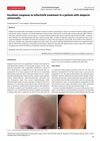
January 2017 in “Acta dermatovenerologica Alpina, Pannonica et Adriatica (Tiskana izd.)”
16 citations
,
January 2017 in “Acta dermatovenerologica Alpina, Pannonica et Adriatica (Tiskana izd.)” A patient with complete hair loss regrew all her hair using tofacitinib.
 66 citations
,
March 2019 in “Cellular and Molecular Life Sciences”
66 citations
,
March 2019 in “Cellular and Molecular Life Sciences” Melanocyte development from neural crest cells is complex and influenced by many factors, and better understanding could help treat skin disorders.
 29 citations
,
September 2012 in “Dermatologic Clinics”
29 citations
,
September 2012 in “Dermatologic Clinics” Hair disorders are caused by a complex mix of biology, genetics, hormones, and environmental factors, affecting hair growth and leading to conditions like alopecia.
 29 citations
,
March 2008 in “Postcolonial Studies”
29 citations
,
March 2008 in “Postcolonial Studies” The article concludes that the global hair trade is exploitative and reflects complex cultural and economic issues.
 9 citations
,
May 2023 in “Inflammation Research”
9 citations
,
May 2023 in “Inflammation Research” New small molecule drugs show promise in treating complex skin diseases but need more safety research.
 7 citations
,
January 1981 in “Springer eBooks”
7 citations
,
January 1981 in “Springer eBooks” The document concludes that hair biology is complex and there are still unanswered questions about hair loss and follicle changes.
 3 citations
,
June 2006 in “Expert Review of Dermatology”
3 citations
,
June 2006 in “Expert Review of Dermatology” The document concludes that hair loss is complex, affects many people, has limited treatments, and requires more research on its causes and psychological impact.
 1 citations
,
January 2009 in “Elsevier eBooks”
1 citations
,
January 2009 in “Elsevier eBooks” Anorexia Nervosa and Bulimia Nervosa are complex eating disorders with increasing incidence among young females, significant morbidity, and varying mortality rates, requiring more research for better treatment.
 October 2014 in “Aktuelle Dermatologie”
 A 19-year-old with MRKHS developed complete hair loss, and treatment options were discussed.