 8 citations
,
February 2025 in “Swiss Medical Weekly”
8 citations
,
February 2025 in “Swiss Medical Weekly” Integrating best practices for steroid users in Swiss primary care is feasible and beneficial, but doping laws need change.
June 2021 in “Aesthetic Surgery Journal” PRP improves hair growth in AGA, but higher concentrations aren't significantly better than lower ones.
January 2020 in “Global dermatology” Iontophoresis with a growth factor cocktail helps hair growth in patients with androgenetic alopecia.
15 citations
,
January 2025 in “Journal of the European Academy of Dermatology and Venereology” Ritlecitinib is effective and safe for treating alopecia areata, promoting significant hair regrowth.
6 citations
,
May 2021 in “Aesthetic Surgery Journal” Higher cell number PRP improves hair density and diameter more than lower cell number PRP.
 May 2024 in “Journal of cosmetic dermatology”
 Heat-treated Limosilactobacillus fermentum with menthol, salicylic acid, and panthenol promotes hair growth and balances scalp microbiome in people with androgenetic alopecia.
 13 citations
,
April 2022 in “Anais brasileiros de dermatologia/Anais Brasileiros de Dermatologia”
13 citations
,
April 2022 in “Anais brasileiros de dermatologia/Anais Brasileiros de Dermatologia” The document concludes that more research is needed to find effective treatments for Lichen planopilaris and Frontal fibrosing alopecia.
2 citations
,
January 2021 in “Journal of The American Academy of Dermatology” A simple scalp scraping can effectively distinguish fibrosing alopecia from androgenetic alopecia with seborrheic dermatitis.
 4 citations
,
November 2021 in “Biomedicines”
4 citations
,
November 2021 in “Biomedicines” New digital tools are improving the diagnosis and understanding of irreversible hair loss conditions.
 160 citations
,
March 2009 in “Seminars in Cutaneous Medicine and Surgery”
160 citations
,
March 2009 in “Seminars in Cutaneous Medicine and Surgery” New insights show Lichen Planopilaris is a rare, scarring hair loss condition, hard to treat, mainly affecting middle-aged women, and significantly impacts mental health.
21 citations
,
September 2016 in “Breast” Cooler scalp temperatures during chemotherapy may prevent hair loss.
 37 citations
,
October 2015 in “Anais Brasileiros de Dermatologia”
37 citations
,
October 2015 in “Anais Brasileiros de Dermatologia” Lichen planopilaris mostly affects women with fair skin and can look different on each person, needing early treatment to prevent hair loss.
The document concludes that diagnosing female hair loss requires careful examination, with treatments varying by condition and psychological support often necessary.
 July 2023 in “Journal of Clinical Medicine”
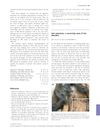
 The document concludes that understanding hair follicle histology and the hair cycle is crucial for diagnosing alopecia.
 34 citations
,
November 2008 in “British Journal of Dermatology”
34 citations
,
November 2008 in “British Journal of Dermatology” Hair extensions can cause hair loss and scalp damage, and these problems might be more common than people realize.
 October 2022 in “IntechOpen eBooks”
 Hair loss due to scarring can be treated by reducing inflammation, removing scar tissue, and transplanting hair. The Follicular Unit Extraction technique is effective but requires skill and time. Future focus should be on scar-less healing methods.
 September 1985 in “Journal of The American Academy of Dermatology”
 Dr. Rasmussen disagrees with Alexander and Schor, emphasizing uncertainty in genital wart transmission and advocating for discussions on potential abuse and referrals in such cases.
15 citations
,
February 2006 in “Journal of Investigative Dermatology” More research is needed to understand and treat cicatricial alopecias.
10 citations
,
July 2019 in “Indian Journal of Dermatology” Weekly azathioprine pulse is a better alternative to corticosteroids for treating alopecia areata due to fewer side effects.
7 citations
,
January 2014 in “International Journal of Trichology” Primary idiopathic pseudopelade of Brocq causes gradual, scarring hair loss with no effective treatment.
 3 citations
,
January 2013 in “Journal of the European Academy of Dermatology and Venereology”
3 citations
,
January 2013 in “Journal of the European Academy of Dermatology and Venereology” The document suggests that severe hair loss in SLE patients may be an early sign of scalp DLE, treatable with immunosuppressive therapy.
 1 citations
,
January 2013 in “Advanced Biomedical Research”
1 citations
,
January 2013 in “Advanced Biomedical Research” Men with more severe hair loss had a lower risk of schizophrenia, but hair loss and testosterone levels were not linked.
 June 2025 in “Cancer Management and Research”
 Improving hair health and managing conditions can enhance scalp cooling effectiveness in preventing hair loss during chemotherapy.
 February 2025 in “JAAD International”
 Five monthly sessions of minoxidil-dutasteride-copper peptide tattooing significantly improve hair regrowth in men with androgenetic alopecia.
 March 2024 in “Facial plastic surgery clinics of North America”
 Finasteride and minoxidil are approved treatments for hair loss, and hair transplants can be effective but require careful patient selection.
 September 2023 in “International Journal of Dermatology”
 Younger people are at a higher risk for Fibrosing Alopecia in a Pattern Distribution than previously thought, with common symptoms and possible involvement of mast cells in its development.
 January 2021 in “Mastology”
 Scalp cooling therapy helped over 80% of women keep at least half their hair during chemotherapy.
May 2019 in “Journal of clinical oncology” Radiation therapy with chemotherapy can cause severe, long-lasting hair loss.
 May 2009 in “Medical and surgical dermatology/Medical & surgical dermatology”
 Hair and nail conditions can stabilize or improve over time, and new treatments show promise.
 4 citations
,
May 2012 in “Journal of Investigative Dermatology”
4 citations
,
May 2012 in “Journal of Investigative Dermatology” The symposium concluded that a specific lipid might cause hair loss, inflammation is a key factor, and stem cells in bald scalps aren't working right, suggesting new treatment targets.