 1 citations
,
March 2021 in “Journal of Dermatology Research and Therapy”
1 citations
,
March 2021 in “Journal of Dermatology Research and Therapy” Women with cicatricial hair loss may have a higher risk of hypertension.
 1 citations
,
January 2014 in “Springer eBooks”
1 citations
,
January 2014 in “Springer eBooks” Adult acne is more common in women, often linked to hormones, and can be harder to treat.
 January 2019 in “ARC journal of pharmaceutical sciences”
 Acne can be managed with various treatments and requires psychological support due to its emotional impact.
 August 2014 in “Warwick Research Archive Portal (University of Warwick)”
 Obesity negatively affects the endometrium, leading to higher miscarriage risk and impaired cell function.
 198 citations
,
July 2011 in “Cochrane library”
198 citations
,
July 2011 in “Cochrane library” Lifestyle changes can improve body composition, excess male hormone levels, and insulin resistance in women with PCOS.
 6 citations
,
January 2010 in “Case Reports”
6 citations
,
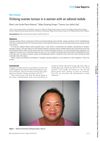
January 2010 in “Case Reports” A woman with high testosterone and an adrenal nodule had an ovarian tumor causing her symptoms, which improved after the tumor was removed.
 2295 citations
,
August 2012 in “The international journal of transgenderism/International journal of transgenderism”
2295 citations
,
August 2012 in “The international journal of transgenderism/International journal of transgenderism” The guidelines recommend informed consent for gender-affirming treatments and stress the importance of personalized, culturally sensitive care for transgender individuals.
 991 citations
,
January 2011 in “Nature Reviews Endocrinology”
991 citations
,
January 2011 in “Nature Reviews Endocrinology” The document concludes that PCOS is a complex disorder caused by both genetic and environmental factors, affecting women's health in various ways, and requires personalized treatment.
 491 citations
,
July 2000 in “The Journal of Clinical Endocrinology and Metabolism”
491 citations
,
July 2000 in “The Journal of Clinical Endocrinology and Metabolism” Polycystic ovary syndrome is found in 6.5% of unselected Caucasian women in Spain.
 378 citations
,
November 2011 in “Human reproduction update”
378 citations
,
November 2011 in “Human reproduction update” Experts recommend using evidence-based methods to diagnose and treat hirsutism, focusing on symptoms and underlying causes.
 298 citations
,
July 2000 in “The Journal of Clinical Endocrinology and Metabolism”
298 citations
,
July 2000 in “The Journal of Clinical Endocrinology and Metabolism” About 6.5% of young Caucasian women in Spain have polycystic ovary syndrome.
 282 citations
,
October 2006 in “The Journal of Clinical Endocrinology and Metabolism”
282 citations
,
October 2006 in “The Journal of Clinical Endocrinology and Metabolism” The Endocrine Society advised against routine testosterone therapy for women, citing a need for more research on long-term safety and a clear definition of androgen deficiency.
 251 citations
,
October 2014 in “The Journal of Clinical Endocrinology & Metabolism”
251 citations
,
October 2014 in “The Journal of Clinical Endocrinology & Metabolism” The guidelines advise against using testosterone and DHEA in women for most conditions due to safety and effectiveness concerns, but suggest considering testosterone for postmenopausal women with low sexual desire.
 222 citations
,
January 2014 in “International journal of reproductive medicine”
222 citations
,
January 2014 in “International journal of reproductive medicine” Insulin resistance and obesity are key factors in the development and worsening of polycystic ovary syndrome, and lifestyle changes are important for managing it.
 216 citations
,
November 1999 in “Fertility and Sterility”
216 citations
,
November 1999 in “Fertility and Sterility” Testing basal 17-HP levels is a good way to screen for nonclassic adrenal hyperplasia in women with high androgen levels.
 197 citations
,
January 2019 in “Neuropsychopharmacology”
197 citations
,
January 2019 in “Neuropsychopharmacology” Male and female bodies respond differently to stress, influenced by hormones and development stages, with implications for stress-related diseases.
 187 citations
,
December 2005 in “Experimental Dermatology”
187 citations
,
December 2005 in “Experimental Dermatology” Estrogens can improve skin aging but carry risks; more research is needed on safer treatments.
 166 citations
,
October 2018 in “Endocrine Reviews”
166 citations
,
October 2018 in “Endocrine Reviews” Hormone treatments for transgender individuals generally improve mental health and physical transition, with some health risks that require medical supervision.
 166 citations
,
March 2007 in “Hypertension”
166 citations
,
March 2007 in “Hypertension” High androgen levels in young women with PCOS are linked to higher blood pressure.
 157 citations
,
May 2021 in “Endocrine Reviews”
157 citations
,
May 2021 in “Endocrine Reviews” Early diagnosis and individualized treatment improve outcomes for Congenital Adrenal Hyperplasia.
 152 citations
,
December 2007 in “Gender Medicine”
152 citations
,
December 2007 in “Gender Medicine” Male and female skin differ due to hormones, affecting conditions like hair loss, acne, and skin cancer, and suggesting a need for gender-specific treatments.
 141 citations
,
January 1984 in “Journal of The American Academy of Dermatology”
141 citations
,
January 1984 in “Journal of The American Academy of Dermatology” Pregnancy can cause skin darkening, varicose veins, more sweating, hair growth, hair loss after birth, nail changes, and gum inflammation.
 134 citations
,
February 2005 in “Neuropsychopharmacology”
134 citations
,
February 2005 in “Neuropsychopharmacology” GABRA2 gene variations impact alcohol response, and hair loss medication finasteride reduces some effects.
 131 citations
,
August 2004 in “Best Practice & Research in Clinical Obstetrics & Gynaecology”
131 citations
,
August 2004 in “Best Practice & Research in Clinical Obstetrics & Gynaecology” The conclusion is that PCOS is caused by ovarian sensitivity to hormones and disrupted hormone control, possibly due to ovarian factors, and more research is needed.
 120 citations
,
June 2008 in “American Journal of Epidemiology”
120 citations
,
June 2008 in “American Journal of Epidemiology” A simple screening method found that 6.3% of women in a semiurban area in Sri Lanka have polycystic ovary syndrome, with most showing menstrual irregularities.
 114 citations
,
January 2007 in “Drug Safety”
114 citations
,
January 2007 in “Drug Safety” Some drugs can cause skin, nail, and hair problems, which are important for healthcare professionals to recognize and report.
 100 citations
,
May 2011 in “Journal of Pediatric and Adolescent Gynecology”
100 citations
,
May 2011 in “Journal of Pediatric and Adolescent Gynecology” The document concludes that proper diagnosis and a multidisciplinary approach are crucial for managing Congenital Adrenal Hyperplasia effectively.
 99 citations
,
December 2010 in “Journal of The European Academy of Dermatology and Venereology”
99 citations
,
December 2010 in “Journal of The European Academy of Dermatology and Venereology” The document concludes that certain genetic mutations and dietary factors are involved in acne development, and treatments like isotretinoin and diet changes can help manage it.
 96 citations
,
February 2007 in “The Journal of Clinical Endocrinology & Metabolism”
96 citations
,
February 2007 in “The Journal of Clinical Endocrinology & Metabolism” Women with type 1 diabetes often have polycystic ovary syndrome and excess male hormones, which are frequently undiagnosed.
 93 citations
,
June 2001 in “The Journal of Clinical Endocrinology and Metabolism”
93 citations
,
June 2001 in “The Journal of Clinical Endocrinology and Metabolism” Certain genetic variations in the AR and ERβ genes can affect androgen levels in women.