 33 citations
,
August 2005 in “The American Journal of Dermatopathology”
33 citations
,
August 2005 in “The American Journal of Dermatopathology” Both vertical and transverse sections are useful for diagnosing alopecia, but using both methods together is best.
 31 citations
,
August 2020 in “EClinicalMedicine”
31 citations
,
August 2020 in “EClinicalMedicine” Male cancer patients have a higher risk of severe illness and death from COVID-19 than female patients.
 31 citations
,
January 2018 in “Pediatric annals”
31 citations
,
January 2018 in “Pediatric annals” Early adrenal gland maturation in young children can be normal, but other serious conditions should be ruled out first.
 28 citations
,
January 2015 in “Journal der Deutschen Dermatologischen Gesellschaft”
28 citations
,
January 2015 in “Journal der Deutschen Dermatologischen Gesellschaft” Women with scarring alopecia have a lower quality of life and more anxiety and depression than those with non-scarring alopecia.
 27 citations
,
August 2010 in “Clinics in Dermatology”
27 citations
,
August 2010 in “Clinics in Dermatology” Hepatitis C virus can cause skin diseases and dermatologists play a crucial role in identifying these conditions.
 24 citations
,
June 2011 in “International Journal of Dermatology”
24 citations
,
June 2011 in “International Journal of Dermatology” Most pregnant women experience skin changes like darkening and itching, while serious skin conditions are rare but need early treatment.
 19 citations
,
January 2011 in “Clinics”
19 citations
,
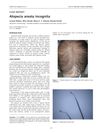
January 2011 in “Clinics” A young woman with a rare hair loss condition improved with steroid and biotin treatment.
 18 citations
,
January 2020 in “Acta dermato-venereologica”
18 citations
,
January 2020 in “Acta dermato-venereologica” Over 67 genes linked to ichthyosis help improve diagnosis and treatment.
 14 citations
,
January 2013 in “International Journal of Trichology”
14 citations
,
January 2013 in “International Journal of Trichology” Treating hair loss requires a comprehensive approach that addresses both physical and emotional aspects, with a focus on diagnosis, patient education, and good communication.
 13 citations
,
September 2018 in “Scientific Reports”
13 citations
,
September 2018 in “Scientific Reports” The research found that a complex gene network, controlled by microRNAs, is important for hair growth in cashmere goats.
 12 citations
,
January 2005 in “Journal of Cosmetic Dermatology”
12 citations
,
January 2005 in “Journal of Cosmetic Dermatology” AGA affects many, progresses differently, and early treatment is crucial.
 12 citations
,
November 1993 in “International Journal of Dermatology”
12 citations
,
November 1993 in “International Journal of Dermatology” The document explains that hirsutism, often caused by hormonal issues, can be managed with treatment to improve both physical appearance and mental health.
 11 citations
,
May 2023 in “Journal of Cancer Research and Clinical Oncology”
11 citations
,
May 2023 in “Journal of Cancer Research and Clinical Oncology” CRISPR/Cas systems show promise for cancer treatment by targeting miRNAs, but delivery and specificity challenges remain.
 10 citations
,
March 2021 in “Skin health and disease”
10 citations
,
March 2021 in “Skin health and disease” COVID-19 patients often have skin issues like chilblain-like lesions and rashes, which can help in early diagnosis and sometimes indicate severe illness.
 10 citations
,
February 2019 in “The New England Journal of Medicine”
10 citations
,
February 2019 in “The New England Journal of Medicine” Removing lymph nodes does not improve survival for advanced ovarian cancer and may cause more complications.
 10 citations
,
July 2013 in “British Journal of Dermatology”
10 citations
,
July 2013 in “British Journal of Dermatology” High MUC-18/MCAM levels in blood indicate a worse outlook for melanoma patients.
 9 citations
,
April 2016 in “Australasian journal of dermatology”
9 citations
,
April 2016 in “Australasian journal of dermatology” Combining imiquimod with diphenylcyclopropenone may improve treatment outcomes for alopecia areata patients who don't respond to diphenylcyclopropenone alone.
 8 citations
,
December 1981 in “Journal of The American Academy of Dermatology”
8 citations
,
December 1981 in “Journal of The American Academy of Dermatology” The document concludes that parathyroid diseases have a range of clinical features and outcomes, with some conditions being treatable and others having a high risk of mortality.
 5 citations
,
September 2002 in “Archives of Dermatology”
5 citations
,
September 2002 in “Archives of Dermatology” Dermatologists diagnose and manage melanoma more effectively than general practitioners.
3 citations
,
September 2019 in “European Medical Journal” Scalp sarcoidosis can cause hair loss and needs accurate diagnosis and treatment with specific medications.
 3 citations
,
January 2013
3 citations
,
January 2013 Hypothyroidism in dogs is usually caused by immune system issues or gland atrophy, affects middle-aged purebreds most, and is treatable with medication.
 2 citations
,
January 2008 in “International Journal of Neuroscience”
2 citations
,
January 2008 in “International Journal of Neuroscience” A 38-year-old man was diagnosed late with Kearns-Sayre syndrome after being wrongly treated for epilepsy.
 1 citations
,
January 2024 in “Annals of Dermatology”
1 citations
,
January 2024 in “Annals of Dermatology” Examining hair shape can help predict Alopecia Areata's progression.
 1 citations
,
May 2017 in “Journal of The American Academy of Dermatology”
1 citations
,
May 2017 in “Journal of The American Academy of Dermatology” A woman's hair grew back after stopping acitretin for psoriasis and getting steroid treatment, and low vitamin D might be linked to alopecia severity.
 1 citations
,
May 2017 in “Journal of The American Academy of Dermatology”
1 citations
,
May 2017 in “Journal of The American Academy of Dermatology” People with alopecia areata often have lower vitamin D levels than healthy people.
 1 citations
,
January 2006 in “Elsevier eBooks”
1 citations
,
January 2006 in “Elsevier eBooks” The conclusion is that different types of hair loss in dogs and cats can be cosmetic or serious, and affected animals should not be bred.
 1 citations
,
December 2010 in “InnovAiT”
1 citations
,
December 2010 in “InnovAiT” The document concludes that accurate diagnosis and appropriate management are crucial for treating various hair disorders, which have significant psychological impacts.
 November 2025 in “Biological Trace Element Research”
 Hair mineral analysis doesn't reliably show blood mineral levels but may help track long-term mineral trends.
Stem cell therapy shows promise for treating hair loss in androgenetic alopecia.
 June 2024 in “Research Square (Research Square)”
 Absence of skin rash and low complement C3 levels increase the risk of lupus nephritis.