 20 citations
,
January 2003 in “Chemical and Pharmaceutical Bulletin”
20 citations
,
January 2003 in “Chemical and Pharmaceutical Bulletin” The new progesterone derivatives effectively inhibit 5α-reductase and bind to the androgen receptor.
January 2007 in “Chinese Journal of Analysis Laboratory” The method accurately measures dichloromethane and chloroform in finasteride.
12 citations
,
May 2024 in “Chemosphere”  25 citations
,
May 2020 in “Progress in Organic Coatings”
25 citations
,
May 2020 in “Progress in Organic Coatings” Castor oil-based polyurethanes are promising for making safe, strong-performing, eco-friendly hair-styling products.
 18 citations
,
January 2002 in “Chemical & pharmaceutical bulletin/Chemical and pharmaceutical bulletin”
18 citations
,
January 2002 in “Chemical & pharmaceutical bulletin/Chemical and pharmaceutical bulletin” New pregnane derivatives were more effective than finasteride at inhibiting a key enzyme for male pattern baldness.
 November 1998 in “Hair transplant forum international”
 Finasteride is considered to have a low risk to fetuses.
 December 2024 in “PubMed”
 TrichoFoam™ effectively delivers multiple hair loss treatments, maintaining their stability and effectiveness.
7 citations
,
August 2007 in “Journal of Biotechnology”  11 citations
,
August 2007 in “Bioorganic & Medicinal Chemistry Letters”
11 citations
,
August 2007 in “Bioorganic & Medicinal Chemistry Letters” Scientists made a chemical (compound 4e) that can be applied on skin to reduce oil production, which can help with acne, but it might cause skin sensitivity to light.
 May 2026 in “International Journal of Scientific Research in Chemistry”
 Finasteride breaks down into new compounds under acidic conditions.
January 2026 in “International Journal of Biological Macromolecules” 11 citations
,
June 2018 in “Annales de dermatologie et de vénéréologie” Hair care products can cause skin irritation and allergies.
 1 citations
,
March 2025 in “Archivos Argentinos de Pediatria”
1 citations
,
March 2025 in “Archivos Argentinos de Pediatria” Exposure to certain chemicals in food and containers may increase the risk of early breast development in young girls.
October 2018 in “Focus on surfactants”  October 2025 in “International Journal of Women’s Dermatology”
 Many women's hair growth products contain harmful ingredients, but eco-friendly options are available.
 January 2008 in “Annals of Nutrition and Metabolism”
 Parthenolide promotes hair growth in mice and may influence pathways related to male pattern baldness.
 74 citations
,
March 1963 in “Archives of Dermatology”
74 citations
,
March 1963 in “Archives of Dermatology” Triparanol therapy can cause hair loss and skin dryness without inflammation or damage to hair follicles or skin structures.
January 2007 in “Journal of Instrumental Analysis” A new method accurately detects tiny amounts of chloroform and dichloromethane in finasteride.
18 citations
,
December 2005 in “Journal of Medicinal Chemistry” A brominated phenoxy compound effectively inhibits a human enzyme and shows potential for clinical use.
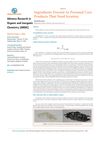
Certain ingredients in personal care products, like formaldehyde, oxidative hair dyes, and sulfates, pose health risks and need careful review.
 11 citations
,
March 2008 in “Experimental Dermatology”
11 citations
,
March 2008 in “Experimental Dermatology” A substance called compound-1 could help increase hair growth by maintaining prostaglandin levels in hair follicles.
3 citations
,
July 2023 in “Acta Biomaterialia” PepACS offers a safer, eco-friendly way to perm, dye, and repair hair.
8 citations
,
March 2015 in “Molecular Medicine Reports” Hair dye ingredient PPD causes cell death and aging in human hair cells by altering microRNA levels.
 January 2026 in “Frontiers in Medicine”
 PP-PTKL may help treat hair greying, but more testing is needed.
 April 2025 in “International Journal of Cosmetic Science”
 A new hair perming method avoids damage and lasts longer than traditional methods.
 17 citations
,
September 2013 in “The International Journal of Neuropsychopharmacology”
17 citations
,
September 2013 in “The International Journal of Neuropsychopharmacology” 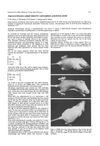 2 citations
,
September 1980 in “Experientia”
2 citations
,
September 1980 in “Experientia” Polyethylene alanine caused hair loss in young lab animals but not in adults, with hair regrowth occurring within 20 days.
 2 citations
,
February 2004 in “Biopolymers”
2 citations
,
February 2004 in “Biopolymers” 4-(4-Phenoxybenzoyl)benzoic acid derivatives can both increase and decrease certain types of reactive oxygen species, and may be relevant to hair loss.
16 citations
,
March 1986 in “Biochemical Pharmacology” 
TrichoFoam™ is a stable option for personalized hair loss treatment with most ingredients remaining effective for 90-180 days.