 February 2026 in “Cureus”
 Castor oil may improve hair and skin health with minimal side effects.
December 2025 in “Skin Appendage Disorders” Topical cetirizine may help increase hair count in androgenetic alopecia.
December 2025 in “International Journal of Molecular Sciences” Opophytum forskahlii seed oil may help with anti-aging and hair growth.
Alopesi tedavisinde ilaçlar saç büyümesini teşvik eder ve yeni yaklaşımlar umut vaat eder.
October 2025 in “International Journal of Molecular Sciences” Rebamipide may help regrow hair by activating hair follicle stem cells.
 August 2025 in “Drug Design Development and Therapy”
 Current treatments for androgenetic alopecia are complex and promising, but more research is needed.
 July 2025 in “Current Treatment Options in Oncology”
 Scalp cooling helps prevent hair loss during chemotherapy, and minoxidil aids regrowth.

New hair regrowth therapies show promise but need more research.
 March 2025 in “Expert Opinion on Drug Discovery”
 New drug strategies are needed for better hair loss treatments.
 January 2025 in “Dermatologic Therapy”
 Targeting multiple pathways may improve treatments for androgenetic alopecia.
August 2024 in “Cosmetics” Personalized treatments for hair loss are becoming more effective by using genetic information.
 April 2024 in “Vestnik oftalʹmologii”
 Stopping minoxidil and using prostaglandin analogues improved the man's eye condition.
 February 2024 in “Sohag Medical Journal”
 Various local treatments for alopecia areata show promise, but individualized plans and more research are needed.
 February 2024 in “Heliyon”
 People with androgenetic alopecia have different lipid levels in their blood, which vary between men and women, and may be linked to a higher risk of metabolic syndrome.
 December 2021 in “Daehanhanuihakoeji”
 The traditional herbal formulas Yongdamsagan-Tang and Paljung-san, along with the drug finasteride, can reduce inflammation and may work together without affecting each other's effectiveness against benign prostatic hyperplasia.
Different types of sun exposure damage skin cells and immune cells, with chronic exposure leading to more severe and lasting damage.
Different types of sun exposure can damage skin cells and affect healing, with chronic exposure being more harmful, and certain immune cells help in the repair process.
March 2020 in “Revista Eletrônica da Faculdade de Ceres” Latanoprost's effectiveness for hair growth is not confirmed but shows promise, needing more research.
New treatments show promise for hair loss, especially JAK inhibitors for alopecia areata.
 April 2019 in “International research journal of pharmacy”
 Adiantum capillus extract reduces pain and swelling in animals.
May 2018 in “Journal of cosmetology & trichology” Combining platelet-rich plasma therapy with prostaglandin-F eye drops can significantly regrow hair in alopecia universalis.
 August 2017 in “DOAJ (DOAJ: Directory of Open Access Journals)”
 New treatments for common hair loss might be safer and more effective than current options.
New treatments for alopecia areata, like JAK inhibitors and immunomodulators, are promising.
 April 2016 in “Journal of Investigative Dermatology”
 Blocking Oncostatin M's role in the JAK-STAT pathway can stimulate hair growth in mice.
 April 2016 in “Journal of Investigative Dermatology”
 Double-stranded RNA activates a pathway that causes a skin protein to be expressed in the wrong place.
 April 2016 in “Journal of Investigative Dermatology”
 Blocking Prostaglandin D₂ (PGD₂) could help treat hair loss.
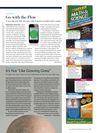 May 2012 in “Scientific American”
 New app improves storm surge predictions; advances in baldness treatment show potential but require time.
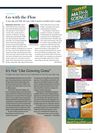 May 2012 in “Scientific American”
 Blocking a compound called prostaglandin D₂ might help treat hair loss.
 April 2012 in “Lab Animal”
 Early exposure to germs may protect against autoimmune diseases, lack of sex increases alcohol preference in fruit flies, a potential baldness treatment could involve blocking a specific receptor, skin memory cells help prevent re-infection, high-fat diets can affect brain cells related to weight, and the link between social status, stress, and heart disease in primates is unclear.
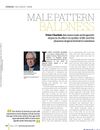
Most American men experience hair loss by age 50, with limited effective treatments available and new options not expected soon.