110 citations
,
February 2024 in “Journal of Chemical Information and Modeling” PandaOmics uses AI to find new disease treatment targets and biomarkers.
ANE syndrome is caused by a mutation in the RBM28 protein that disrupts ribosome assembly.
7 citations
,
February 2020 in “Analytical and Bioanalytical Chemistry”  2 citations
,
May 2021 in “Journal of pharmaceutical and biomedical analysis”
2 citations
,
May 2021 in “Journal of pharmaceutical and biomedical analysis” A new method was developed to accurately detect and measure 47 different drug ingredients in various products.
Inhibiting mTORC2 can reduce DNA repair and increase cancer cell death, suggesting potential for targeted brain cancer treatments.
September 2025 in “OPAL (Open@LaTrobe) (La Trobe University)” Researchers created an efficient method to extract DNA from marmoset hair, reducing blood chimerism.
July 2025 in “Genome biology” HT-scCAT-seq helps understand gene regulation in embryonic skin development.
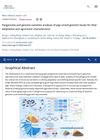
Pangenome analysis reveals key genes for pig adaptation and traits, aiding genetic improvement.
September 2025 in “OPAL (Open@LaTrobe) (La Trobe University)” Researchers created an efficient method to extract DNA from marmoset hair, avoiding blood chimerism.
Keratin peptides in hair may help identify gender and ethnicity, but more research is needed.
24 citations
,
March 2022 in “Genome biology” scINSIGHT accurately identifies cell clusters and gene patterns in complex data.
2 citations
,
July 2025 in “Analytical Chemistry” The method effectively images and correlates elements and metabolites in tissue samples at a micron scale.
1 citations
,
February 1991 in “Journal of Biological Chemistry” 23 citations
,
June 2019 in “Bioanalysis” Monitoring steroid hormones in blood can better detect testosterone doping.
30 citations
,
April 2011 in “Rapid communications in mass spectrometry/RCM. Rapid communications in mass spectrometry” Analyzing hair with this method can help understand and monitor scalp conditions and treatment effects.
1 citations
,
January 2008 in “Massey Research Online (Massey University)” A successful enzyme depilation system needs a broad-spectrum protease that doesn't harm collagen VI.
 January 1999 in “American Journal of Medical Genetics Part A”
 The report expanded knowledge of MBTPS1-related disorders by identifying new symptoms.
 85 citations
,
June 2015 in “Scientific Reports”
85 citations
,
June 2015 in “Scientific Reports” The study found that diseases can be grouped by symptoms and that the accuracy of predicting disease-related genes varies with the data source.
 April 2023 in “Journal of Investigative Dermatology”
 Protein analysis shows aging changes in scalp cell types from women.
 April 2019 in “Journal of Investigative Dermatology”
 The search scheme SMRI is faster and more secure for retrieving encrypted data from the cloud.
April 2026 in “Future Medicinal Chemistry” PROTACs have become a breakthrough in medicine by effectively targeting and degrading specific proteins to treat diseases.
1 citations
,
February 2016 in “Cell Transplantation” Hair follicles have a more inactive cell cycle than other skin cells, which may help develop targeted therapies for skin diseases and cancer.
6 citations
,
August 2016 in “Journal of Visualized Experiments” The CUBIC protocol allows detailed 3D visualization of proteins in mouse skin biopsies.
92 citations
,
December 2005 in “The Journal of clinical investigation/The journal of clinical investigation” Human hair follicle stem cells can be isolated using specific markers for potential therapeutic use.
2 citations
,
August 1987 in “Analytical Biochemistry” A new method isolated previously undetected hair proteins rich in glycine and tyrosine.
6 citations
,
February 2022 in “European journal of endocrinology” The method can measure multiple hormones in women's hair and may help identify hormone-related health issues.
Keratin peptide signatures in hair may help identify gender and ethnicity.
5 citations
,
April 2024 in “ACS Chemical Neuroscience” A new method accurately measures nine neuroactive steroids in small blood samples, helping to study brain diseases.
18 citations
,
February 2020 in “Journal of pharmaceutical and biomedical analysis” The method accurately measures hormones and endocannabinoids in mice, showing gut microbiota diversity affects these levels and may influence stress and reproductive systems.