1 citations
,
January 2017 in “International Journal of Trichology” A new mutation caused a rare hair disorder in a Polish girl, not inherited from her family.
August 2021 in “Indian dermatology online journal” A young boy with a rare skin and nail condition improved significantly with simple topical treatments.
September 2024 in “Dermatologica Sinica” Ponatinib can cause a rare skin reaction that resolves with topical treatment and temporary drug discontinuation.
 105 citations
,
December 2009 in “Archives of dermatology”
105 citations
,
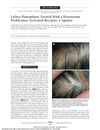
December 2009 in “Archives of dermatology” A specific drug can help treat Lichen Planopilaris, a condition causing permanent hair loss.
1 citations
,
August 2019 in “Journal of Investigative Dermatology” PRDX5 enzyme may contribute to alopecia areata by affecting oxidative stress and autoimmunity.
27 citations
,
July 1993 in “The journal of investigative dermatology/Journal of investigative dermatology” 21 citations
,
June 1991 in “Journal of Inherited Metabolic Disease” Selenium deficiency caused symptoms in a child, which improved with selenium supplements.
 2 citations
,
September 2022
2 citations
,
September 2022 The PER3 rs772027021 SNP may cause mild skin pigmentation changes in a new subtype of dyschromatosis universalis hereditaria.
January 1996 in “Studia iuridica” Two new gene mutations cause a rare hair disorder.

A rigid compound with a common structural motif was successfully synthesized.
 17 citations
,
January 1999 in “Journal of Molecular Structure”
17 citations
,
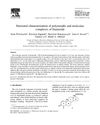
January 1999 in “Journal of Molecular Structure” Finasteride's molecular and crystal structures help develop new drug formulations.
 April 2012 in “KSBB Journal”
 Minoxidil analogs can be improved for hair growth inhibition by modifying specific parts of their structure.
 May 2024 in “Journal of molecular structure”
 A new compound, 3a, effectively fights prostate cancer better than finasteride.
3 citations
,
May 2019 in “Journal of Cosmetic Dermatology” Pro-Ile could be used in cosmetics to improve skin, hair growth, and healing.
 January 2026 in “Journal of Emerging Technologies and Innovative Research”
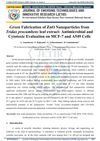
 Zinc oxide nanoparticles made from Tridax procumbens leaves show strong antibacterial and anticancer effects.
 December 2022 in “Acta Ophthalmologica”
 Dutasteride potentially improves cell survival and reduces retinal damage in retinitis pigmentosa.
 81 citations
,
October 2014 in “The journal of investigative dermatology/Journal of investigative dermatology”
81 citations
,
October 2014 in “The journal of investigative dermatology/Journal of investigative dermatology” Certain genes control the color of human hair by affecting pigment production.
59 citations
,
March 2003 in “The Lancet” Imatinib can repigment grey hair, while SU11428 can cause temporary hair depigmentation.
 June 2023 in “Pediatric investigation”
 A boy's scalp infection, usually found on the body, was effectively treated with antifungal cream.
 1 citations
,
June 2020 in “Journal of AOAC INTERNATIONAL”
1 citations
,
June 2020 in “Journal of AOAC INTERNATIONAL” Two new methods accurately measure Aminexil, Pyridoxine, and Niacinamide in hair products.
 8 citations
,
July 2018 in “Analytical sciences”
8 citations
,
July 2018 in “Analytical sciences” Using 5-butylpicolinate esters improves the sensitivity and reliability of detecting testosterone and dihydrotestosterone in saliva.
8 citations
,
June 1981 in “Clinica Chimica Acta”  19 citations
,
May 1992 in “International Journal of Dermatology”
19 citations
,
May 1992 in “International Journal of Dermatology” Some alternative vitiligo treatments show promise, but none are as effective as psoralens and UVA.
July 2022 in “International Journal of Contemporary Medicine” Lower Paraoxonase 1 levels in alopecia areata patients suggest antioxidant treatment might help.
47 citations
,
July 1998 in “Journal of Investigative Dermatology” A new mutation, Glu402Lys, in hair keratin is linked to variable symptoms of monilethrix.
3 citations
,
October 2025 in “Cancer” PROTACs offer a new, precise way to treat cancer by breaking down harmful proteins.
 November 2023 in “Journal of the American Academy of Dermatology”
 Skin of color can spontaneously repigment after a phenol-croton oil chemical peel.
September 1997 in “Clinical and Experimental Dermatology” June 2015 in “Reactions weekly” December 2012 in “Reactions weekly”