53 citations
,
October 2003 in “Genetics” The mK6irs1/Krt2-6g gene likely causes wavy hair in mice.
112 citations
,
August 2012 in “The American Journal of Human Genetics” Mutations in the RBPJ gene cause Adams-Oliver Syndrome.
Deleting the MAD2L1 gene in mice led to rapid tumor growth despite chromosomal instability.
 January 2013 in “International Journal of Trichology”
 A new mutation in the TRPS1 gene was found in a Ukrainian girl with Trichorhinophalangeal syndrome type I.
1 citations
,
October 2019 in “International Journal of Dermatology and Venereology” Zebrafish help understand genetic causes of skin pigment disorders like albinism.
MFN2 mutations cause mitochondrial problems, leading to more upper body fat and lower leptin levels.
The balance between cell renewal and differentiation controls the growth of cancerous cells in mouse skin.
 5 citations
,
November 2022 in “Genetics selection evolution”
5 citations
,
November 2022 in “Genetics selection evolution” Low-coverage sequencing is a cost-effective way to find genetic factors affecting rabbit wool traits.
1 citations
,
December 2020 in “International journal of molecular sciences” External factors can cause skin cancer cells that usually don't spread to grow and form tumors in mice.
May 2026 in “ACS Catalysis” Efficient enzyme function relies on specific residue interactions and structural coordination.
 2 citations
,
June 2014 in “مجلة مركز بحوث التقنيات الاحيائية”
2 citations
,
June 2014 in “مجلة مركز بحوث التقنيات الاحيائية” Five different TPO gene mutations were found in PCOS patients with thyroid hormone issues.
 October 2022 in “Rheumatology (Bulgaria)”
 Accurate diagnosis of progressive supranuclear palsy requires thorough neurological assessments and MRI.
January 2020 in “ScholarWorks (Central Washington University)” NAG-1 may help prevent some metabolic issues related to PCOS.
 301 citations
,
May 1998 in “Genes & Development”
301 citations
,
May 1998 in “Genes & Development” Ets2 gene is crucial for placental development in mice.
 2 citations
,
October 2015 in “Human Gene Therapy”
2 citations
,
October 2015 in “Human Gene Therapy” The congress highlighted new gene therapy techniques and cell transplantation methods for treating diseases.
1 citations
,
October 2025 in “International Journal of Molecular Sciences” Mutating the gmds gene in zebrafish increases hair cell numbers and regeneration.
3 citations
,
April 2025 in “Science Advances” Loss of Ten1 in mice causes telomere shortening and symptoms similar to human dyskeratosis congenita.
17 citations
,
April 2011 in “Journal of Dermatological Science” The study created a mouse model that survives longer and shows fewer symptoms of pemphigus vulgaris.
78 citations
,
May 2012 in “Journal of Investigative Dermatology” A specific gene mutation causes woolly hair and hair loss.
May 2025 in “Dermatology Reports” A genetic mutation in the LIPH gene causes a rare hair disorder with sparse, curly hair.
4 citations
,
October 2003 in “Annales de Génétique” A specific gene mutation causes different hair defects in Indian monilethrix families.
 15 citations
,
November 2015 in “Trends in biotechnology”
15 citations
,
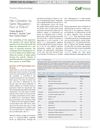
November 2015 in “Trends in biotechnology” Gene regulation could revolutionize hair color by altering pigmentation from within.
 9 citations
,
August 2013 in “PLOS ONE”
9 citations
,
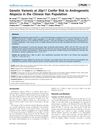
August 2013 in “PLOS ONE” Genetic variants at 20p11 increase baldness risk in Chinese Han people.
 37 citations
,
October 2015 in “European Journal of Human Genetics”
37 citations
,
October 2015 in “European Journal of Human Genetics” Genetic data can predict male-pattern baldness with moderate accuracy, especially for early-onset cases in some European men.
8 citations
,
June 2001 in “Journal of Biological Chemistry” A truncated protein linked to breast cancer may change cell adhesion.
22 citations
,
May 2007 in “Molecular Biotechnology”  2 citations
,
September 2023 in “Aging”
2 citations
,
September 2023 in “Aging” Elastic Net DNA methylation clocks are inaccurate for predicting age and health status; a "noise barometer" may better indicate aging and disease.
Skin cells can naturally limit the growth of cancerous changes by balancing cell renewal and differentiation.
 1 citations
,
July 2022 in “Вопросы современной педиатрии”
1 citations
,
July 2022 in “Вопросы современной педиатрии” Progeria causes early aging due to a gene mutation, affecting skin, bones, and heart, with treatments aimed at improving life quality.
 January 2024 in “Wiadomości Lekarskie”
 pbn-STAC effectively finds strategies for cellular reprogramming using deep reinforcement learning.