January 2026 in “American Journal of Medical Genetics Part A” A new genetic variant causes trichothiodystrophy in two brothers, but their mother may carry it without showing symptoms.
 53 citations
,
June 1993 in “Proceedings of the National Academy of Sciences of the United States of America”
53 citations
,
June 1993 in “Proceedings of the National Academy of Sciences of the United States of America” LY191704 is a compound that effectively blocks a specific enzyme involved in hormone conversion and could help treat enlarged prostate and hair loss.
215 citations
,
November 2000 in “Journal of Investigative Dermatology” The system allows precise control of gene expression in mouse skin, useful for studying skin biology.
 24 citations
,
January 2019 in “Theranostics”
24 citations
,
January 2019 in “Theranostics” Loss of Pten in certain hair follicle stem cells increases skin cancer risk.
14 citations
,
February 1991 in “FEBS Letters” Introducing the rat OTC gene partially corrected OTC deficiency in mice.
26 citations
,
January 1992 in “Carcinogenesis” TPA strongly increases ODC activity in certain skin cells, potentially aiding tumor growth.
4 citations
,
August 2022 in “Cells” lncRNA2919 slows down rabbit hair growth by stopping cell growth and causing cell death.
6 citations
,
October 2014 in “International Journal of Molecular Sciences” Tanshinone IIA helps protect tissue from low oxygen damage by activating certain cell pathways.
3 citations
,
October 1994 in “Journal of Dermatological Science” The new antibody, TYHF-1, specifically targets certain hair-related structures.
 April 2026 in “Human Genome Variation”
 The MBTPS2 gene variant c.970+5G>A is a common mutation causing IFAP syndrome.
April 2023 in “Journal of Investigative Dermatology” AL136131.3 slows hair growth by affecting energy processes in hair loss.
 November 2023 in “Scientific reports”
 The research identified and described a gene important for hormone conversion in endangered catfish, which varies in activity during different reproductive stages and after hormone treatment.
14 citations
,
August 2014 in “The FASEB Journal” CAP1/Prss8 does not activate PAR2 or inhibit PN-1.
 April 2016 in “Journal of Investigative Dermatology”
 Microneedle arrays deliver botulinum toxin effectively for sweat suppression, similar to injections.
5 citations
,
March 2020 in “Thoracic Cancer” CT-707 is effective and safe for treating certain Chinese lung cancer patients.
 12 citations
,
August 2022 in “Stem cell reviews and reports”
12 citations
,
August 2022 in “Stem cell reviews and reports” Increasing PBX1 reduces aging and cell death in hair follicle stem cells by boosting SIRT1 and lowering PARP1 activity.
 23 citations
,
December 2013 in “British Journal of Dermatology”
23 citations
,
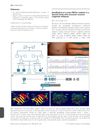
December 2013 in “British Journal of Dermatology” A new gene mutation linked to a skin condition was found in a Spanish family.
 11 citations
,
March 2020 in “American Journal of Medical Genetics Part A”
11 citations
,
March 2020 in “American Journal of Medical Genetics Part A” A mutation in the EDNRA gene causes Oro-Oto-Cardiac syndrome, affecting face and heart development.
188 citations
,
June 1998 in “Molecular cell” Researchers created a mouse with the same mutation as humans with trichothiodystrophy, showing similar symptoms and confirming the condition is due to defects in DNA repair and gene activity.
11 citations
,
April 2012 in “Journal of Investigative Dermatology” A specific mutation in PA-PLA1α causes abnormal hair growth.
 August 2016 in “Journal of Investigative Dermatology”
 Researchers found a new genetic mutation linked to a hair condition in a Japanese boy.
July 2024 in “Journal of Investigative Dermatology” ATR12-351 ointment safely delivers LEKTI protein to the skin, reducing enzyme activity in Netherton syndrome.
 28 citations
,
July 2007 in “Development”
28 citations
,
July 2007 in “Development” TAF4 is important for skin cell growth and helps prevent skin cancer in mice.
July 2025 in “Clinical Case Reports” A new genetic mutation in the TRPS1 gene causes Trichorhinophalangeal Syndrome, leading to specific hair, dental, and bone issues.
 51 citations
,
January 2024 in “Nanoscale”
51 citations
,
January 2024 in “Nanoscale” Nano-PROTACs could improve drug targeting and delivery by using nanotechnology.
7 citations
,
February 2011 in “Journal of dermatology” The 736T>A mutation in the LIPH gene is common in Japanese people with autosomal recessive woolly hair.
 3 citations
,
April 2012 in “Bioinformation”
3 citations
,
April 2012 in “Bioinformation” Two specific SNPs in the TRPS1 gene cause excessive hair growth by altering the protein's structure.
 3 citations
,
January 2018 in “Postępy Dermatologii i Alergologii”
3 citations
,
January 2018 in “Postępy Dermatologii i Alergologii” Longer TA repeats in the SRD5A2 gene may increase acne risk in Chinese people.
July 2024 in “Journal of Investigative Dermatology” A KLK5 inhibitor effectively improved skin symptoms in a mouse model of Netherton Syndrome.
 11 citations
,
September 2011 in “Biochemical journal”
11 citations
,
September 2011 in “Biochemical journal” Neurotrophin-4 increases calcium current in specific mouse neurons through the PI3K pathway.