1 citations
,
December 2007 The micropunctiform technique for hair restoration is safe, simple, and creates a natural hairline.
1 citations
,
January 2001 in “Acta Archaeologica Academiae Scientiarum Hungaricae” FUE is a less invasive hair restoration method that avoids visible scars and reduces recovery time.
 1 citations
,
January 1993 in “Facial Plastic Surgery”
1 citations
,
January 1993 in “Facial Plastic Surgery” Surgical hair restoration has improved since 1959, with new techniques like minigrafts, micrografts, and scalp reductions creating more natural hairlines and reducing bald skin, despite some risks and potential for scarring.
 1 citations
,
June 1979 in “The Journal of Dermatologic Surgery and Oncology”
1 citations
,
June 1979 in “The Journal of Dermatologic Surgery and Oncology” Doctors successfully rebuilt a sideburn using skin and hair from near the ear in one surgery.

FUE hair transplantation is a minimally invasive method for treating hair loss.

Posaconazole successfully treated a resistant skin infection in a Spitz dog when other antifungals failed.
 January 2026 in “Preprints.org”
 Posaconazole effectively treated a resistant fungal infection in a Spitz dog.
October 2025 in “The Sri Lanka Journal of Dermatology” Inverted follicular keratosis can look like cancer but is actually a harmless tumor.
 February 2025 in “Dermatologic Surgery”
 Hair transplantation is the best method for restoring hair, especially for genetic hair loss.
 December 2024 in “Journal of Clinical Medicine of Kazakhstan”
 Vitiligo treatments include JAK inhibitors, UVB phototherapy, and dietary changes, with emotional support being important.
 September 2024 in “Journal of Cutaneous and Aesthetic Surgery”
 A young man with severe neck and beard burns was successfully treated, restoring neck movement and improving skin appearance.
December 2023 in “Journal of Asia Pacific Aesthetic Sciences” Using one's own hair stem cells can improve hair density in Asian individuals with hair loss.
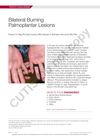
The woman was diagnosed with lichen sclerosus, a rare skin condition, after initial misdiagnosis and ineffective treatments.
 August 2023 in “Journal of the American Academy of Dermatology”
 A scalp biopsy is essential for accurately identifying different types of hair loss.
 July 2023 in “Journal of Clinical Medicine”
 The document concludes that understanding hair follicle histology and the hair cycle is crucial for diagnosing alopecia.
October 2022 in “Hair Transplantation” Improper hair transplant techniques can lead to unnatural results, but practical solutions exist to fix them.
 October 2021 in “The Egyptian Journal of Hospital Medicine ”
 Combination therapies work better than single treatments for atrophic acne scars.
April 2020 in “The journal of investigative dermatology/Journal of investigative dermatology” Certain surgical methods are better than routine incision for hidradenitis suppurativa, topical clindamycin and acitretin are effective treatments, men with HS have a risk of skin cancer, HS patients are more likely to die from heart problems, and specific genetic markers are linked to treatment response.
 January 2020 in “Hair transplant forum international”
 The type of previous hair restoration surgery might affect the success of a later one, with strip harvesting possibly leading to fewer damaged hair follicles.
 November 2018 in “Springer eBooks”
 The document concludes that hair transplant methods are often selected for provider convenience over patient benefit, highlighting the need for less invasive techniques and careful physician involvement for better results.
 July 2018 in “Elsevier eBooks”
 The most common cause of hair loss in children is tinea capitis, followed by alopecia areata and telogen effluvium.
 July 2017 in “JAMA Dermatology”
 The document corrects a missing conflict of interest and acknowledges a pioneer in hair transplantation and his other contributions.
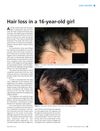 November 2014 in “Prescriber”
 The 16-year-old girl with hair loss was successfully treated for alopecia areata, leading to significant hair regrowth.
 January 2014 in “Pathology”
 Non-scarring hair loss can be diagnosed with two 4mm punch biopsies, one cut vertically and the other transversely.

Scalp flaps in hair restoration surgery provide immediate results, prevent temporal hair loss, offer great density, and allow for large hair re-allocation, making them a popular choice, especially in Asian countries.
 August 2009 in “Journal of Oral and Maxillofacial Surgery”
 Hair transplantation and micrografting are effective for cosmetic facial enhancement, requiring careful technique and postoperative care for successful outcomes.
 August 2009 in “Journal of Oral and Maxillofacial Surgery”
 The document concludes that understanding hair loss patterns and careful surgical techniques are key for successful hair transplantation in oral and maxillofacial surgery.
 February 2009 in “Journal of the American Academy of Dermatology”
 Transverse sections are better for non-scarring hair loss, vertical sections are better for lichen planopilaris, and either method works for other scarring hair loss types.
 November 2008 in “Facial Plastic Surgery”
 Hair restoration techniques have evolved from large punch grafts to microfollicular unit transplants, with future advancements potentially including hair cloning.

The book details advanced techniques in cosmetic dermatology for experienced surgeons.