 12 citations
,
July 1957 in “Journal of Investigative Dermatology”
12 citations
,
July 1957 in “Journal of Investigative Dermatology” Giving dihydrotachysterol to mother rats caused skin hardening and bone issues in their babies through milk.
7 citations
,
January 1973 in “Calcified Tissue International” Hair follicle tissue can induce mineral formation, likely due to a potent nucleator.
1 citations
,
May 2025 in “Journal of the Indian Chemical Society”  31 citations
,
September 2014 in “International Journal of Dermatology”
31 citations
,
September 2014 in “International Journal of Dermatology” Anthralin is effective for psoriasis and alopecia with minimal systemic side effects but can irritate the skin.
16 citations
,
March 1986 in “Biochemical Pharmacology”  1 citations
,
October 2024 in “FARMACIA”
1 citations
,
October 2024 in “FARMACIA” Low levels of zinc and selenium in the body are linked to a higher risk of cataracts.
July 2024 in “Journal of Investigative Dermatology” PP405 may help hair growth by activating hair follicle stem cells.
January 2024 in “ResearchWorks at the University of Washington (University of Washington)” LA-ICP-MS effectively measures zinc, lead, and mercury in hair.
14 citations
,
January 2022 in “Evidence-based Complementary and Alternative Medicine” Cryptotanshinone may help treat postmenopausal osteoporosis and protect kidneys.
16 citations
,
November 2008 in “Journal of the American Academy of Dermatology” Consider necrolytic acral erythema in similar cases and treat with oral zinc sulfate.
 4 citations
,
January 2014 in “Indian dermatology online journal”
4 citations
,
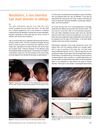
January 2014 in “Indian dermatology online journal” Monilethrix is a genetic hair disorder causing fragile, beaded hair with no effective treatment.
 July 1999 in “Journal of The European Academy of Dermatology and Venereology”
 Bath PUVA therapy works well for a skin condition without as many cancer risks and is cheaper, and iron deficiency might not cause female hair loss.
June 2015 in “Reactions weekly” December 2012 in “Reactions weekly” 84 citations
,
June 1970 in “Journal of Investigative Dermatology” 14 citations
,
August 2017 in “International Journal of Immunopathology and Pharmacology” Photodynamic therapy improved skin issues from sorafenib when other treatments failed.
7 citations
,
April 1996 in “Archives of dermatological research” Topical tacalcitol can treat psoriasis by acting directly on skin cells.
 9 citations
,
March 1968 in “The BMJ”
9 citations
,
March 1968 in “The BMJ” A woman's severe skin reaction was caused by an allergy to a skin treatment.
42 citations
,
January 2002 in “Skin Pharmacology and Physiology” Reconstructed skin models are useful for studying how skin processes certain chemicals.
 32 citations
,
September 2015 in “Dermatology”
32 citations
,
September 2015 in “Dermatology” Certain leukemia drugs can cause severe skin reactions that may require stopping treatment.
 April 2023 in “Journal of Investigative Dermatology”
 A protein called MPZL3 in mitochondria slows down hair growth and could be a target for treating hair growth disorders.
2 citations
,
August 2023 in “Molecules” SH-340 may improve skin barrier and help treat atopic dermatitis.
51 citations
,
September 2012 in “Biomacromolecules” Disulfide bonds make keratin in hair stronger and tougher.
 November 2025 in “Preprints.org”
 Phenytoin and spironolactone help prevent hair loss from chemotherapy by reducing stress and inflammation.
2 citations
,
January 2025 in “Journal of Nanobiotechnology” A new engineered treatment shows promise in curing heart fibrosis.
27 citations
,
January 2017 in “Journal of clinical and diagnostic research” A woman poisoned with thallium was successfully treated with activated charcoal and Prussian blue.
2 citations
,
October 2021 in “Clinical and experimental dermatology” Cyperus rotundus essential oil effectively treats underarm darkening, reduces inflammation, and slows hair growth.
 January 2026 in “Cosmoderma”
 A 9-year-old girl has a rare hair disorder causing beaded, sparse hair.
 10 citations
,
January 2013 in “International journal of trichology”
10 citations
,
January 2013 in “International journal of trichology” A woman's scalp nodules were successfully treated with antifungal and anti-lice medications, revealing a rare case of mixed piedra infection.
 January 2022 in “Social Science Research Network”
 A special coating was made for artificial hair fibers that can slowly release silver ions for up to 56 days, providing long-term protection against bacteria and inflammation.