 26 citations
,
April 2019 in “Genes”
26 citations
,
April 2019 in “Genes” lncRNA XLOC_008679 and gene KRT35 affect cashmere fineness in goats.
 20 citations
,
January 2013 in “Cell & Bioscience”
20 citations
,
January 2013 in “Cell & Bioscience” Understanding how epigenetic regulation affects stem cells is key to cancer insights and new treatments.
 18 citations
,
May 2020 in “Biomolecules”
18 citations
,
May 2020 in “Biomolecules” Spironolactone, a heart and liver drug, has new uses including cancer treatment, viral infection prevention, and skin condition improvement.
 18 citations
,
April 2014 in “Stem cells”
18 citations
,
April 2014 in “Stem cells” The study found stem cells in minor salivary glands that can differentiate and are involved in tumor formation when exposed to tobacco.
 12 citations
,
September 2024 in “Frontiers in Immunology”
12 citations
,
September 2024 in “Frontiers in Immunology” Mitochondrial genes help predict breast cancer outcomes and spread.
 12 citations
,
August 2022 in “Stem cell reviews and reports”
12 citations
,
August 2022 in “Stem cell reviews and reports” Increasing PBX1 reduces aging and cell death in hair follicle stem cells by boosting SIRT1 and lowering PARP1 activity.
 9 citations
,
August 2024 in “Tissue Engineering and Regenerative Medicine”
9 citations
,
August 2024 in “Tissue Engineering and Regenerative Medicine” Collagen-heparin-FGF2-VEGF scaffolds can improve skin healing.
 5 citations
,
January 2021 in “iScience”
5 citations
,
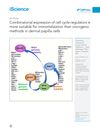
January 2021 in “iScience” Using a combination of specific cell cycle regulators is better for safely keeping hair root cells alive indefinitely compared to cancer-related methods.
 5 citations
,
May 2023 in “European Journal of Human Genetics”
5 citations
,
May 2023 in “European Journal of Human Genetics” NIPT can help detect potential maternal cancer, and GIPXplore can identify immune diseases in pregnancies.
3 citations
,
April 2022 in “Research Square (Research Square)” PBX1 reduces aging and cell death in stem cells by boosting SIRT1 and lowering PARP1.
 1 citations
,
November 2025 in “Cell Death and Disease”
1 citations
,
November 2025 in “Cell Death and Disease” Understanding how mesenchymal stem cells stay undifferentiated can improve their use in treating diseases.

Custom skincare can be made based on genes, fewer cats in Lublin have FeLV/FIV than national average, and studies also looked at small water bodies, river pollution, guppy growth, toxins in biochars, palm oil issues, and pumpkin seed oil for hair strength.

More research is needed to confirm the potential of various treatments, including Helichrysum plicatum, vitamins, bromelain, personalized medications, hydrogels, and bacteriophage therapy.
 September 2022 in “Research Square (Research Square)”
 Increasing Rps14 helps grow more inner ear cells and repair hearing cells in baby mice.
 January 2018 in “Stem cell biology and regenerative medicine”
 The conclusion is that the nuclear lamina and LINC complex in skin cells respond to mechanical signals, affecting gene expression and cell differentiation, which is important for skin health and can impact skin diseases.
 August 2007 in “Journal of Investigative Dermatology”
 The meeting discussed vitamin D3's role in fighting tuberculosis, potential treatments for skin conditions like psoriasis, and hair follicle regeneration as a possible solution for hair loss.
 November 2022 in “CARDIOMETRY”
 A group has developed therapies that show promise for treating cancer and various other conditions.
 883 citations
,
August 2016 in “Nature Reviews Disease Primers”
883 citations
,
August 2016 in “Nature Reviews Disease Primers” Polycystic Ovary Syndrome (PCOS) is a common condition in women that can cause metabolic, reproductive, and psychological issues, and requires lifestyle changes and medication for management.
 359 citations
,
September 2017 in “European Journal of Epidemiology”
359 citations
,
September 2017 in “European Journal of Epidemiology” The Rotterdam Study updated findings on elderly health, focusing on heart disease, genetics, lifestyle effects, and disease understanding.
 308 citations
,
December 2018 in “PLOS Genetics”
308 citations
,
December 2018 in “PLOS Genetics” The research found that PCOS has common genetic factors regardless of how it is diagnosed and is linked to metabolic and reproductive issues.
 218 citations
,
January 2013 in “The Lancet Oncology”
218 citations
,
January 2013 in “The Lancet Oncology” Chemotherapy causes hair loss by damaging hair follicles and stem cells, with more research needed for prevention and treatment.
 161 citations
,
August 2013 in “Journal of experimental botany”
161 citations
,
August 2013 in “Journal of experimental botany” Certain inhibitors slow down plant growth by causing early cell specialization without changing the cell development pattern.
 116 citations
,
September 2020 in “Nature Communications”
116 citations
,
September 2020 in “Nature Communications” The research identified various cell types in mouse and human teeth, which could help in developing dental regenerative treatments.
 68 citations
,
September 2018 in “International Journal of Molecular Sciences”
68 citations
,
September 2018 in “International Journal of Molecular Sciences” Air pollution (PM10) increases skin inflammation and aging by reducing collagen and may trigger a repair response in skin cells.
 60 citations
,
August 2008 in “Human molecular genetics online/Human molecular genetics”
60 citations
,
August 2008 in “Human molecular genetics online/Human molecular genetics” A position effect on the TRPS1 gene causes excessive hair growth in humans and mice.
 50 citations
,
April 2014 in “Nature Communications”
50 citations
,
April 2014 in “Nature Communications” The research identified new skin traits in mice, some linked to human skin conditions.
 46 citations
,
July 2007 in “Journal of comparative neurology”
46 citations
,
July 2007 in “Journal of comparative neurology” Manatee whiskers are specially adapted for touch in water.
 42 citations
,
February 2021 in “Signal Transduction and Targeted Therapy”
42 citations
,
February 2021 in “Signal Transduction and Targeted Therapy” Hair follicle regeneration possible, more research needed.
 36 citations
,
April 2016 in “British journal of dermatology/British journal of dermatology, Supplement”
36 citations
,
April 2016 in “British journal of dermatology/British journal of dermatology, Supplement” A substance called VIP might protect hair follicles from being attacked by the immune system, and problems with VIP signaling could lead to hair loss in alopecia areata.
 29 citations
,
March 2023 in “European Journal of Human Genetics”
29 citations
,
March 2023 in “European Journal of Human Genetics” New genetic factors linked to acne risk were discovered, highlighting the role of certain pathways and genes.