January 2026 in “Aging and Disease” The α-MSH-MC1R-cAMP pathway does not protect skin cells from UVA damage.
 19 citations
,
December 2015 in “Journal of Investigative Dermatology”
19 citations
,
December 2015 in “Journal of Investigative Dermatology” The protein p53 directly reduces the production of Keratin 17, a skin and hair protein, in rats with radiation dermatitis.
5 citations
,
May 2024 in “Journal of Cosmetic Dermatology” Engineered nanovesicles from hair follicle stem cells can effectively treat UVB-induced skin aging.
 March 2026 in “Molecules”
 Camellia sinensis seed flavonoids can reduce skin inflammation and damage from UV rays.
 10 citations
,
August 2021 in “EMBO Reports”
10 citations
,
August 2021 in “EMBO Reports” The Bcl-2 protein is important for keeping hair follicle stem cells working and preventing hair loss.
6 citations
,
November 2018 in “American journal of transplantation” UV light helped human hair transplants survive in mice without broad immunosuppression.
 4 citations
,
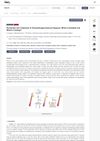
March 2023 in “Current Oncology”
4 citations
,
March 2023 in “Current Oncology” Scalp cooling is the only FDA-approved method to prevent hair loss from chemotherapy, but other treatments like minoxidil and PRP are being tested.
 1 citations
,
September 2023 in “Journal of Investigative Dermatology”
1 citations
,
September 2023 in “Journal of Investigative Dermatology” Melatonin may protect hair follicle cells from damage caused by a chemotherapy drug.
 February 2026 in “International Journal of Molecular Sciences”
 Brazilian pepper tree leaf extract effectively protects skin cells from UVC damage and is a strong natural skincare option.
17 citations
,
May 2019 in “Journal of International Medical Research” Xiaoaiping reduces chemotherapy side effects and improves quality of life for breast cancer patients.
9 citations
,
January 2021 in “Mediators of Inflammation” 15d‐PGJ2 cream protects against UVB-induced skin damage in mice.
 3 citations
,
April 2021 in “Biomolecules & Therapeutics”
3 citations
,
April 2021 in “Biomolecules & Therapeutics” The protein ER71/ETV2 helps regrow hair after chemotherapy by improving the growth of new blood vessels.
2 citations
,
January 2015 November 2025 in “JAAD Case Reports” Oral dutasteride, minoxidil, and finasteride may help reduce hair loss in breast cancer survivors, but more research is needed.
 July 2023 in “Photodermatology, Photoimmunology and Photomedicine”
 Infrared radiation can cause skin aging and cancer at high temperatures but may have therapeutic benefits at controlled levels.
September 2016 in “Springer eBooks” Gray hair is caused by oxidative stress damaging hair cells.
30 citations
,
September 2014 in “Journal of Investigative Dermatology” Blocking Sonic Hedgehog signaling may help manage hair loss from chemotherapy.
8 citations
,
August 2014 in “Journal of Clinical Oncology” Stereotactic body radiation therapy and radiosurgery are advanced, precise treatments that target tumors while protecting healthy tissue.
 April 2024 in “Histochemistry and cell biology”
 N-acetylcysteine may prevent hair loss caused by chemotherapy.
2 citations
,
June 2024 in “JAAD reviews.” Some drugs can cause permanent hair loss, though it's rare.
 7 citations
,
February 2023 in “Inflammation and Regeneration”
7 citations
,
February 2023 in “Inflammation and Regeneration” The protein interleukin-1 alpha helps regenerate hair follicles and increase stem cell growth in mice.
October 2025 in “International Journal of Molecular Sciences” Rebamipide may help regrow hair by activating hair follicle stem cells.
December 2024 in “International Journal of Molecular Sciences” Platelet-rich fibrin may help reduce nonmelanoma skin cancer cell growth.
 January 2024 in “Journal of Ayurveda and integrative medicine”
 Millets may help reduce chemotherapy side effects like nausea, fatigue, and hair loss.
17 citations
,
June 2020 in “Anais brasileiros de dermatologia/Anais Brasileiros de Dermatologia” Scalp cooling is an effective way to prevent hair loss from chemotherapy.
 12 citations
,
April 2020 in “British Journal of Dermatology”
12 citations
,
April 2020 in “British Journal of Dermatology” Caffeine may help reduce stress-induced hair loss.
 2 citations
,
March 2017 in “Asian Journal of Beauty and Cosmetology”
2 citations
,
March 2017 in “Asian Journal of Beauty and Cosmetology” Caffeic acid protects human scalp cells from UV damage.
YH0618 helps reduce chemotherapy-induced hair loss by targeting specific proteins and pathways.
Ganoderma lucidum extract may help treat stress-related hair loss.
 December 2023 in “Trials”
 The trial is testing if a helmet that uses light can prevent hair loss during chemotherapy.