 19 citations
,
October 2008 in “Journal der Deutschen Dermatologischen Gesellschaft”
19 citations
,
October 2008 in “Journal der Deutschen Dermatologischen Gesellschaft” Anti-cancer treatments can cause reversible hair loss, skin sensitivity, pigmentation changes, nail damage, and skin reactions, with a need for more research on managing these side effects.
January 2008 in “Projeto: revista mensal de arquitetura” Targeted cancer drugs can cause skin reactions, so dermatologists must manage these effects.
 November 2019 in “Neuro-oncology”
 Rind-based techniques can lower scalp radiation dose and reduce hair loss in brain cancer treatment.
8 citations
,
September 2015 in “Radiotherapy and oncology” Scalp cooling does not stop hair loss from radiotherapy.
52 citations
,
May 2011 in “APOPTOSIS” Hydroxyl radicals cause hair follicle cell death during chemotherapy by reducing Bcl-2 protein levels.
 1 citations
,
June 2023 in “Radiation oncology journal”
1 citations
,
June 2023 in “Radiation oncology journal” Low-dose radiation therapy may improve brain function in some Alzheimer's patients and is generally well-tolerated.
January 2016 in “한국공업화학회 연구논문 초록집” The nanoparticles show promise for cancer treatment and diagnosis with fewer side effects.
 18 citations
,
October 2020 in “Radiation Research”
18 citations
,
October 2020 in “Radiation Research” Some drugs may help treat both COVID-19 and radiation injury.
May 2025 in “Drug Delivery and Translational Research” 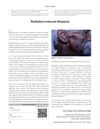 17 citations
,
January 2010 in “International journal of trichology”
17 citations
,
January 2010 in “International journal of trichology” A man experienced hair loss from radiotherapy, which can be temporary or permanent depending on radiation dose, with potential treatments available.
Melatonin may protect hair follicle stem cells from damage caused by chemotherapy.
 April 2026 in “bioRxiv (Cold Spring Harbor Laboratory)”
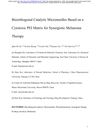
 A new microneedle patch significantly improves melanoma treatment by using a special material to activate cancer-fighting drugs and disrupt cancer cells.
July 2024 in “Journal of Investigative Dermatology” PH-762 shows promise in treating skin cancer by effectively targeting and silencing PD-1 in tumors with minimal side effects.
 227 citations
,
December 2021 in “ACS Nano”
227 citations
,
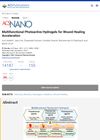
December 2021 in “ACS Nano” Special hydrogels that respond to light can speed up wound healing and prevent infection.
 2 citations
,
February 2023 in “Research Square (Research Square)”
2 citations
,
February 2023 in “Research Square (Research Square)” The scaffold effectively prevents melanoma relapse and aids wound healing.
54 citations
,
February 2002 in “Carcinogenesis” Increasing SSAT makes skin more prone to cancer.
 5 citations
,
May 2006 in “Dermatologic Surgery”
5 citations
,
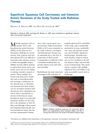
May 2006 in “Dermatologic Surgery” Radiation therapy successfully treated an elderly man's skin cancer and pre-cancerous scalp lesions.
 May 2006 in “Dermatologic Surgery”
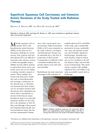
 Radiation therapy successfully treated an elderly man's skin cancer and pre-cancerous scalp lesions.
 February 2026 in “Preprints.org”
 Reporter characteristics affect detection of hair loss from cancer therapy.
 3 citations
,
August 2024 in “Frontiers in Oncology”
3 citations
,
August 2024 in “Frontiers in Oncology” Targeted radionuclide therapy shows promise for improving head and neck cancer treatment but needs more research.
 37 citations
,
March 2012 in “International Journal of Radiation Biology”
37 citations
,
March 2012 in “International Journal of Radiation Biology” Mobile phone radiation can cause DNA damage in human hair root cells.
April 2021 in “Institutional Repositories DataBase (IRDB)” High-intensity red LED light boosts bone cell growth and mineralization.
 6 citations
,
July 2013 in “Experimental and Therapeutic Medicine”
6 citations
,
July 2013 in “Experimental and Therapeutic Medicine” Ginsenoside Rg1 protects mouse skin from UVB damage and helps control inflammation.
Alkylating agents can kill cancer cells but may cause skin and allergic reactions.
 May 2012 in “Journal of Clinical Oncology”
 Taking 5-alpha reductase inhibitors might be linked to breast cancer in men.
 30 citations
,
April 2013 in “Journal of Investigative Dermatology”
30 citations
,
April 2013 in “Journal of Investigative Dermatology” Radiation mainly affects keratinocyte stem cells, not melanocyte stem cells, causing hair to gray.
 23 citations
,
July 2008 in “British journal of dermatology/British journal of dermatology, Supplement”
23 citations
,
July 2008 in “British journal of dermatology/British journal of dermatology, Supplement” Topical contact sensitizers can treat certain skin conditions but are rarely used in the U.K.
1 citations
,
April 2018 in “Dermatologic Surgery”  1 citations
,
April 1953 in “Acta Radiologica”
1 citations
,
April 1953 in “Acta Radiologica” Irradiating the whole central nervous system can lead to over 50% of patients with cerebellar medulloblastoma surviving three years.
 18 citations
,
July 2008 in “Current Oncology Reports”
18 citations
,
July 2008 in “Current Oncology Reports” EGFR cancer drugs often cause a rash, which can lead to distress and isolation, but may also improve outcomes for some cancer patients. Current treatments for the rash are limited, but a compound called menadione shows promise.