 November 2022 in “Journal of Investigative Dermatology”
 Most Recessive Dystrophic Epidermolysis Bullosa patients with a specific mutation likely have Sephardic ancestry from about 500 years ago.
ANE syndrome is caused by a mutation in the RBM28 protein that disrupts ribosome assembly.
5 citations
,
February 2025 in “Pediatric Dermatology” Ritlecitinib was generally well tolerated in children with alopecia areata.
 7 citations
,
July 1975 in “Acta dermato-venereologica”
7 citations
,
July 1975 in “Acta dermato-venereologica” A patient with Rothmund-Thomson syndrome showed skin changes, hair loss, and dental defects but no cataracts or skeletal issues.
117 citations
,
April 2008 in “Developmental biology” Ectodysplasin inhibits Wnt signaling to help form hair follicles.
 May 2022 in “Experimental dermatology”
 Trichothiodystrophy hair is structurally abnormal with protein and organization issues.
April 2017 in “The journal of investigative dermatology/Journal of investigative dermatology” Double stranded RNA helps skin wounds heal by coordinating specific proteins and signaling pathways.
January 2014 in “eScholarship (California Digital Library)” Toll-like receptor 3 helps repair the skin barrier after UV damage.
 April 2023 in “The journal of investigative dermatology/Journal of investigative dermatology”
 Ritlecitinib significantly improves scalp hair regrowth in alopecia areata patients over time.
1 citations
,
September 2020 in “Journal of dermatology” Researchers found a new mutation in the LIPH gene of a woman with a rare hair condition.
 December 2019 in “bioRxiv (Cold Spring Harbor Laboratory)”
 Redheaded people have higher levels of a vitamin D precursor, suggesting red hair may be an adaptation for better vitamin D synthesis in areas with less sunlight.
 August 2023 in “Journal of Dermatological Science”
 A specific RNA molecule blocks hair growth by affecting a protein related to hair loss conditions.
4 citations
,
April 2022 in “Evidence-based Complementary and Alternative Medicine” Dracorhodin perchlorate helps heal wounds in diabetic rats by reducing inflammation.
 9 citations
,
January 2017 in “Annals of Dermatology”
9 citations
,
January 2017 in “Annals of Dermatology” The study found genetic differences related to hair development that may explain hair loss in a patient with Trichorhinophalangeal syndrome type I.
 28 citations
,
March 2010 in “British Journal of Dermatology”
28 citations
,
March 2010 in “British Journal of Dermatology” Genetic marker rs12558842 strongly linked to male hair loss.
 6 citations
,
August 1989 in “European journal of pediatrics”
6 citations
,
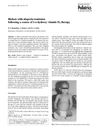
August 1989 in “European journal of pediatrics” Child with rickets improved with a specific vitamin D therapy, but alopecia did not change.
42 citations
,
May 1997 in “The Journal of Biochemistry” PAD type III enzyme is specific to rat skin and hair follicles.
 1 citations
,
April 2018 in “Journal of Investigative Dermatology”
1 citations
,
April 2018 in “Journal of Investigative Dermatology” Fzd2 is important for skin and hair development through various signaling ways.
46 citations
,
August 2006 in “PubMed” A genetic defect causes males in some Mediterranean populations to be born with ambiguous genitalia and develop male traits at puberty.
78 citations
,
November 2005 in “Endocrinology” Hairless protein can block vitamin D activation in skin cells.
 February 2025 in “Biomolecules”
 RORA boosts autophagy in hair follicle stem cells, potentially aiding hair growth.
24 citations
,
July 1994 in “Journal of Investigative Dermatology” Lhx2 is essential for effective Sonic Hedgehog signaling in early retinal development.
11 citations
,
January 2021 in “British Journal of Dermatology” Mutations in the AP1B1 gene cause a new syndrome with skin, hearing, and developmental issues.
5 citations
,
February 2003 in “American Journal of Medical Genetics Part A” A chromosomal change may cause ectodermal dysplasia and developmental issues in a child.
78 citations
,
October 2007 in “Journal of Investigative Dermatology” Delta1 is crucial for controlling skin cell growth and preventing tumors in mice.
 30 citations
,
July 2019 in “Endocrinology”
30 citations
,
July 2019 in “Endocrinology” Certain HSD3B1 gene types are linked to worse prostate cancer outcomes and affect treatment response and other health conditions.
41 citations
,
December 2011 in “The journal of investigative dermatology/Journal of investigative dermatology” Deleting MED1 in skin cells causes hair loss and skin changes.
30 citations
,
October 2010 in “Biochemical and biophysical research communications” The Gsdma3 gene is essential for normal hair development in mice.
April 2026 in “Current Opinion in Genetics & Development” RNA is crucial for controlling cell flexibility and regeneration.