88 citations
,
August 2014 in “PLOS genetics” Syndecan-1 is essential for maintaining skin fat and preventing cold stress.
January 2026 in “Advanced Science” Increasing XIAP and DDRGK1 can help prevent hearing loss from loud noise.
8 citations
,
March 2007 in “The journal of investigative dermatology/Journal of investigative dermatology” The near-naked hairless mutation causes hair loss but is not due to a mutation in the hairless gene itself.
July 2025 in “Journal of Investigative Dermatology”  September 2024 in “PubMed”
 Certain RNAs may help diagnose alopecia areata by affecting keratin genes.
 3 citations
,
September 2019 in “PLOS ONE”
3 citations
,
September 2019 in “PLOS ONE” Genetic variations affect dutasteride treatment response for male pattern hair loss.
3 citations
,
January 2022 in “Burns & Trauma” CTHRC1 helps sweat glands recover by rebuilding nearby blood vessels.
April 2024 in “Anais Brasileiros de Dermatologia” 
Plakophilin 1 helps control skin cell immune responses to prevent excessive inflammation.
 38 citations
,
April 2017 in “PLOS Genetics”
38 citations
,
April 2017 in “PLOS Genetics” GRHL3 is important for controlling gene activity in skin cells during different stages of their development.
18 citations
,
October 2009 in “Endocrinology” Different Hairless isoforms affect Vitamin D receptor activity in hair regulation, with one repressing and the other stimulating it.
39 citations
,
July 1997 in “American Journal of Medical Genetics” The gene for Clouston syndrome in a large Indian family is located in the 13q11-q12.1 region.
15 citations
,
January 2025 in “Journal of the European Academy of Dermatology and Venereology” Ritlecitinib is effective and safe for treating alopecia areata, promoting significant hair regrowth.
July 2025 in “Clinical Case Reports” A new genetic mutation in the TRPS1 gene causes Trichorhinophalangeal Syndrome, leading to specific hair, dental, and bone issues.
November 2025 in “Journal of Investigative Dermatology” BTNL2 helps protect hair follicles from immune attacks.
A new mutation in the TRPS1 gene caused Trichorhinophalangeal syndrome in a 17-year-old, highlighting the need for genetic testing.
 May 2026 in “Scientific Reports”
 Overexpression of LRIG3 in skin causes hair loss.
 35 citations
,
May 2019 in “Frontiers in genetics”
35 citations
,
May 2019 in “Frontiers in genetics” Non-coding RNAs play key roles in the hair growth cycle of Angora rabbits.
 11 citations
,
May 1996 in “The Journal of clinical endocrinology and metabolism/Journal of clinical endocrinology & metabolism”
11 citations
,
May 1996 in “The Journal of clinical endocrinology and metabolism/Journal of clinical endocrinology & metabolism” The main enzyme found in pubic skin that could be targeted to treat excessive hair growth is 5 alpha-R2.
 1 citations
,
November 2023 in “Rice”
1 citations
,
November 2023 in “Rice” PRX102 is essential for rice root hair growth by helping transport substances to the tips.
1 citations
,
May 2022 in “International journal of molecular sciences” Faulty LEF1 activation causes faster skin cell differentiation in premature aging syndrome.
4 citations
,
July 2020 in “Research Square (Research Square)” The research helps understand how finasteride works and aids drug development.
1 citations
,
November 2023 in “Journal of Investigative Dermatology” Farudodstat may effectively treat alopecia areata without harming hair follicles.
6 citations
,
January 2010 in “Journal of Biochemical and Molecular Toxicology” The ID2 gene can help distinguish between sensitizers and irritants in skin cells.
 March 2026 in “American Journal of Clinical Dermatology”
 Ritlecitinib is effective and safe for long-term use in treating severe alopecia areata in people aged 12 and older.
March 2023 in “SKIN The Journal of Cutaneous Medicine” Ritlecitinib helped most alopecia areata patients regrow hair by Week 48.
17 citations
,
March 2012 in “Journal of biological chemistry/The Journal of biological chemistry” Hairless protein affects hair follicle structure by regulating the Dlx3 gene.
July 2005 in “The American Journal of Human Genetics” The AR gene is linked to male-pattern baldness, TNFSF4 to heart disease, SLC19A3 to BBGD, MCT8 to a syndrome, and segmental duplications to genetic variation.
 62 citations
,
April 2008 in “Neurobiology of aging”
62 citations
,
April 2008 in “Neurobiology of aging” Scientists found a gene in mice that causes early hearing loss.
 7 citations
,
July 2020 in “Immunological Investigations”
7 citations
,
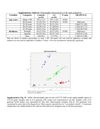
July 2020 in “Immunological Investigations” The rs231775 genetic variant is linked to a higher risk and severity of Alopecia Areata in males.